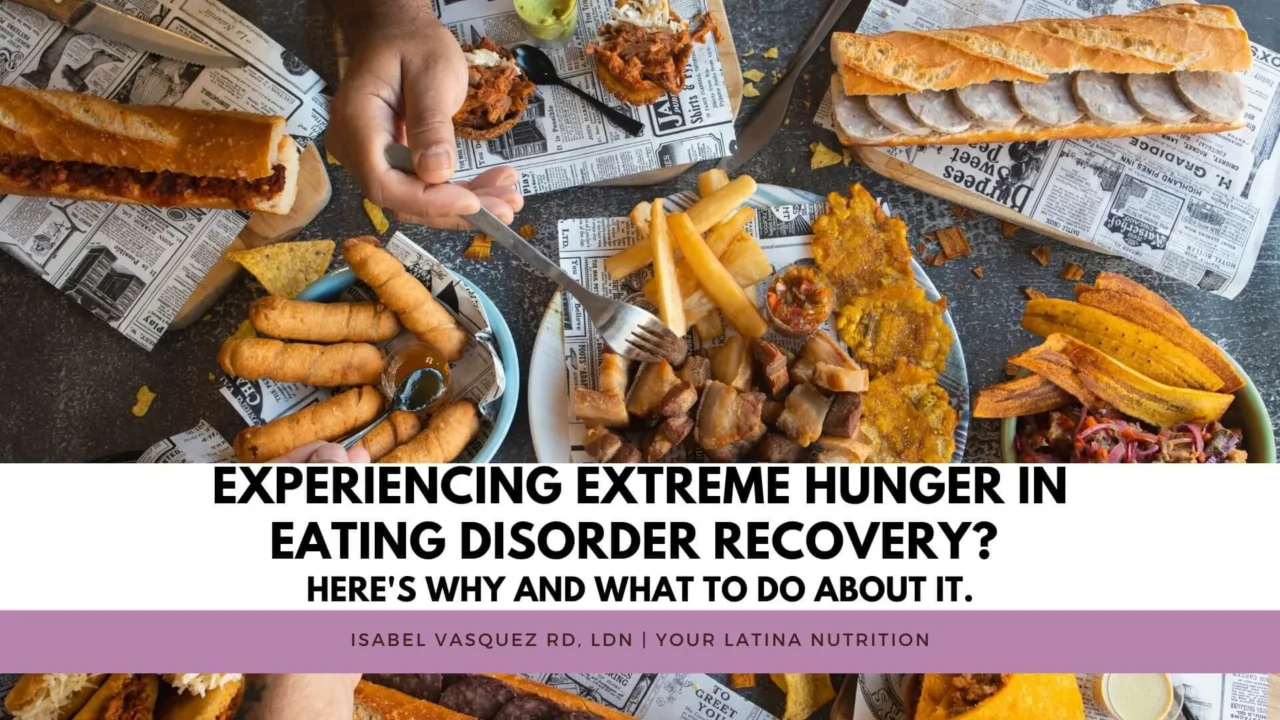
If you’re constantly hungry while recovering from an eating disorder, you’re not alone. It’s not a lack of control or willpower; it’s your body trying to heal.
When your body has been deprived of energy and nutrients for a while, it’s normal to experience extreme hunger. It may feel scary, but it’s usually just your body’s way of protecting you and getting you back to good health.
This applies even if you’ve struggled with binge eating. In fact, the binge eating may be a sign of extreme hunger from restriction.
Keep reading to learn what extreme hunger is, why it happens in eating disorder recovery, and what to do about it.
What Is Extreme Hunger in Recovery?
Extreme hunger is when you have intense, frequent feelings of hunger. This may happen even if you just ate.
Extreme hunger can also manifest as increased thoughts about food or heightened food cravings. You may even notice that you crave more energy-dense foods.
This is not a sign of relapse, brokenness, or poor “willpower”. It’s actually a natural part of the eating disorder recovery journey!
That said, we know it can feel scary to experience extreme hunger. After all, diet culture touts restriction as a cure-all to health and body image concerns. And honoring extreme hunger means challenging restrictive patterns from your eating disorder.
In actuality, hunger is your body communicating its needs with you, like when you get the urge to urinate. Your body has energy and nutrient needs, and hunger nudges you to meet those needs.
Why Extreme Hunger Happens During Eating Disorder Recovery
Your Body Needs to Heal
When your body is chronically deprived of the calories and nutrients it needs to function, there are physiological consequences. You may have experienced things like hair loss or thinning, feeling cold all the time, losing your period, or getting sick more often.
These are some examples of side effects of semi-starvation. They’re signs that your body needs lots of nutrition to heal—cue extreme hunger.
For example, anorexia nervosa can cause heart damage, weakened bones, muscle wasting, brain damage, loss of your menstrual cycle, and low blood pressure, per the National Institutes of Health (NIH).
Anorexia nervosa isn’t the only eating disorder that can have real physiological consequences. Bulimia nervosa can cause damage to your digestive tract leading to intestinal distress, acid reflux, and other gastrointestinal problems, per the NIH.
Meanwhile, avoidant restrictive food intake disorder (ARFID) can cause malnutrition, stunted growth, and poor academic performance, per the NIH.
Extreme hunger is your body’s way of getting the nutrients it needs to heal.
You May Be Experiencing Metabolic and Hormonal Changes
Once you start the refeeding process and your body catches on to the fact that you’re finally nourishing it again, it doesn’t want that good thing to end.
In fact, it needs a lot of energy to heal and restore normal functioning. This can lead to extra high energy needs—sometimes called hypermetabolism—, leading you to feel hungry all the time. It’s making up for months or years without enough energy, so it takes more than you may think to heal.
Plus, the hormones that regulate hunger and fullness are affected by eating disorder behaviors like restriction, purging, and excessive exercise. Once you start eating enough again, these hormones start to regulate, leading to more pronounced hunger and fullness cues.
Your Body is Starting to Trust It Has Access to Food Again
Although it can be terrifying to experience extreme hunger, it’s actually a good sign! Your body is starting to trust that it has access to food again. After months or years without consistent access to the nutrition it needs, it’s starting to trust that its needs will be met.
Hunger cues often dull when they haven’t been met for some time. Think of it like this—if you knocked on someone’s door and they didn’t answer, you may knock a couple more times, but eventually you’d leave if you got no response. That’s basically what your hunger cues do.
After having no hunger cues at all, you may perceive hunger to be “extreme” when it’s actually just normalizing. But the fact that they’re knocking again means your body is starting to trust that you’ll answer the metaphorical door and honor those cues.
Extreme Hunger Is a Positive Sign of Healing
Extreme hunger means your hunger cues are returning, which is a sign of healing.
Although you may have a complicated relationship with hunger while struggling with an eating disorder, feeling hungry is a sign that your body is comfortable communicating its needs with you again. You’re building back up trust with your body.
It’s a push to receive the nourishment your organs, metabolism, and brain need to heal. It’s truly amazing that your body knows to send these signals to protect you and help you heal!
We know that extreme hunger can be scary to experience, but it won’t last forever. Typically once your body has healed physically and mentally, your hunger won’t feel so extreme.
How to Respond to Extreme Hunger
-
Seek Support from a Dietitian
First and foremost, work with an eating disorder dietitian for support. A dietitian can help you understand your hunger cues and ensure you’re meeting your nutrition needs during different phases of treatment and recovery.
It can be really challenging to understand your body’s nutritional needs after struggling with an eating disorder. An eating disorder dietitian can help.
2. Follow a Regular Eating Pattern
As you work with a dietitian, they will probably provide you with a meal plan to regulate your eating. Typically, this entails eating three meals and a few snacks throughout the day. Your dietitian can help ensure your meals and snacks are sufficient to meet your needs.
Following a regular eating pattern can help your body recover and rebuild trust that it will receive the nourishment it needs moving forward.
3. Prioritize Well-Rounded Meals
Make sure your meals are well-rounded, with all the food groups your dietitian recommends. Oftentimes, this includes carbohydrates, protein, fats, fruits, veggies, and dairy.
Eating this combination of food groups helps you get in the variety of macronutrients, vitamins, and minerals you need to heal. It also helps satisfy your hunger.
4. Be Curious About Your Hunger and Fullness Cues
It may be a while since you’ve connected with your hunger cues. If you have felt hungry, you may have ignored those cues or judged them one way or another.
As you make your way through recovery, try to approach your hunger and fullness cues with curiosity rather than judgment. Over time these cues can become a tool for connecting with and honoring your body’s needs.
That said, it can take time for your hunger and fullness cues to normalize. There will often be times when you need to eat despite not being not hungry during treatment.
5. Honor Your Hunger
When you feel hungry, honor those hunger cues. This is key for building back a mutual trust with your body and healing from malnutrition. Most of the time, meal plans for recovery are minimums, not maximums.
If you’re persistently hungry despite following the meal plan your dietitian has given you, speak with your dietitian about adjusting your meal plan. We know it can be scary, but it’s important for recovery.
6. Let Go of Rigid Food Rules
Eating disorders often come with a lot of food rules. Part of recovery is letting go of these rules and allowing more flexibility in your relationship with food.
The structure of a meal plan is usually necessary to regulate your eating pattern, so practicing flexibility may look like eating challenge foods you previously cut out, varying your eating times slightly, or eating out.
7. Be Patient With Yourself and Your Body
Recovery can feel like a roller coaster so some of the most important skills to practice are patience and self-compassion.
There will be ups and downs. You may have extended times where you’re persistently hungry and times where you have to eat despite feeling full. Times when you feel like giving up and times where you see the light at the end of the tunnel.
Be patient with yourself and your body as you go through this journey. You got this.
8. Lean into Your Support System
Finally, lean into your support system as you go through this journey. Whether it’s your treatment team, family, friends, and/or mentors, ask for help when you need it and don’t be afraid to let your supporters know how they can help you.
When to Seek Professional Support
If the extreme hunger feels overwhelming or you’re experiencing increased urges to engage in eating disorder behaviors, speak with your treatment team.
If you don’t already have professional support, consider working with a therapist, doctor, and registered dietitian who specialize in eating disorders.
A registered dietitian from our amazing team of Latina dietitians would love to support you in your eating disorder recovery journey. Click here to learn more.
For support accessing eating disorder treatment, Project Heal has a few programs that can help.