
Acai vs. Blueberries: A Complete Nutrition Guide
Written by Isabel Vasquez Larson RD, LDN
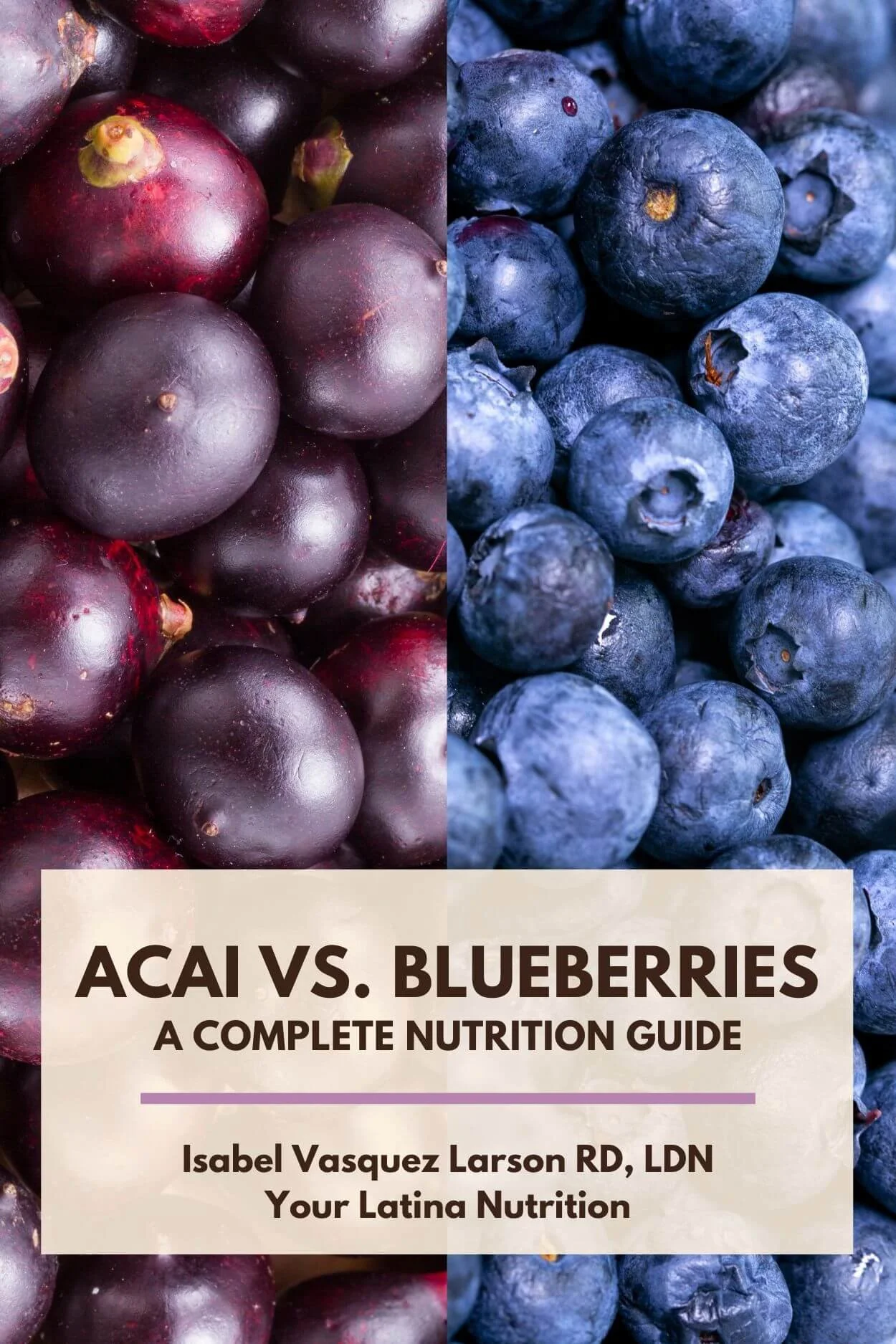
Acai grows in the Amazon rainforest, and it’s a go-to berry in Brazil. This antioxidant-packed fruit is typically blended and enjoyed in acai bowls. Now, its popularity has spread to places like the US, where it’s used to make acai bowls, smoothies, and supplements.
Blueberries, on the other hand, grow abundantly in the US. You probably see them in the fresh and frozen produce sections of your grocery store and you may love adding them to yogurt bowls, oatmeal, and smoothies. They’re also full of antioxidants, but how do they stack up against acai berries?
In this article, we’re covering the differences between acai and blueberries so you can make an empowered choice that aligns with your taste preferences and health goals.
Acai Nutrition Facts
Here is the nutrition profile of 100 grams of frozen acai puree without added sugar, per the USDA:
Protein: 2 grams (g)
Fat: 5 g
Saturated fat: 1 g, or 5% of the daily value (DV)
Carbohydrates: 5 g
Fiber: 5 g, or 18% of the DV
Total sugars: 0 g
Sodium: 26 milligrams (mg), or 1% of the DV
Iron: 0.6 mg, or 4% of the DV
Potassium: 105 mg, or 2% of the DV
Calcium: 35 mg, or 3% of the DV
Blueberry Nutrition Facts
Here is the nutrition profile of the same serving—100 grams—of blueberries, per the USDA:
Protein: 1 g
Fat: 0 g
Saturated fat: 0 g
Carbohydrates: 15 g
Fiber: 2 g, or 9% of the DV
Total sugars: 10 g
Sodium: 1 mg, or 0% of the DV
Iron: 0.3 mg, or 2% of the DV
Potassium: 77 mg, or 2% of the DV
Calcium: 6 mg, or 0% of the DV
Differences and Similarities Between Acai and Blueberries
Acai Has Less Carbs and More Fiber.
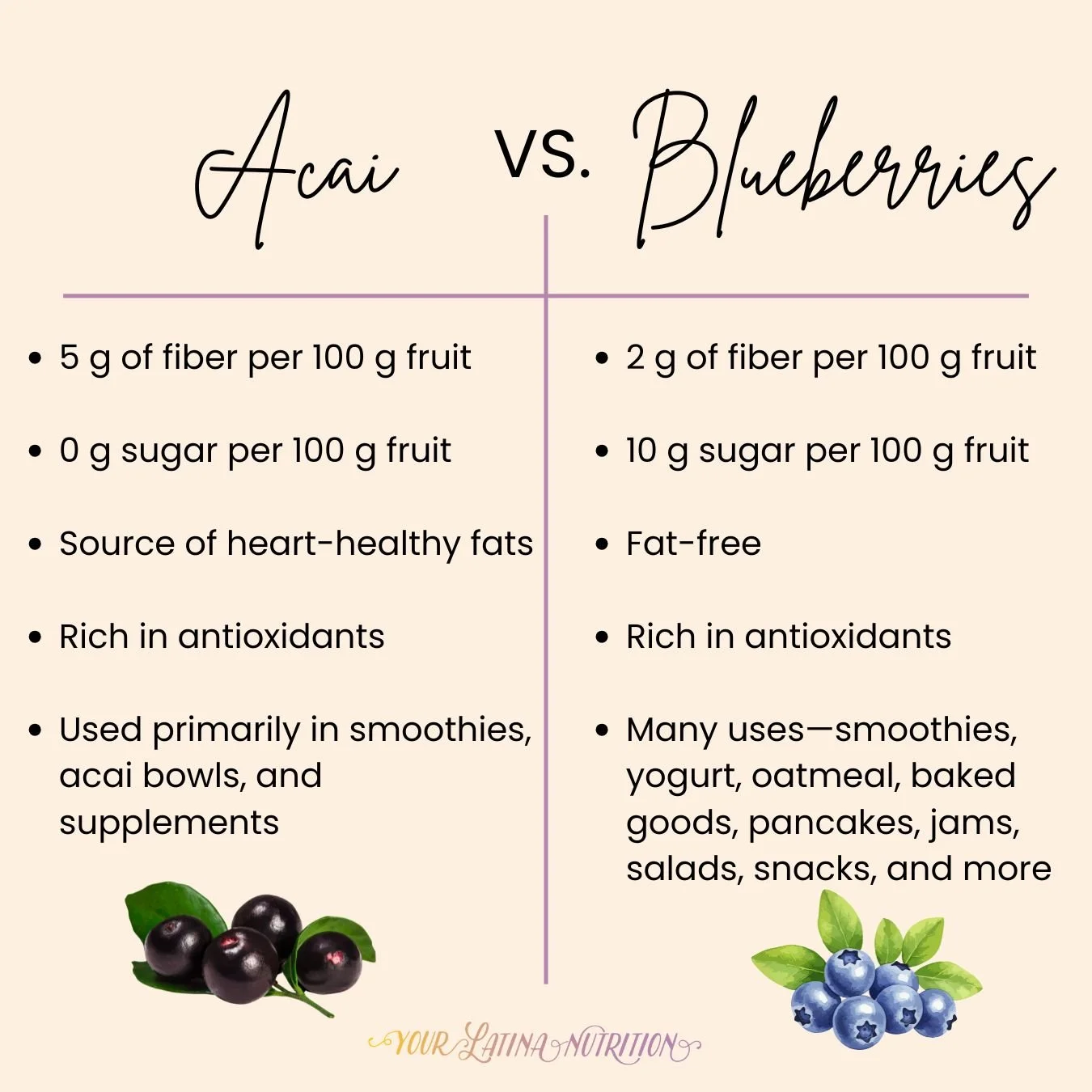
As you can see from the nutrition facts above, 100 grams of acai only has 5 grams of carbs, which are pretty much all from fiber. That means acai berries aren’t high in sugars or starches, so they’re not prone to spiking blood sugars.
Plus, that high-fiber content—18% of the daily value per 100 grams—is great for your gut, heart, and metabolic health, per the CDC.
Keep in mind that that’s true for unsweetened acai puree. Many acai bowls have added sugars to make them more palatable, which will change their impact on blood sugars and overall health.
And that’s not to say that blueberries aren’t also beneficial for upping your fiber intake for overall health. You just won’t get quite as much fiber from blueberries as you will from acai.
Acai Has Heart-Healthy Fats. Blueberries Don’t.
Most berries, including blueberries, are basically fat-free. Acai berries are unique in that they have 5 grams of fat per 100 grams of acai.
Don’t take that to mean acai berries are bad—they’re a source of heart-healthy unsaturated fats that can help lower LDL (“bad”) cholesterol levels, per the American Heart Association.
Their combo of heart-healthy fats, fiber, and antioxidants are a winning one for heart health. A 2023 study in Nutrients found that eating acai may help lower the risk of developing high cholesterol, high blood pressure, and cardiovascular disease.
They’re Both Full of Antioxidants.
Blueberries are also beneficial for heart health, but it’s not because of their fat content—it’s mostly related to their antioxidant and fiber content.
Studies—like this 2023 study in Nutrition Research—show that blueberries may help improve vascular and endothelial function, reducing inflammation and oxidative stress linked with heart health issues.
Acai is also full of antioxidants that help reduce inflammation and the risk of chronic diseases like diabetes, heart disease, and cancer, per a 2023 study in Nutrients.
Both berries’ bright blue and purple colors signal their abundant antioxidant content. So when it comes to boosting your antioxidant intake, you can’t go wrong with blueberries or acai.
Acai is Less Versatile.
There’s so much you can do with blueberries. They go equally well in pancakes, yogurt bowls, oatmeal, smoothies, salads, jams, and more. Plus, you can snack on them by themselves! This makes it much easier to add them to your diet.
Acai, on the other hand, isn’t so versatile. While you can technically eat acai berries raw, it’s super uncommon because they’re not very palatable. The pit makes up most of the berry, and their flavor is quite bitter. That’s why you typically see acai sold as frozen puree.
Don’t get us wrong—frozen acai puree is a tasty and nutritious addition to smoothies and acai bowls. However, acai is definitely less versatile than blueberries.
So, Which is Healthier?
You really can’t go wrong when choosing between acai and blueberries. They’re both nutrient-dense fruits worth adding to your diet! And many Americans could stand to eat more fruit, per the USDA.
Here are the main points to consider when it comes to deciding between blueberries and acai:
Acai has heart-healthy fats that blueberries don’t. This promotes heart health and satiety.
Acai has little to no sugar, so it’s unlikely to raise your blood sugars. However, acai bowls or smoothies may have added sugars that can spike blood sugars.
Blueberries are easier to add to a variety of meals and snacks, so they can help you increase your fruit intake.
Both acai and blueberries contribute fiber and antioxidants to your diet that help promote heart, gut, and metabolic health.
Final Thoughts
When choosing between acai and blueberries, there’s really no bad option. Both fruits can help you increase your intake of antioxidants and fiber to promote overall health.
So keep acai puree in your freezer and fresh blueberries in your fridge to mix and match between the two. Acai goes best in smoothies and acai bowls, while blueberries go well in everything from yogurt parfaits to weekend waffles.
For education on how to ADD nutrition to your favorite Latine cultural dishes, make peace with food, and focus on your health without dieting, join our nutrition library for just $27/month.
If you liked this post, you may also like:
South American Fruit: A Complete Nutrition Guide