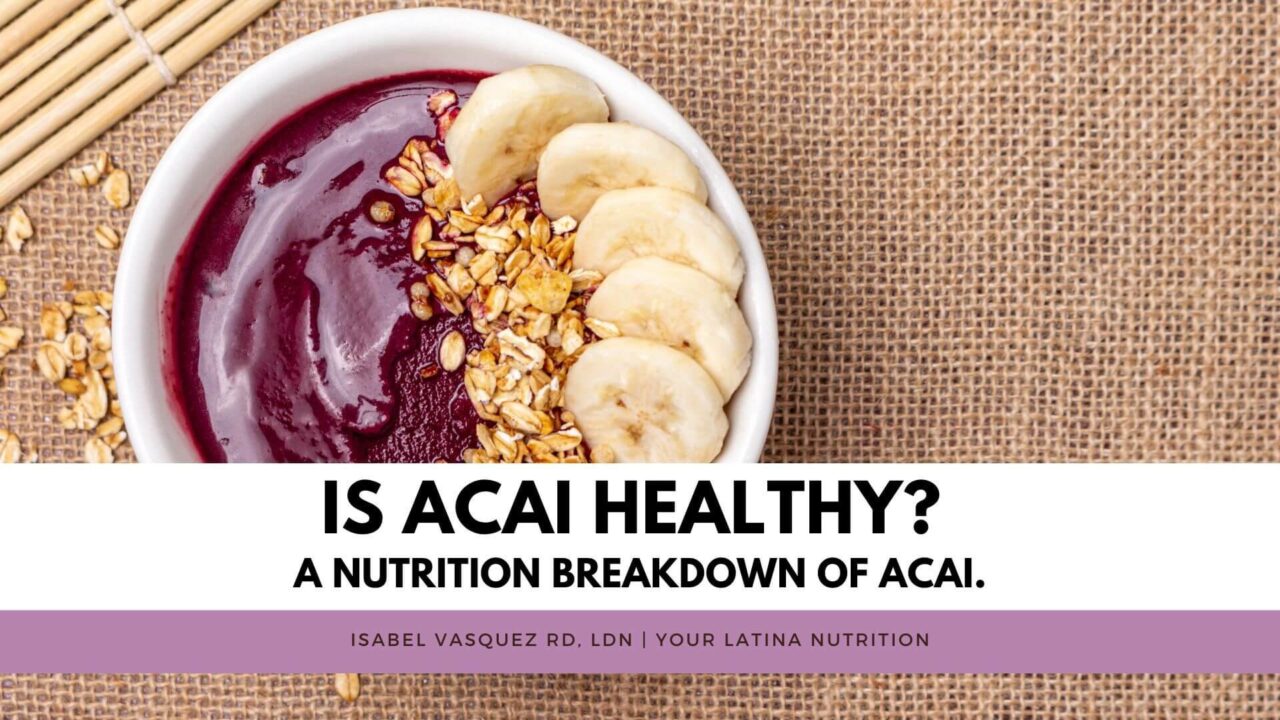
Acai bowls can be found at the beach or in the frozen section of supermarkets throughout the US. However, you may worry that they’re high in sugar and therefore, bad for your health. In fact, acai is a very nutritious food high in fiber, antioxidants, and healthy fats.
Acai berries are native to the Brasilian Amazon region, according to the National Institutes of Health (NIH). They’ve been used medicinally by the indigenous people of the region for many years.
In recent years, people in the US have become increasingly interested in the health benefits of this purple berry, even calling it a ‘superfood’.
Acai is yet another Latin American food—alongside foods like avocado, quinoa, and beans—that’s become popular in the US, especially amongst health food enthusiasts.
Keep reading to learn more about the nutrition and health benefits of acai, plus tips for how to prepare a nutritious acai bowl.
Acai Nutritional Value
Here is the nutrition profile of 1 cup (140 grams) of frozen acai chunks, per the USDA:
-
Protein: 2 grams (g)
-
Fat: 7 g
-
Saturated fat: 1 g, or 5% of the daily value (DV)
-
Carbohydrates: 7 g
-
Fiber: 7 g, or 25% of the DV
-
Sodium: 35 milligrams (mg), or 2% of the DV
-
Iron: 1 mg, or 6% of the DV
-
Potassium: 147 mg, or 4% of the DV
-
Calcium: 49 mg, or 4% of the DV
Acai is unique compared to other fruits because it’s a good source of heart-healthy fats. It’s also relatively low in carbs.
Acai is especially rich in antioxidants including polyphenols, flavonoids, and anthocyanins, per a 2023 study in Nutrients. These can help prevent cell damage from oxidative stress and lower inflammation.
Health Benefits of Acai
May Help Lower Inflammation
Acai is full of antioxidants that may help lower inflammation. Although studies in humans are limited, in vitro studies (e.g. test tube studies) have shown that the phenolic compounds in acai may help your body produce less inflammatory substances. Acai may also increase the production of an anti-inflammatory protein called IL-10.
Many chronic diseases—cardiovascular disease, diabetes, arthritis, COPD, cancer—are linked with chronic inflammation, per StatPearls. So, keeping inflammation at bay can support overall health.
May Promote Healthy Digestion
In just one cup of frozen acai you’ll get 25% of the daily value of fiber, per the USDA! That’s a whole lot of fiber in a relatively small serving.
Fiber is one of the most important nutrients for gut health. It promotes a healthy gut microbiome, which impacts not only gut health, but also immune health, brain health, and more, per a 2022 study in Microorganisms. Plus, eating enough fiber helps stave off constipation, per MedlinePlus.
Eating more acai is a delicious and easy way to boost your fiber intake.
May Support Cardiovascular Health
Acai is full of heart healthy nutrients like healthy fats, fiber, and antioxidants. A 2023 study in Nutrients reports that these components of acai may help lower the risk of developing high cholesterol, high blood pressure, and cardiovascular disease.
Fruits are usually low in fat, but acai is a good source of heart-healthy unsaturated fats. These can help lower cholesterol levels, according to the same 2023 Nutrients study, to reduce your risk of heart disease.
Although acai pulp is what we eat most, the seeds may be especially beneficial for heart health.
The antioxidants in acai seeds help your body produce nitric oxide—a molecule that helps relax blood vessels to lower blood pressure—per a 2016 study in the Journal of Cardiovascular Pharmacology. The easiest way to get in the seeds is through acai oil.
Potential Health Drawbacks of Acai
Acai on its own is generally safe and nutritious. However, acai bowls or sweetened acai may be high in added sugars. Plus, acai bowls may be topped with sugary foods like sweetened condensed milk, sweetened granola, or honey that contribute added sugars to your diet.
The Dietary Guidelines for Americans recommend limiting added sugars to no more than 10% of your total daily calories. Eating too many added sugars is linked with health issues like type 2 diabetes and heart disease.
To minimize the added sugars in your acai bowl or smoothie, prioritize no-sugar-added ingredients like unsweetened acai, fresh fruit, chia seeds, no-sugar-added nut butters, nuts, or coconut.
Tips for Incorporating Acai to Promote Your Health
Acai is an amazing food to incorporate for your health. Here are some tips to reap the most health benefits from acai:
-
Buy unsweetened acai. Acai may or may not contain added sugars for sweetness. We suggest buying acai without added sugars since the fruit is naturally sweet anyway. You can check the added sugars on the nutrition facts label.
-
Top it with more fruit. Whether you’re using acai to make a bowl or a smoothie, you can add other fruits for more sweetness, nutrition, and flavor. Fruits like blueberries, mangos, strawberries, and bananas go well with acai.
-
Add protein. Acai has carbs, fiber, and healthy fats, but it doesn’t have much protein. If you want acai to hold you over for longer, add a source of protein. Some protein sources that go well with acai are nut butter, nuts, and Greek yogurt. You could also blend your acai with protein powder.
Frequently Asked Questions
Is acai too high in sugar?
Acai is a source of naturally occurring sugars, which don’t have the same health consequences as added sugars. Most people without diabetes don’t need to worry about the sugar content of acai. Simply check the nutrition label to ensure it’s added sugar-free.
Is acai healthy for people with diabetes?
Since acai is a source of naturally occurring sugars, you may need to be mindful of your acai consumption if you have diabetes. To reduce the risk of blood sugar spikes, try using acai that’s free from added sugars, and pair it with protein-rich foods like nuts, nut butter, Greek yogurt, and protein powder to help slow absorption of the sugars.
Are acai bowls actually healthy?
Acai bowls can promote your health, but they can also be high in added sugars. It all depends on the ingredients. For a balanced acai bowl, include a mix of added-sugar-free fruit, nuts or nut butter, chia or flax seeds, low-sugar granola and coconut.
Final Thoughts
While you may worry that acai is high in sugar, it’s actually a super nutrient-dense food. It’s packed with heart healthy fats, fiber, and antioxidants to promote gut and heart health, and reduce inflammation.
To reap the most benefits, opt for acai with no added sugars and pair it with other fruits, nuts, and seeds.
For education on how to ADD nutrition to your favorite Latine cultural dishes, make peace with food, and focus on your health without dieting, join our nutrition library for just $27/month.