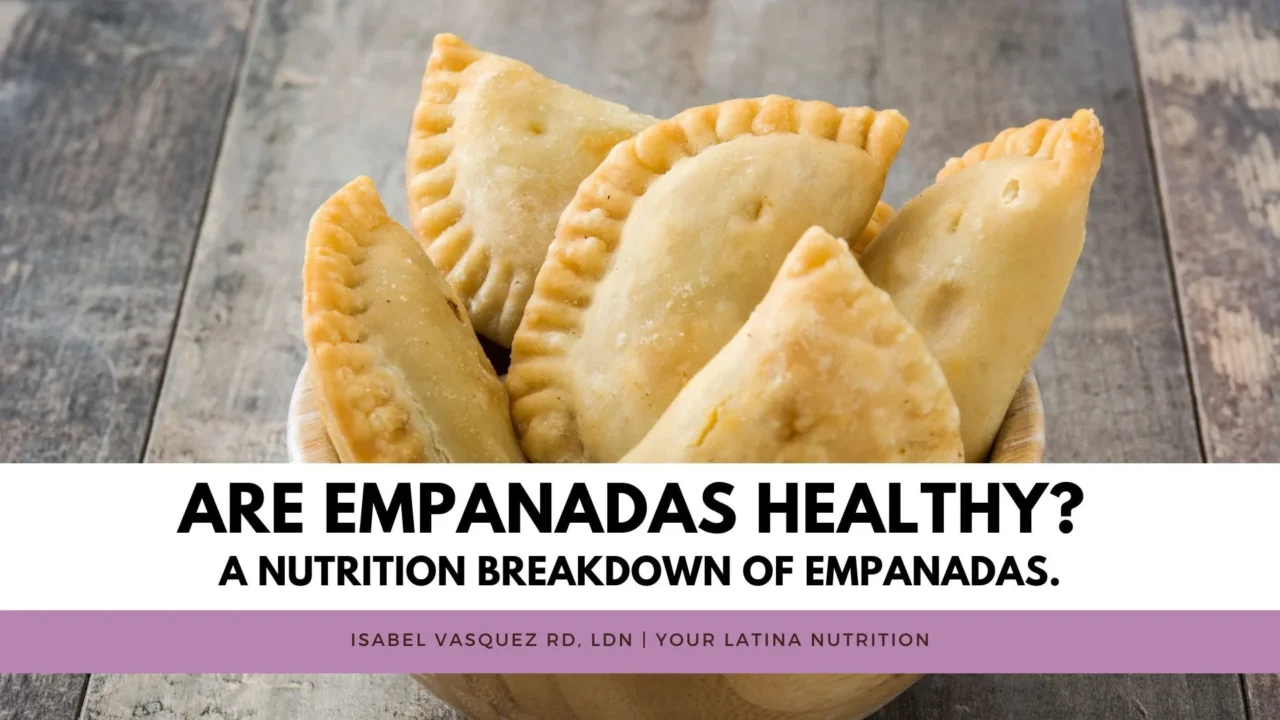
From Puerto Rico to Argentina to Mexico, most Latin American countries have their own version of an empanada. They may be sweet or savory and their dough may be made from corn, yuca, wheat, or plantains.
These baked or fried pouches of dough are often enjoyed as a snack, whether made at home or purchased by a street vendor. You may not think of them as a ‘healthy’ dish, but don’t be so quick to write them off.
In this article, we’re sharing the nutritional value of empanadas, plus their health benefits and potential drawbacks.
Empanadas Nutritional Value
Given the vast range of fillings, cooking methods, and types of dough used for empanadas, their nutritional value can vary greatly.
For simplicity’s sake, we’re focusing on baked empanadas made with wheat-based dough for this piece. Other types of dough may provide additional fiber or slightly different amounts of carbs. Frying empanadas will typically increase their fat content.
Chicken Empanada Nutrition Facts
Here are the nutrition facts of one large chicken empanada (130 grams), per the USDA:
-
Protein: 16 grams (g)
-
Fat: 21 g
-
Saturated fat: 7 g, or 35% of the daily value (DV)
-
Carbohydrates: 36 g
-
Fiber: 2 g, or 7% of the DV
-
Sodium: 598 milligrams (mg), or 26% of the DV
-
Iron: 2 mg, or 11% of the DV
-
Phosphorus: 173 mg, or 14% of the DV
-
Vitamin B12: 0.2 micrograms (mcg), or 8% of the DV
-
Folate: 43 mcg, or 11% of the DV
Bean and Cheese Empanada Nutrition Facts
Here are the nutrition facts of one large bean and cheese empanada (130 g), per the USDA:
-
Protein: 7 g
-
Fat: 17 g
-
Saturated fat: 6 g, or 30% of the DV
-
Carbohydrates: 41 g
-
Fiber: 4 g, or 16% of the DV
-
Sodium: 519 mg, or 23% of the DV
-
Iron: 2.1 mg, or 12% of the DV
-
Phosphorus: 121 mg, or 10% of the DV
-
Vitamin B12: 0.07 mcg, or 3% of the DV
-
Folate: 80 mcg, or 20% of the DV
Beef Empanada Nutrition Facts
Here are the nutrition facts of one large beef empanada (130 g), per the USDA:
-
Protein: 16 g
-
Fat: 25 g
-
Saturated fat: 9 g, or 45% of the DV
-
Carbohydrates: 36 g
-
Fiber: 2 g, or 7% of the DV
-
Sodium: 597 mg, or 26% of the DV
-
Iron: 2.7 mg, or 15% of the DV
-
Phosphorus: 162 mg, or 13% of the DV
-
Vitamin B12: 1.1 mcg, or 45% of the DV
-
Folate: 46 mcg, or 11% of the DV
Health Benefits of Empanadas
Well-Rounded Source of Macronutrients
Consuming a balance of macronutrients—carbs, protein, and fats—is the basis of a nutritious diet. We need all three of these for energy and overall health.
Eating meals and snacks that contain all of the macronutrients also helps you feel full, satisfied, and energized until your next meal or snack.
Empanadas often have this solid balance of macronutrients. The dough provides carbohydrates, and the fillings typically provide protein and fats. This makes them a good snack to stay satisfied for a couple hours or more.
Rich in Protein
Ingredients like beans, meat, and cheese make empanadas a protein-rich food. Protein is the building block of your cells. It forms your bones, muscles, skin, hormones, enzymes, and more, per the USDA.
Especially in the age of GLP1s, protein—paired with resistance training—is important for maintaining muscle mass.
Plus, protein-rich foods often contain key vitamins and minerals like iron, vitamin B12, magnesium, and zinc. As you can see from the nutrition facts above, empanadas also provide some of these micronutrients.
Including protein in your snacks can help you feel fuller longer so you’re not grazing throughout the day, wondering why you can’t stop snacking. It also helps prevent blood sugar spikes since it doesn’t raise blood sugars, per the American Diabetes Association.
Good Source of Iron
About 13% of females in the US have iron-deficiency anemia, per the CDC. To maintain healthy iron levels, it’s important to eat a variety of iron-rich foods like meat, seafood, nuts, seeds, fortified grains, beans, and leafy greens.
In the nutrition facts above, you can see that all three empanadas have at least 10% of the DV of iron. All three different fillings—beans, chicken, and beef—provide iron to help prevent anemia and keep your red blood cells healthy.
Potential Health Drawbacks of Empanadas
Empanadas may be high in saturated fat from the meat, cheese, and large amount of oil used for frying. If there’s butter in the dough, that can also add saturated fat.
Eating too much saturated fat can raise cholesterol levels, so the Dietary Guidelines for Americans recommend limiting saturated fat to 10% of your calorie intake. For a 2,000-calorie diet, that’s about 20 grams per day.
Empanadas may also be high in sodium, typically from the dough, cheese, or flavorings. Pre-packaged foods—like frozen empanadas or pre-made dough—tend to be higher in sodium since it acts as a preservative and flavor enhancer, per the Institute of Medicine.
Homemade, baked empanadas may be lower in saturated fat and sodium since they don’t need sodium for a preservative and they aren’t fried in oil. If you’re making empanadas from scratch, you can rely on herbs, spices, and veggies for flavor to lower the sodium content.
Incorporating Empanadas to Promote Your Health
You can absolutely enjoy empanadas as a part of an overall nutritious diet. If you eat them often (or you want to) here are some tips to boost their nutritional value:
-
Prioritize lean proteins. Lean proteins are lower in saturated fat, making them better for heart health. Some examples are chicken breast, beans, lean ground beef, shrimp, or lean ground turkey. As you can see in the nutrition facts above, the beef empanada has the highest amount of saturated fat since it’s not a lean protein.
-
Add veggies for fiber. Empanadas filled with veggies and beans tend to offer more fiber (like the bean and cheese empanada included above). Fiber is important for gut, heart, and metabolic health, per the CDC, but most Americans don’t eat enough of it. You can also pair any empanadas with veggies or dips like avocado or salsa for added fiber, vitamins, and antioxidants.
-
Use low-sodium flavor enhancers. When making empanadas at home, consider using less salt and more garlic, peppers, onions, tomatoes, and sofrito for flavor. You can also use no-sodium spice blends like Loisa’s salt-free adobo or salt-free sazón.
Final Thoughts
Empanadas are a popular snack food in Latin America, and you can absolutely enjoy them in a healthy diet. They have a mix of carbs, protein, and fat to support overall health and satiety. Plus, they have vitamins and minerals like iron and vitamin B12.
For the most health benefits, opt for lean proteins like chicken breast, beans, or shrimp; add fiber sources like beans and veggies; and lean on herbs and veggies for flavor instead of high-sodium ingredients. This minimizes the saturated fat and sodium to promote heart health.
For education on how to ADD nutrition to your favorite Latine cultural dishes, make peace with food, and focus on your health without dieting, join our nutrition library for just $27/month.