With egg prices skyrocketing to shocking heights in recent months, many of our clients have asked for high-protein breakfast ideas that don’t include eggs.
Especially if you’re a savory food lover, you may feel lost as to how to start your day with protein if you’re not eating as many eggs.
Fortunately, there are lots of delicious, high-protein breakfasts that don’t require eggs!
Keep reading for 10 protein-rich breakfast ideas without eggs. We made sure to include both sweet and savory options to cater to anyone’s taste buds!
Bean and Cheese Burrito
A breakfast burrito doesn’t have to have eggs to be high in protein. Just ½ cup of black beans has about 7 grams of protein, per the USDA, and ¼ cup of shredded cheddar cheese has another 7 grams of protein, per the USDA.
Throw the beans and cheese in a flour tortilla with some peppers and onions and you’ll have a delicious, well-rounded breakfast with 15+ grams of protein.
The best part is that you can prepare a bunch of these burritos at once and freeze them to reheat when you want a quick high-protein breakfast.
Tofu Scramble
Tofu is a good egg replacement for a breakfast scramble. Just mash the tofu until it’s crumbled like a scrambled egg. Then, cook it on the stovetop with your favorite veggies and spices.
Just ½ cup of tofu has 22 grams of protein, per the USDA! That’s the equivalent of about 3 eggs. Plus, it’s higher in fiber and lower in saturated fat than eggs—a beneficial nutrition profile for heart health, per the CDC.
Eat it with a side of whole grain bread or a whole wheat English muffin for a fiber and protein-rich breakfast.
Protein Oats
Oatmeal can be a high-protein breakfast as long as you add enough toppings and mix-ins.
Regular oats have about 4 grams of protein per ⅓ cup, per the USDA. Cooking (or soaking, for overnight oats), your oats in 1 cup of dairy milk or soy milk contributes about 8 more grams of protein.
Add toppings and mix-ins like nuts, nut butter, chia seeds, or protein powder for extra protein. By combining these ingredients, you can make a hot or cold oatmeal bowl with 15 to 20+ grams of protein.
Bob’s Red Mill makes Protein Oats with 10 grams of protein per ⅓ cup of oats. They use a specific variety of oat that’s higher in protein, not protein powder, to enhance the protein content. It’s an easy way to add a few extra grams of protein to your breakfast!
As a bonus, oats have a type of fiber called beta-glucan that is especially beneficial for managing high cholesterol, per a 2019 study in Frontiers in Nutrition.
Yogurt Parfait
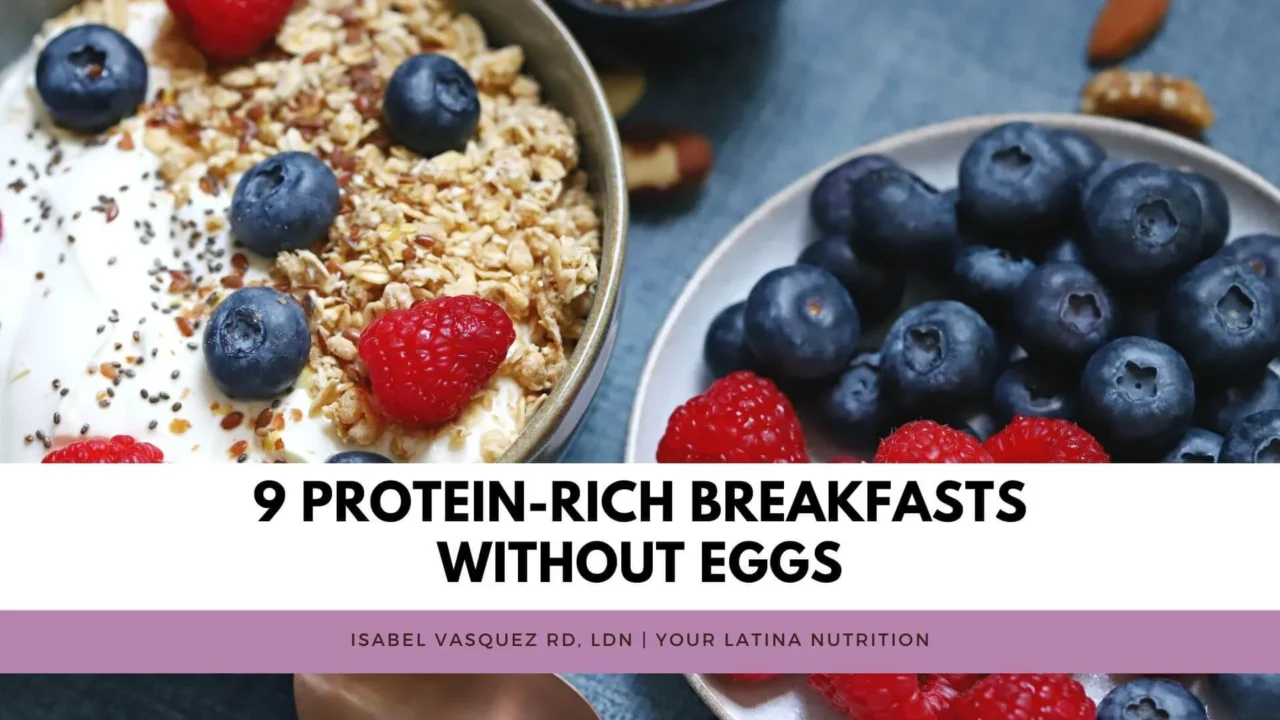
A yogurt parfait is a quick and easy way to start your morning off with plenty of protein.
For the most protein, opt for Greek yogurt or Icelandic yogurt. They typically have about 10–20 grams of protein per single-serve container.
To make it a well-rounded breakfast, top your yogurt with granola, dried or fresh fruit, nuts, and seeds.
The following yogurt parfait has over 20 grams of protein:
-
¾ cup Greek yogurt
-
1 tablespoon chia seeds
-
2 tablespoons walnuts
-
¼ cup granola
-
½ cup berries
Ham and Cheese Sandwich
In many Latin American countries, ham and cheese sandwiches (aka sandwiches de jamón y queso) are enjoyed as a quick snack or meal. You can make one for breakfast to start your day with plenty of protein.
Each slice of deli ham has about 2 grams of protein, per the USDA. One slice of cheddar cheese adds 7 more grams of protein, per the USDA, and two slices of whole wheat bread provide about 8 grams of protein, per the USDA.
So a sandwich with two slices of whole wheat bread, 3 slices of deli ham, and 1 slice of cheddar cheese provides about 20 grams of protein!
For added nutrition, pair your sandwich with a fresh fruit batida. Making the batida with milk also provides more protein—about 8 grams per cup, per the USDA.
Protein-Packed Smoothie
Especially if you struggle with low appetite or limited time in the morning, a smoothie is a great way to get in a protein-rich breakfast. Let’s be real, sometimes drinking something feels easier than eating a plated meal!
If you want your smoothie to be high in protein, then fruit and water alone won’t cut it. However, by adding ingredients like Greek yogurt, milk, nut butter, protein powder, and/or oats, you can easily make a smoothie with 20+ grams of protein.
Here’s an example of smoothie ingredients that add up to about 20 grams of protein:
-
1 cup frozen bananas and blueberries
-
½ cup frozen spinach
-
½ cup Greek yogurt
-
⅓ cup oats
-
1 tablespoon chia seeds
-
1 tablespoon peanut butter
Cottage Cheese Bowl
Cottage cheese has about 24 grams of protein per cup, according to the USDA. We know it’s not everyone’s favorite, but if you love cottage cheese then it’s worth incorporating into your breakfast.
You can make it sweet or savory depending on what you’re in the mood for.
For a sweet breakfast, top it with fresh fruit, a drizzle of honey, and some granola.
If you want something savory, you can top cottage cheese with veggies or spread it on whole wheat toast. Add everything bagel seasoning for more flavor!
Breakfast Quesadilla
For savory breakfast lovers, another delicious option is a breakfast quesadilla. You can use similar ingredients to the breakfast burrito—tortilla, beans, cheese, peppers, onions. You could also add spinach for more vitamins and minerals.
As we mentioned above, the beans and cheese provide lots of protein. Furthermore, the beans add fiber for heart health, blood sugar regulation, and satiety, per the CDC.
For more protein, you can dip the quesadilla in plain Greek yogurt—a high-protein sour cream alternative.
Chia Pudding
Chia pudding is perfect for meal prep and you can easily make it a high-protein breakfast.
Simply soak the chia seeds in the milk of your choice. For the most protein, we recommend soy or dairy milk, which have about 8 grams of protein per cup. Then, top it with fruit, nut butter, and/or granola.
Here’s a chia pudding combo that’ll give you about 20 grams of protein:
-
2 tablespoons chia seeds
-
¼ cup Greek yogurt
-
⅓ cup dairy or soy milk
-
1 tablespoon peanut butter
-
¼ cup granola
Besides protein, chia seeds are full of fiber, antioxidants, omega‐3 fatty acids, vitamins, and minerals. A 2022 study in Food Science & Nutrition found that they can help promote cardiovascular health and blood sugar regulation. They can also help relieve constipation and prevent cancer. All the more reason to weave chia pudding into your breakfast rotation!
Why Is Protein Important at Breakfast?
-
Satiety. If your breakfast leaves you hungry again an hour after eating, you may not be including enough protein. Protein helps you feel fuller for longer. Studies show that of the three macronutrients—carbs, protein, and fats—protein is the most satiating. So if you want to feel steady energy throughout the morning, it’s important to include protein in your breakfast.
-
Blood sugar regulation. Protein helps slow the rise of blood sugars to prevent blood sugar spikes, per the American Diabetes Association. Especially if you have diabetes, it’s important to pair carbs with protein for blood sugar regulation. This also helps maintain steady energy levels throughout the morning.
-
Muscle health. Protein is the building block of your muscles, so it’s important to eat enough of it. Especially if you workout in the morning, it’s worth incorporating protein in your post-workout meal to help repair and strengthen your muscles. Plus, in the age of GLP1s—which can lead to the loss of muscle mass—it’s important to incorporate protein in all of your meals if you’re taking one of these medications.
Final Thoughts
Eating a protein-rich breakfast can help keep you full throughout the morning, regulate your blood sugars, and promote muscle health. Eggs are undoubtedly a go-to protein source for breakfast, but with costs on the rise, you may want to mix it up.
Try sweet breakfasts like a Greek yogurt parfait, chia pudding, or a protein-packed smoothie. If you want something savory, opt for a bean and cheese breakfast burrito or quesadilla, tofu scramble, or a ham and cheese sandwich. These options generally have 20+ grams of protein!
For education on how to ADD nutrition to your favorite Latine cultural dishes, make peace with food, and focus on your health without dieting, join our nutrition library for just $27/month.