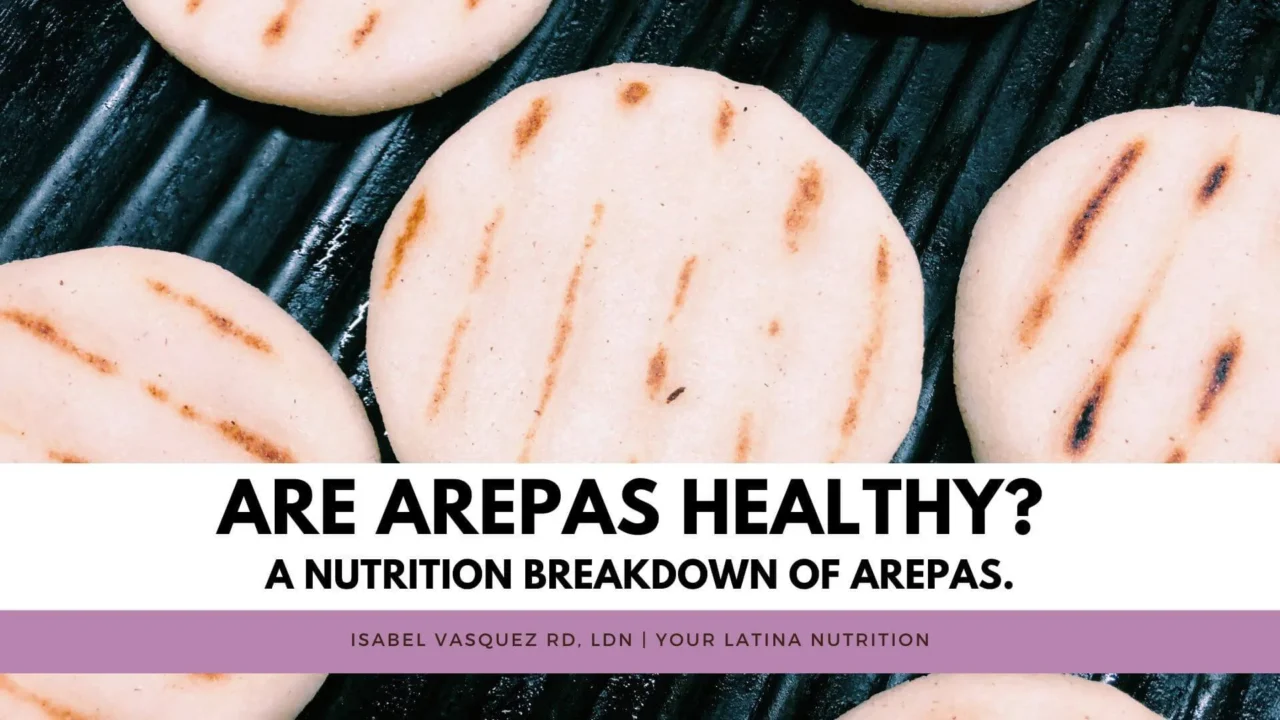
If you’re Venezuelan or Colombian, you’re probably familiar with arepas. These corn cakes are similar to Salvadorian pupusas, except they’re smaller and they’re usually made with masarepa instead of masa harina.
They’re often enjoyed with stewed meat, cheese, or butter. Alternatively, they may be stuffed with meat, cheese, beans, salsa, and/or avocado.
Especially if they’re one of your beloved cultural foods, you probably wonder if they’re good for you. While we believe there is more to food than just nutrition, you’ll be glad to learn that arepas do, in fact, have plenty of nutrition to offer!
Keep reading to learn about the nutrition facts, health benefits, and potential health drawbacks of arepas! We also share tips for assembling a well-rounded meal or snack with arepas.
Arepas Nutrition Facts
According to the USDA, one restaurant-prepared arepa (98 grams) has the following nutrition profile:
-
Protein: 5 grams (g)
-
Fat: 5 g
-
Saturated fat: 2.8 g, or 14% of the daily value (DV)
-
Carbohydrates: 36 g
-
Fiber: 2.5 g, or 9% of the DV
-
Sodium: 265 milligrams (mg), or 12% of the DV
-
Selenium: 6 micrograms (mcg), or 11% of the DV
-
Calcium: 87 mg, or 7% of the DV
-
Phosphorus: 115 mg, or 9% of the DV
As you can see, arepas are primarily a source of carbohydrates, although they do have some protein and fat as well.
As a bonus, arepas that are made with whole grain corn contribute to your daily whole grain intake! They’re a better source of fiber, protein, and micronutrients than ones made with refined corn.
Health Benefits of Arepas
Provide Complex Carbohydrates
Even though carbs have gotten a bad rap lately, they’re our body’s preferred source of energy!
Arepas don’t just provide any kind of carbs; they provide complex carbohydrates. These—along with naturally occurring sugars from fruits and dairy—should make up most of our carb intake because they also provide fiber, vitamins, and minerals, per MedlinePlus.
As you can see in the nutrition facts above, just one arepa has almost 10% of your daily fiber needs, which brings us to the next benefit.
May Support Gut Health
Since arepas are a good source of fiber, they can support your gut health.
Our bodies can’t fully digest fiber (think of the shells of corn kernels in your stool), so it gets fermented by the microorganisms in your gut. This process also produces beneficial substances that promote metabolic, immune, and brain health, per a 2022 study in Microorganisms.
Plus, eating enough fiber is key to staving off constipation and diarrhea. It also promotes the overall health of your gut microbiome—the trillions of microorganisms in your gut—per a 2022 study in Nutrients.
Contain Key Nutrients for Bone Health
Although bone health may not be the first thing that comes to mind when you think of arepas, they do contain a couple key nutrients for your bones—protein and calcium.
According to the International Osteoporosis Foundation, protein and calcium are two of the most important nutrients for bone health. Just one arepa has 5 grams of protein and 7% of the DV for calcium. This isn’t as high as dairy products, but it can help you meet your overall calcium and protein needs.
Potential Health Drawbacks of Arepas
Arepas can absolutely fit into a nutritious diet, but if you’re trying to manage high cholesterol or high blood pressure, be mindful that they are a source of saturated fat and sodium.
Eating too much sodium can increase fluid retention, leading to higher blood pressure, per a 2019 study in Nutrients. Arepas aren’t super high in sodium, but each one has about 12% of the daily value.
The exact amount can also vary based on how they’re made. That said, you may want to pair arepas with lower-sodium foods like veggies, low-sodium beans, and spiced beef.
Each arepa also has about 14% of the DV for saturated fat. Eating too much saturated fat can raise your LDL cholesterol and cause cholesterol to build up in your arteries, per MedlinePlus.
So if you’re trying to prevent or manage high cholesterol, be mindful that arepas contribute some saturated fat to your diet.
Incorporating Arepas in a Healthy Diet
Arepas can be enjoyed as a side dish or snack. If you’re having them as a snack, try pairing them with at least one of the following types of foods. If you’re including them in a meal, add at least 2 of the following types of foods.
This will add more protein, healthy fat, and/or fiber to support overall health and keep you fuller longer.
-
Salsa. Salsa adds veggies for a little more fiber and a lot more vitamins and minerals. Plus, it adds a refreshing flavor to these dense cornmeal cakes.
-
Avocado. Adding avocado to your arepa—whether it’s sliced or mashed into guacamole—adds a lot of heart-healthy fats, fiber, vitamins, and minerals. This supports metabolic, heart, and gut health, per a 2021 study in Nutrients.
-
Beans. Beans are another excellent source of fiber, with about half of your daily needs per cup, per the USDA. Plus, they’ll add more protein, vitamins, and minerals to your meal or snack.
-
Lean protein. Arepas have some protein, but if you want a high-protein meal or snack it’s best to add another protein source. Lean proteins are best for heart health since they’re low in saturated fat, per the American Heart Association. Some examples are shredded chicken breast (to make pollo mechado), flank steak (to make carne mechado), or beans.
-
Cheese. Cheese adds more protein and calcium for long-lasting energy and bone health. However, it’s high in saturated fat so be mindful if you have high cholesterol.
Final Thoughts
Arepas are a valuable source of whole grains in Latin American diets. These delicious cornmeal cakes also provide some protein, fiber, calcium, and selenium to support bone, gut, and metabolic health.
That said, they usually also contain a decent amount of sodium and saturated fat, so be mindful of this if you’re trying to manage high blood pressure or high cholesterol.
To assemble a well-rounded meal or a filling snack, pair arepas with meats, avocado, beans, salsas, and/or eggs. This will add more protein, veggies, and healthy fats to promote satiety and overall health.
For education on how to ADD nutrition to your favorite Latine cultural dishes, make peace with food, and focus on your health without dieting, join our nutrition library for just $27/month.