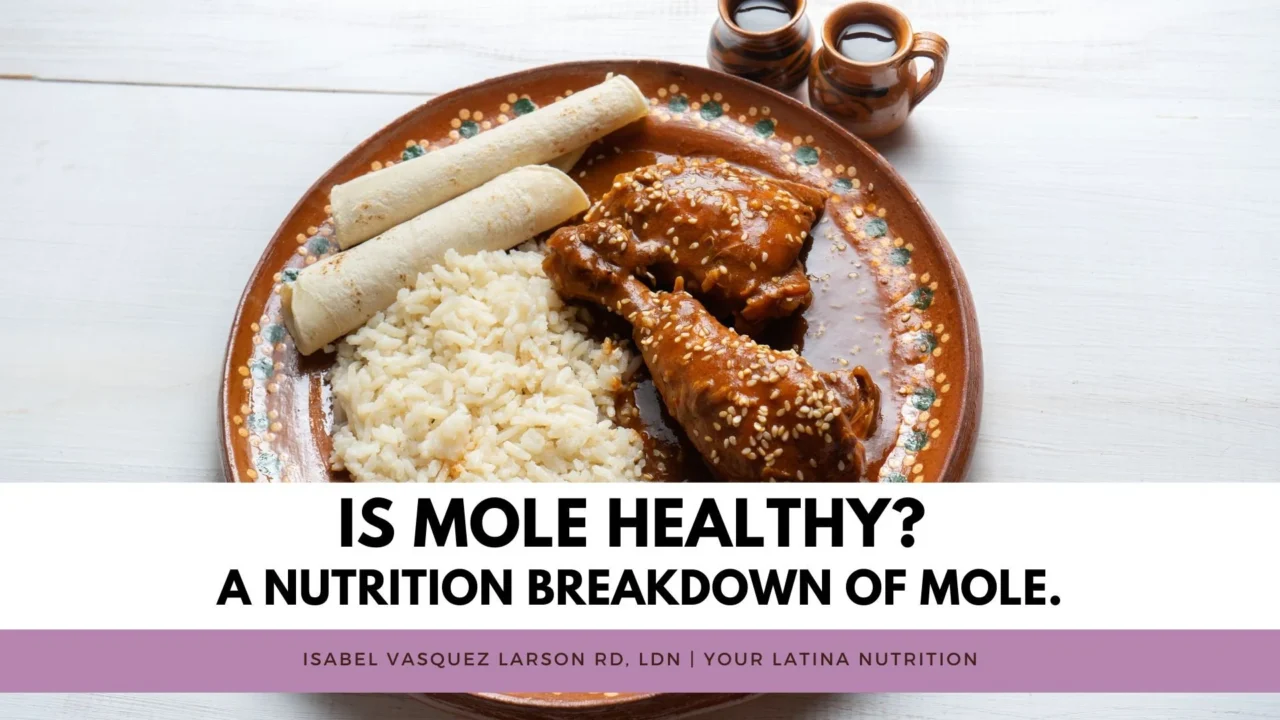
There are dozens and dozens of types of mole in Mexican cuisine, but what do they all have in common? They’re bursting with flavor thanks to a combo of chiles, nuts, seeds, and spices and a slow cooking process that allows the flavors to shine through.
Some—like Mole Poblano—include chocolate for a rich, spicy, and sweet flavor, while others—like Mole Verde—are more vibrant and herbaceous.
In this article, learn the nutrition and health benefits of mole, plus ways to incorporate mole in your diet to support your health. Let’s get into it!
Health Benefits of Mole
Rich in Heart-Healthy Fats
About half of the calories in mole come from fat, per a 2022 study in Molecules. Of the five types of mole the researchers evaluated, mole verde had the highest fat content (58% of total calories), and mole casero had the lowest fat content (35% of total calories).
Where does this fat come from? It’s typically from a combo of nuts, seeds, and lard or vegetable oil. The nuts, seeds, and veggie oil are all sources of heart-healthy fats, per the American Heart Association. Eating more of these fats can help lower LDL (“bad”) cholesterol levels.
These fats help give mole its thick consistency and rich flavor.
Source of Fiber
Sauces probably aren’t the first thing that comes to mind when you think of high-fiber foods, but mole sauce is a tasty way to increase your fiber intake!
That same 2022 study in Molecules found that mole is a good source of fiber thanks to ingredients like nuts, seeds, chiles, and onion.
Plus, mole sauce is often enjoyed with fiber-rich sides like beans, corn tortillas or avocado for an overall high-fiber meal.
Full of Antioxidants
Between the chiles, spices, nuts, and seeds, mole is bursting with antioxidants. Antioxidants protect your cells from harmful free radicals, which helps prevent chronic diseases like heart disease and cancer, per the Academy of Nutrition and Dietetics.
Red dried chiles, in particular, add a plethora of antioxidants. The 2022 study in Molecules found that mole verde—which uses jalapeños—had a lower antioxidant content than the ranchero, casero, almendrado, and pipian moles that used red dried chiles.
Note that jarred mole may not have the same abundance of antioxidants as fresh mole. Pro tip: check the ingredients list. If chiles, seeds, nuts, and veggies are some of the first few ingredients, it’s probably a good source of antioxidants.
Potential Health Drawbacks of Mole
Overall, mole is a flavorful way to enhance the nutrition of a dish. That said, there are some nutrition nuances to be mindful of depending on your health needs.
Mole sauce often has lard. The lard is used to cook the chiles, nuts, and seeds and enhance the flavor of the dish. However, lard is a source of saturated fat, which can raise LDL (“bad”) cholesterol levels, per the American Heart Association.
Some mole sauces use liquid vegetable oils instead. If you’re managing high cholesterol, you may want to opt for these since they’re heart-healthy fats.
Jarred mole is often high in sodium since salt acts as a flavor enhancer and preservative. For example, 1 ½ tablespoons of this popular Doña María Mole has 330 mg, or 14% of the DV, of sodium.
Consuming too much sodium can contribute to high blood pressure, per the American Heart Association, so you may want to prioritize fresh mole or be mindful of the amount of jarred mole sauce you use if you have this heart condition.
Also, mole may contain nuts or seeds, so it’s not suitable if you’re allergic to these foods.
Incorporating Mole to Promote Your Health
As you can see, mole is absolutely worth enjoying not only for cultural connection, but also for your health!
Here are some ways to enjoy mole to support your overall health:
-
Add fiber-rich sides. Mole is full of fiber on its own, but adding fiber-rich sides like avocado and beans can help you meet your fiber goals and feel full.
-
Serve it over lean protein. Mole is typically served over chicken, which is a lean protein, so you’re probably already doing this! Lean proteins are low in saturated fat, so they’re best for heart health, per the American Heart Association.
-
Add complex carbs. Our bodies and brains need carbs for energy. It’s best to prioritize complex carbs since they provide fiber, vitamins, and minerals, per MedlinePlus. You may already be doing this without realizing it! Complex carbs like corn tortillas and beans are commonly enjoyed with mole.
-
Make it fresh and freeze it. Particularly if you’re worried about the sodium content of jarred mole, try making mole yourself. Since it’s a laborious process, we suggest making a big batch and freezing the extra, that way you’ll have it ready to go next time you want it.
Final Thoughts
After reading this article, we hope you recognize the numerous benefits of mole! These iconic Mexican sauces provide fiber, healthy fat, and loads of antioxidants from chiles, nuts, seeds, and spices.
It’s one of many traditional Mexican foods that provide tons of nutritional benefits!
For education on how to ADD nutrition to your favorite Latine cultural dishes, make peace with food, and focus on your health without dieting, join our nutrition library for just $27/month.