
5 Myths About Latin American Foods, Busted by a Latina Dietitian
Written by Isabel Vasquez Larson RD, LDN

If you’re like many of our clients, your cultural foods are more than just fuel—they’re comfort, tradition, identity, and connection.
Yet so many of our clients come to us feeling confused or guilty about the dishes they grew up eating.
Our cultural dishes often get labeled as too high in fat and carbs, and devoid of veggies.
So you may have come to believe that wellness can only be found in salads, bland chicken, or trendy health foods that don’t reflect our heritage.
But here’s the truth—our cultural foods are deeply nutritious, and many of the myths surrounding them are rooted in misinformation, not reality.
In this post, we’re breaking down some of the biggest myths about Latin American dishes so you can enjoy your favorite meals with confidence. Let’s get to it!
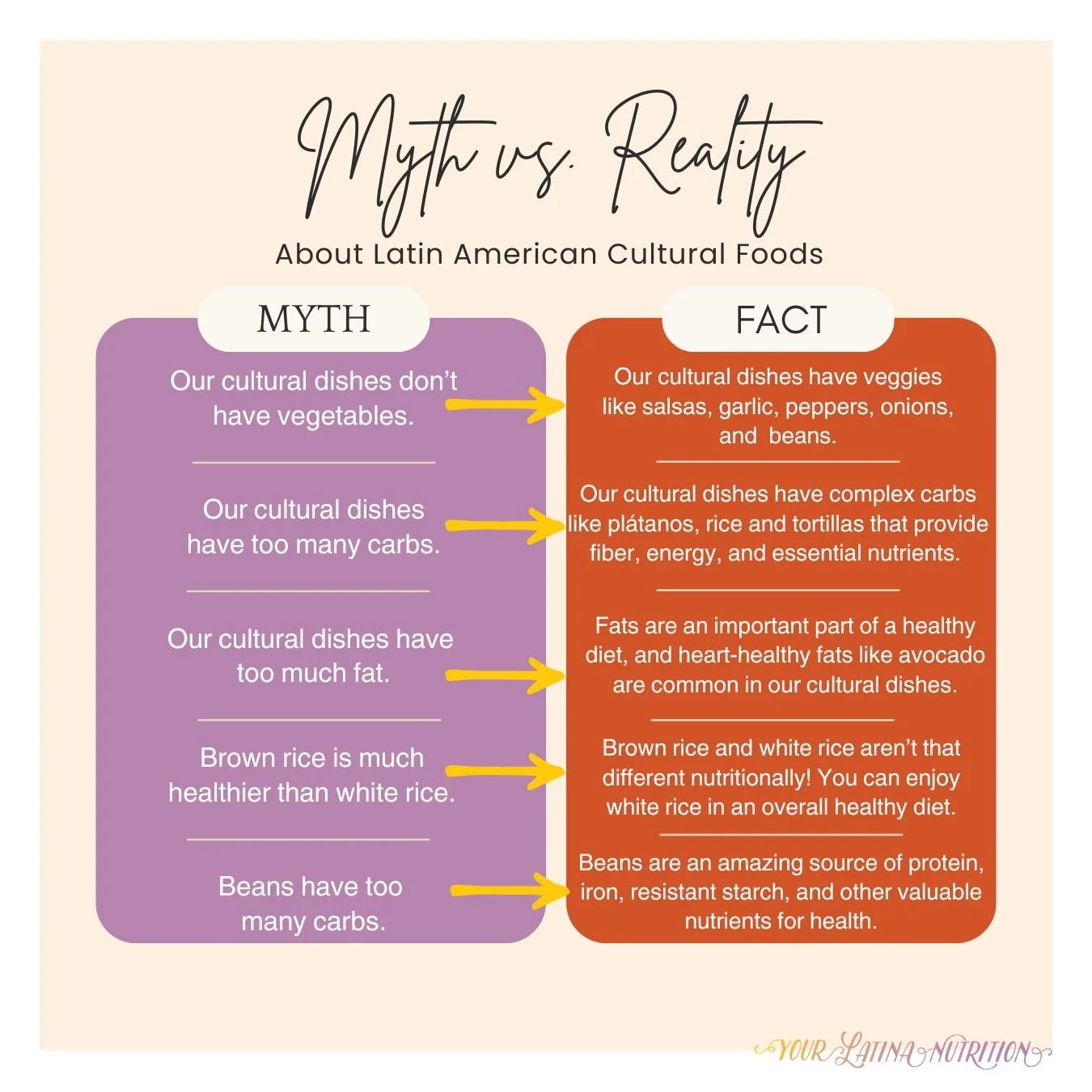
Myth 1: Latin American cultural dishes don’t have vegetables.
There’s no doubt veggies are important, and most Americans could stand to eat more of them. However, many of our clients discount the veggies present in their favorite cultural dishes.
We’re talking about salsas, sofrito, curtido, onion, garlic, chiles, tomato, calabacitas, and more. Think about it—we often rely on a lot of veggies to add flavor to our meals. It’s part of what makes them so tasty!
Just because it isn’t a side of steamed cauliflower or a kale salad doesn’t mean these veggies don’t count.
So if you want to add more veggies to your diet (like many of our clients do), it may be more realistic and enjoyable to add more peppers, onion, salsas, beans, or calabacitas. You probably already know and love these anyway!
For more on our cultural veggies, check out our blog posts about Mexican vegetables and Puerto Rican vegetables.
Myth 2: Latin American cultural dishes have too many carbs.
Carbohydrates are your body’s main source of energy, per MedlinePlus. So despite what diet culture may say, they’re an important part of a healthy diet.
In fact, carbs are so important that the Dietary Guidelines for Americans recommend they make up 45–65% of our calorie intake.
We get carbs from foods like grains, fruits, dairy, legumes, and starchy veggies.
Many of our clients—especially those with blood sugar issues—avoid their favorite carbs like rice, tortillas, or plátanos out of fear that their beloved cultural dishes are too high in carbs.
In reality, even if you’re trying to manage your blood sugars, you still need carbohydrates.
Our cultural dishes often incorporate nutrient-dense whole grains like corn or corn tortillas, and fiber-rich root veggies like yuca or yautia.
Plus, we often eat them with sources of protein, fat, and more fiber (hello, veggies!) for overall health, satiety, and blood sugar regulation.
Myth 3: Latin American cultural dishes have too much fat.
We need fat in our diets to absorb certain vitamins, produce hormones, and support cell function, per the American Heart Association. In fact, fat should make up about 20–35% of your calorie intake, per the Dietary Guidelines for Americans.
That said, not all fats are the same. It’s worth prioritizing unsaturated fats over saturated fats, particularly when it comes to preventing or managing high cholesterol.
Foods like butter, lard, beef tallow, fatty cuts of meat, and cheese are examples of saturated fats in our cultural dishes.
We also use heart-healthy sources of fat like canola oil, olive oil, avocado, chia seeds, and fish.
To promote heart health, try to use these heart-healthy fats most often, while still allowing yourself to enjoy saturated fats when they go best in a dish.
Remember, the goal isn’t to eliminate traditional fats. Instead, focus on using them intentionally.
Myth 4: Brown rice is much healthier than white rice.
So many of our clients have tried swapping out white rice for brown rice and been left very disappointed. Let’s be real—brown rice does not belong in our cultural dishes.
Don’t worry—brown rice and white rice aren’t that different nutritionally!
White rice has more iron and slightly fewer carbohydrates, while brown rice has a bit more fiber, protein, magnesium, and potassium.
That said, the difference isn’t significant. Plus, we tend to eat white rice with foods that add lots of protein, fiber, and minerals like beans.
Note that white rice is a refined grain, so try leaning on whole grains in other meals to follow the Dietary Guidelines for Americans recommendation to make half your grains whole grains. Some examples that we enjoy culturally are oats, corn, and corn tortillas.
Myth 5: Beans have too many carbs.
Beans often get mistaken as a ‘bad’ food for diabetes because they contain carbs, but they’re actually considered a "superstar food” for diabetes by the American Diabetes Association.
Why? Well, they’re full of fiber, vitamins, and minerals. Plus, ½ cup of beans provides the same amount of protein as an ounce of meat without the saturated fat.
Here is the nutritional content of ½ cup of canned black beans, per the USDA:
Carbs: 20 grams
Fiber: 8 grams (29% daily value)
Protein: 7 grams
Fat: 0.35 grams
Sodium: 360 milligrams (16% daily value)
Iron: 2.5 milligrams (14% daily value)
Magnesium: 42 milligrams (10% daily value)
Phosphorus: 130 milligrams (10% daily value)
Copper: 0.23 milligrams (25% daily value)
Even though they have carbs, almost half of the carbs come from fiber, which doesn’t get absorbed to raise blood sugars. Instead, it helps prevent blood sugar spikes and promote gut health, heart health, and satiety, per the CDC.
Plus, when we eat rice and beans together, they form a complementary protein—meaning that together, they provide all of the essential amino acids we need for good health.
Final Thoughts
Myths about the nutritional value of our cultural foods abound. Here at Your Latina Nutrition, we’re passionate about busting these myths so our clients can enjoy their cultural foods while also working towards their health goals.
So next time you catch yourself feeling guilty for eating foods like white rice or beans, or discounting veggies like salsa or curtido, remind yourself that these are nutritious foods you deserve to eat and enjoy!
For more education on how to ADD nutrition to your favorite Latine cultural dishes, make peace with food, and focus on your health without dieting, join our nutrition library for just $27/month.
If you liked this post, you may also like:
Unpacking the Hispanic Health Paradox: What Our Culture Can Teach Us About Wellness
Avocado Glycemic Index: A Healthy Option for Blood Sugar Control