Key Points
-
Fried plantains like tostones and maduros are beloved cultural foods in parts of Latin American
-
Fried plantains are a good source of complex carbs, fiber, potassium, and magnesium
-
They’re high in saturated fat which can raise LDL cholesterol when eaten in excess
Being a Dominican and Puerto Rican dietitian, plátanos are one of my most beloved cultural foods, and the same is true for many of my clients.
However, many of them have come to think of fried plantains as a ‘guilty pleasure’ for being too high in carbs and fat. Maybe you can relate.
While plantains are indeed a source of carbohydrates and frying them does increase their fat content, they’re also full of fiber, vitamins, and minerals important for overall health. They can absolutely fit into an overall healthy diet and give you a bunch of valuable nutrients in the process!
Keep reading to learn about the nutrition differences between raw and fried plantains, plus the health benefits and potential drawbacks of fried plantains.
Types of Fried Plantains
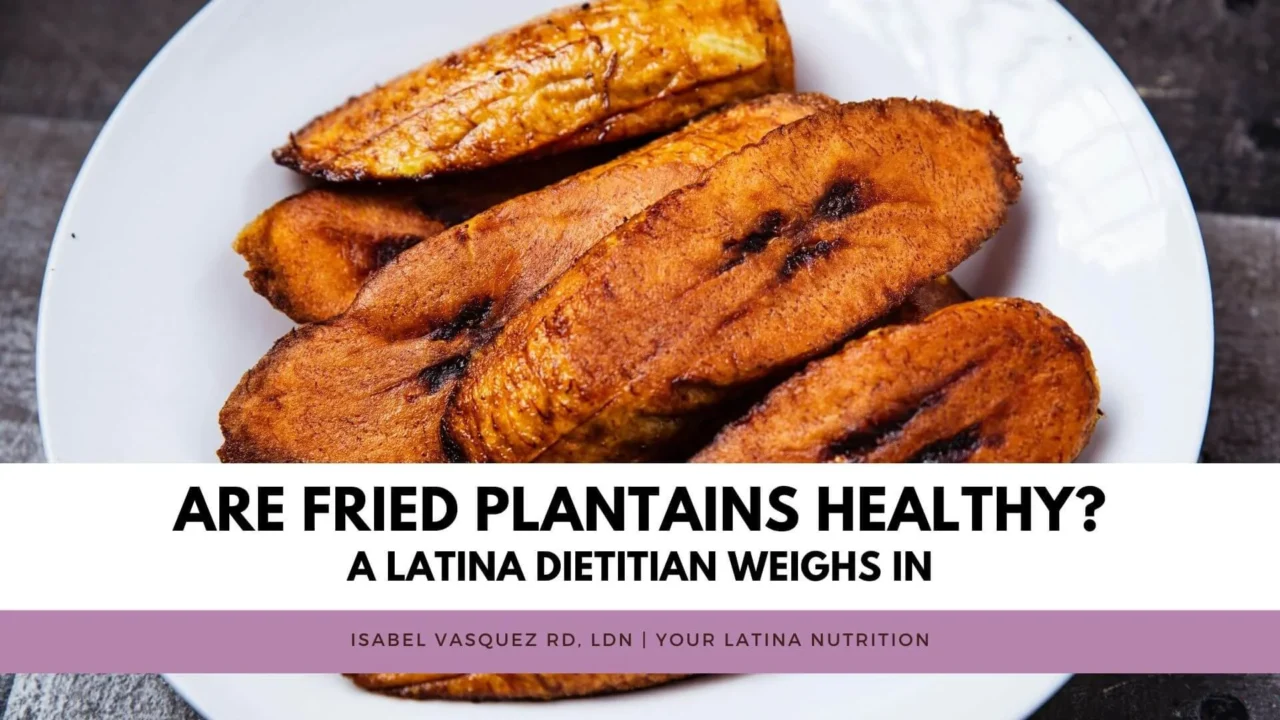
Fried plantains may be sweet or savory, depending on how ripe the plantains are when they’re fried.
Yellow plantains are ripe plantains. Their starches have turned to sugar, making them sweeter and softer than green plantains. In Latin America, fried sweet plantains are often called maduros—the Spanish word for ripe.
Fried green plantains make for a more savory dish. They’re less ripe, so their starches haven’t been converted into sugars like yellow plantains. Fried green plantains are often called tostones or patacones in Latin America.
Plantains can also be thinly sliced and fried to make plantain chips, also known as chifles, plátanitos, or mariquitas. They’re often enjoyed as a snack or a side dish.
How Healthy Are Fried Plantains?
Plantains—no matter how they’re cooked—are a good source of carbohydrates. Regardless of the cooking method, they’re low in protein. Any differences in their protein content are usually insignificant.
Frying plantains increases the fat content because the plantains absorb oil as they’re fried. In turn, they tend to be higher in calories and more filling than plantains that aren’t fried.
Fried plantains also tend to be lower in some water-soluble vitamins that are sensitive to heat like folate and vitamin C.
To demonstrate the nutrition differences, we’re breaking down the nutrition facts of raw vs fried green and yellow plantains below.
Raw vs Fried Green Plantains nutrition facts
Here is the nutrition in 100 grams of raw green plantain—a little under 1 cup—, per the USDA.
-
Calories: 152
-
Carbohydrates: 37 grams
-
Protein: 1.3 grams
-
Fat: 0 grams
-
Saturated fat: 0 grams
-
Fiber: 2.2 grams, or 8% of the daily value (DV)
-
Vitamin C: 20 milligrams, or 22% of the DV
-
Folate: 28 micrograms, or 7% of the DV
-
Potassium: 431 milligrams, or 9% of the DV
-
Magnesium: 41 milligrams, or 10% of the DV
Meanwhile, here is the nutrition in the same serving (100 grams) of fried green plantain, per the USDA.
-
Calories: 309
-
Carbohydrates: 49 grams
-
Protein: 1.5 grams
-
Fat: 12 grams
-
Saturated fat: 3.7 grams, or 19% of the DV
-
Fiber: 3.5 grams, or 13% of the DV
-
Vitamin C: 3.4 milligrams, or 4% of the DV
-
Folate: 15 micrograms, or 4% of the DV
-
Potassium: 482 milligrams, or 10% of the DV
-
Magnesium: 58 milligrams, or 14% of the DV
Raw vs Fried Yellow Plantains nutrition facts
Here is the nutrition in 100 grams of raw yellow plantain—a little under 1 cup—, per the USDA.
-
Calories: 122
-
Carbohydrates: 32 grams
-
Protein: 1.3 grams
-
Fat: 0 grams
-
Saturated fat: 0 grams
-
Fiber: 1.7 grams, or 6% of the DV
-
Vitamin C: 18 milligrams, or 20% of the DV
-
Folate: 22 micrograms, or 6% of the DV
-
Potassium: 487 milligrams, or 10% of the DV
-
Magnesium: 36 milligrams, or 9% of the DV
Meanwhile, here is the nutrition in the same serving (100 grams) of fried yellow plantain, per the USDA.
-
Calories: 236
-
Carbohydrates: 41 grams
-
Protein: 1.4 grams
-
Fat: 7.5 grams
-
Saturated fat: 1.8 grams, or 9% of the DV
-
Fiber: 3.2 grams, or 11% of the DV
-
Vitamin C: not available
-
Folate: not available
-
Potassium: 507 milligrams, or 11% of the DV
-
Magnesium: 45 milligrams, or 11% of the DV
Health Benefits of Fried Plantains
Provide Complex Carbohydrates for Sustained Energy
Carbohydrates are our bodies’ preferred source of energy. That’s right, you don’t have to be afraid to eat carbs.
That said, different types of carbs impact blood sugars and energy levels differently.
Simple carbs—found in added sugars, fruits, and milk—get digested very quickly, raising blood sugars and energy levels quickly and then leading to a crash shortly after, per the American Heart Association (AHA).
Complex carbs are digested more slowly, leading to a slower rise in blood sugars and more sustained energy levels. Plantains are a type of complex carbohydrate, so they can help promote sustained energy levels, especially when paired with protein.
Rich in Fiber for Gut, Metabolic, and Heart Health
As you can see from the nutrition facts above, plantains are generally a good source of fiber. This may be a pleasant surprise if you love plantains but thought they were ‘bad’ for you!
Fiber is a super important nutrient most Americans don’t get enough of, per the Dietary Guidelines for Americans (DGAs). It helps you stay regular, prevents blood sugar spikes, and helps lower cholesterol, per the Centers for Disease Control and Prevention (CDC).
More specifically, plantains contain prebiotic fiber and resistant starch, which are great for gut health. Prebiotics act as food for the healthy bacteria in your gut so they can thrive, per a 2018 study in Current Developments in Nutrition.
Meanwhile, resistant starch resists digestion in the small intestine so it gets fermented in the large intestine. This produces beneficial short-chain fatty acids that can improve metabolic and gut health, per a 2022 study in the Journal of Functional Foods.
Provide Key Vitamins and Minerals
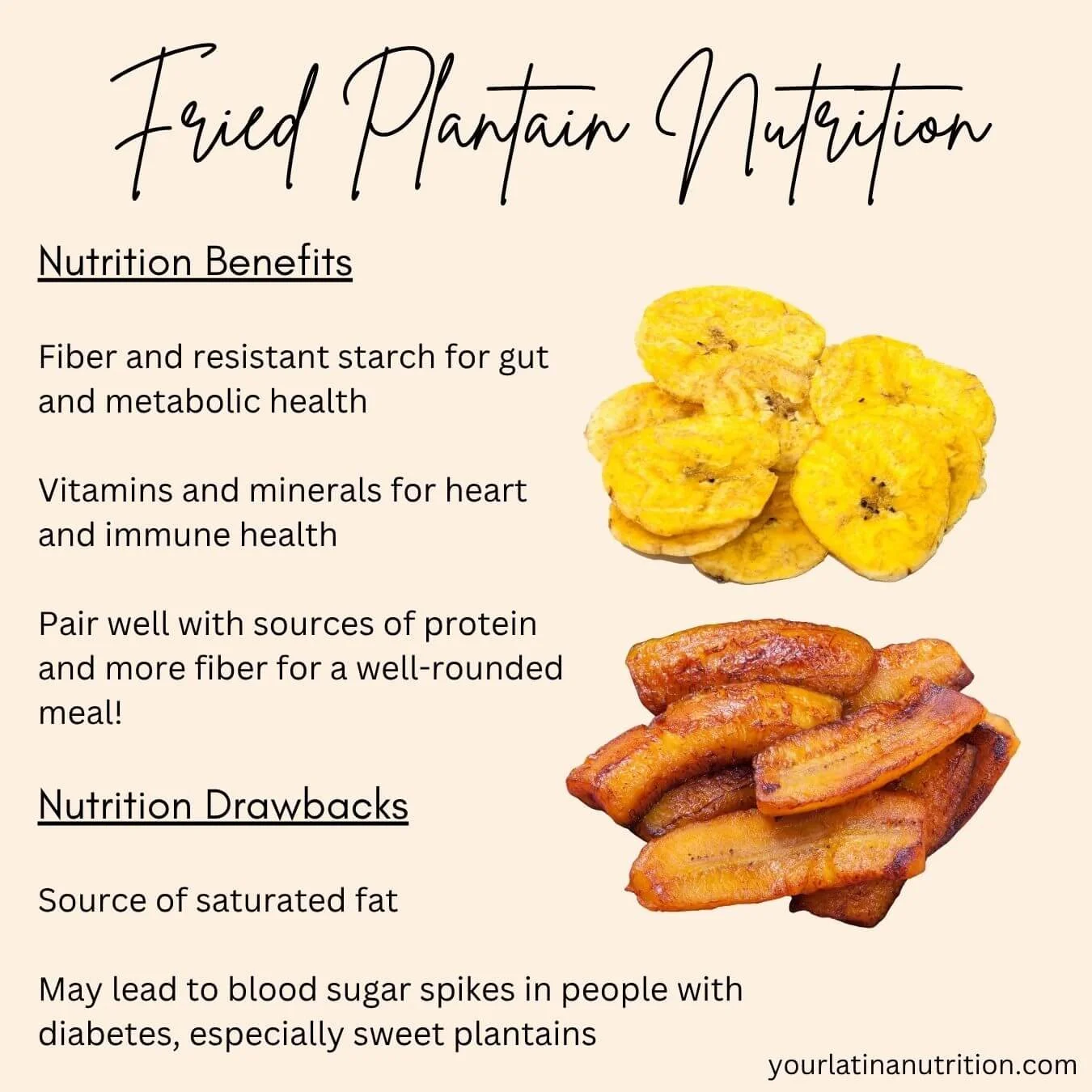
Plantains provide a few key vitamins and minerals like vitamin C, potassium, magnesium, and folate. The content of water-soluble vitamins like vitamin C and folate is lower in fried plantains, but they can still help you meet your overall needs of these nutrients.
Fortunately, frying plantains doesn’t decrease the potassium content, which is great since potassium is another nutrient that Americans tend to underconsume, per the DGAs. This nutrient supports healthy blood pressure, heart function, muscle contraction, and much more, per the National Institutes of Health (NIH).
Plantains are also a good source of magnesium, a mineral that also impacts muscle function and blood pressure, per the NIH. Magnesium also helps regulate blood sugar levels.
Offer Cultural Connection
Last but not least, if fried plantains are central to your cultural cuisine, eating them can help you connect with your culture! This may not seem like a health benefit, but mental and emotional health are just as important as physical health.
So whether it’s Puerto Rican tostones, Haitian banana peze, or Jamaican fried sweet plantains, allowing yourself to eat and enjoy fried plantains can help you connect with your culture, homeland, and/or your family. What a beautiful benefit we can get from food!
Potential Health Drawbacks of Fried Plantains
Compared to raw or baked plantains, fried plantains are much higher in fat. So if you’re following a low-fat diet—say, for gallbladder issues—your healthcare provider may recommend limiting fried foods including fried plantains.
They also tend to be high in saturated fat—a type of fat that can raise LDL cholesterol levels, per the AHA. The exact amount varies based on what type of oil they’re fried in, with canola oil being one of the lowest in saturated fat.
Fried plantains are also generally lower in some water-soluble vitamins like folate, vitamin C, and B-vitamins because they’re sensitive to heat. That said, they still contribute to your daily intake of these vitamins.
If you have diabetes or insulin resistance, keep in mind that fried plantains are a source of carbohydrates. More importantly, sweet plantains are high in sugars, which could lead to blood sugar spikes if you’re not intentional about how much you eat and what you pair them with.
Incorporating Fried Plantains to Promote Your Health
Fried plantains can absolutely be enjoyed as a part of an overall healthy diet.
Pairing them with sources of protein and more fiber can help make a well-rounded meal or snack that will keep you satisfied longer and promote balanced blood sugars.
Most people with diabetes can still enjoy fried plantains as long as they pair them with sources of protein and additional fiber. For a meal, this may mean eating them with meat or seafood and avocado. For a snack, try plantain chips with guacamole or bean dip.
You can also experiment with other cooking methods like air frying or baking, especially if you eat plátanos a lot or you have a health condition where you need to be extra mindful of your fried food intake.
Final Thoughts
While you may not think of fried plantains as ‘healthy’, they’re full of complex carbs, fiber, resistant starch, and micronutrients that promote gut, metabolic, heart, and muscle health.
That said, they may be high in saturated fat and/or sugar depending on the oil used to fry them and how ripe they are. This could contribute to high cholesterol or be more likely to spike blood sugars if you have diabetes. Still, they can absolutely be included in an overall healthy diet.
To mitigate blood sugar spikes and promote steady energy levels, pair fried plantains with protein and additional fiber from foods like beans, meat, eggs, and avocado.
For education on how to ADD nutrition to your favorite Latine cultural dishes, make peace with food, and focus on your health without dieting, join our nutrition library for just $27/month.