
What's the Difference Between Hunger and Appetite?
Written by Isabel Vasquez RD, LDN
Have you ever gotten a craving for a specific food even though you just ate? Or felt your stomach growling but couldn’t think of anything that sounded good to eat? If so, you’ve experienced the difference between hunger and appetite.
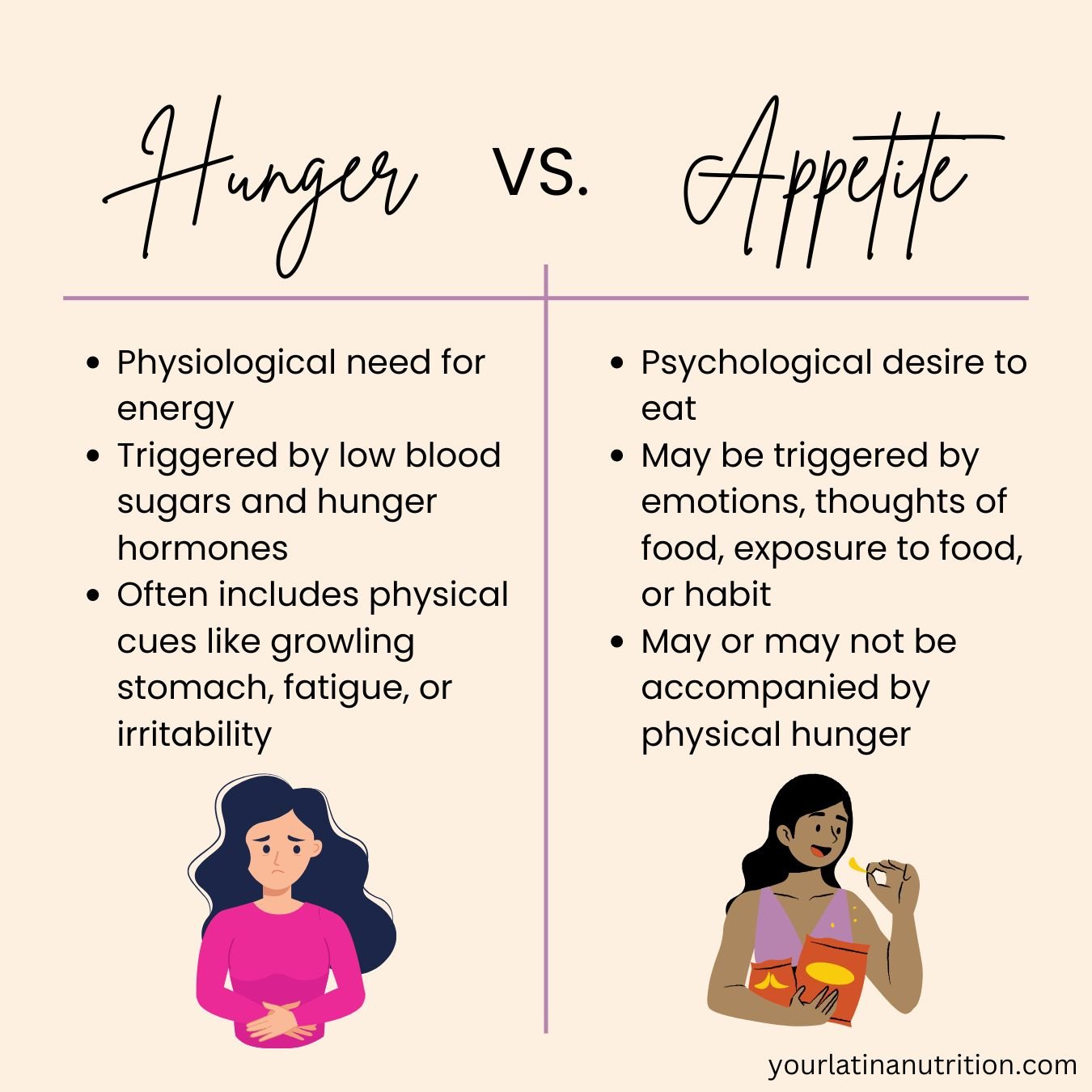
Hunger is a physiological response to your body’s need for energy. Meanwhile, appetite is a psychological desire for food even if you’re not physically hungry.
Learning how to distinguish between hunger and appetite can help you meet your body’s nutrient needs and enjoy what you eat. Keep reading to learn the difference between hunger and appetite, plus tips to distinguish between the two.
What Is Hunger?
Hunger is a physiological response to your body’s need for energy and nutrients. It’s a sign you’re running on low and need more fuel. Some common signs of hunger include:
Low energy
Headache
Irritability
Difficulty concentrating
Stomach growling
Feeling of emptiness in the stomach
When your stomach is empty, it prompts the secretion of ghrelin—also known as the “hunger hormone”—which stimulates your drive to eat, per StatPearls.
If you grew up in a Latine household, it’s possible that messages like ‘clean your plate’ or ‘hay comida en la casa’ led to a disconnection from your hunger cues. Your hunger or fullness may have been dismissed, warping those cues over time.
What Is Appetite?
Unlike hunger, appetite isn’t necessarily driven by a physiological need for food. Instead, it’s a psychological desire to eat. When you have an appetite for food, you may say things like “I’m in the mood for…” or “I have a craving for…”.
Appetite is also relevant when you are hungry. It’s what helps you decide what will leave you not just full, but satisfied. Remember, nutritious food doesn’t have to taste bad! There are plenty of tasty foods, including your cultural foods, that also provide nutrition.
Appetite can be triggered by a few different things. Common triggers for appetite include:
Seeing or smelling food (e.g. abuela’s tostones or carne guisada)
Stress or boredom
Social events with food
Habits (e.g. eating in front of the TV at night)
Emotional associations (e.g. eating ice cream when you’re sad)
Taste preferences
Honoring your appetite is an important part of having a positive relationship with food! It helps you experience satisfaction from your meals and snacks.
Plus, it’s normal to eat when you’re not hungry from time to time. For example, many people like having a little something sweet after a savory dinner or sharing dessert with friends even if they’re not hungry. This absolutely happens in an overall healthy relationship with food.
Why Is It Important to Know the Difference Between Hunger and Appetite?
Many people mistake appetite for hunger and vice versa, and this impacts their relationships with food.
For example, many of my clients believe they’re “emotional eaters” when they’re actually just hungry from not eating enough throughout the day. They may think they’re driven purely by appetite when it’s actually hunger.
Recognizing the difference between hunger and appetite also helps improve your connection to your body so you can learn to honor its needs better.
If you’re dismissive of appetite, it might be worth making room for some pleasure and flexibility in your eating.
If you’re purely driven by appetite, you may benefit from learning more about gentle nutrition to promote your health and feel more satiated after meals.
Tips to Distinguish Between Hunger and Appetite
Tune into Physical Sensations
Connecting to your body’s physical hunger cues can help you distinguish between hunger and appetite.
If you feel a drive to eat, pause and notice if you have any hunger cues—irritability, empty sensation in your stomach, headache, low energy, stomach growling, or difficulty concentrating.
However, note that for some people, hunger cues are dull and unreliable. This may happen from chronic dieting, an eating disorder, stress, or hormonal changes.
In that case, you may need support from a registered dietitian to establish an appropriate eating pattern to meet your nutrition needs.
Consider When and What You Ate Last
Particularly if your hunger cues are unreliable or you’re still working on connecting to them, it’s worth checking in on the last time you ate.
Most people need to eat something at least every 3 to 5 hours, so if it’s been that long since you ate, you may be experiencing hunger.
That said, you may get hungry much sooner if you ate something small or unbalanced like a piece of fruit, bag of chips, or a single taco.
If you ate a well-rounded meal or snack in the last couple hours and still feel somewhat full, the drive to eat may be more appetite than hunger.
Use the Hunger Fullness Scale
The hunger-fullness scale is a useful tool to tap into the nuances of hunger and fullness.
We have a whole article on the hunger-fullness scale, but to put it simply, it’s a scale from 1 to 10 ranging from extreme hunger to extreme fullness. It demonstrates the spectrum of hunger and fullness so you can connect more intimately with your levels of hunger or fullness.
Familiarizing yourself with the hunger-fullness scale can help you tune into your body to notice if you’re hungry and how hungry you are. If you notice you’re not hungry but you have a drive to eat, it may be driven by appetite rather than physical hunger.
Appreciate the Value of Food Beyond Fuel
Although you may think that you should only eat when you’re hungry, this isn’t true! A healthy relationship with food also includes eating simply because you have an appetite for something from time to time, even if you aren’t hungry.
When you are hungry and you’re deciding what to eat, it’s worth considering what you have an appetite for. This could mean eating something that sounds satisfying and honors your taste preferences.
Food has value beyond just fuel. Yes, we need food for energy and nutrients so our bodies can function well. However, food also offers connection, comfort, culture, and pleasure. These benefits are also worth appreciating!
Final Thoughts
Hunger and appetite are natural, but they’re different drives to eat. Hunger is a physical necessity for food, whereas appetite is more of a craving or taste for food.
Honoring both hunger and appetite are important for an overall healthy relationship with food. One ensures you meet your physical energy needs, while the other ensures you find satisfaction from what you’re eating.
Especially in our Latine culture, food is more than just fuel. It’s familia, sabor, connection, and culture. We can hold space for these benefits while also being mindful of hunger and fullness cues.
Want help tuning into your hunger and appetite? Our team of Latina dietitians would love to work with you! We’re in network with most major insurance providers and are licensed to provide virtual nutrition counseling in 16 states and counting. Learn more here.
For education on how to ADD nutrition to your favorite Latine cultural dishes, make peace with food, and focus on your health without dieting, join our nutrition library for just $27/month.
If you liked this post, you may also like:
Why Do I Feel Guilty After Eating?