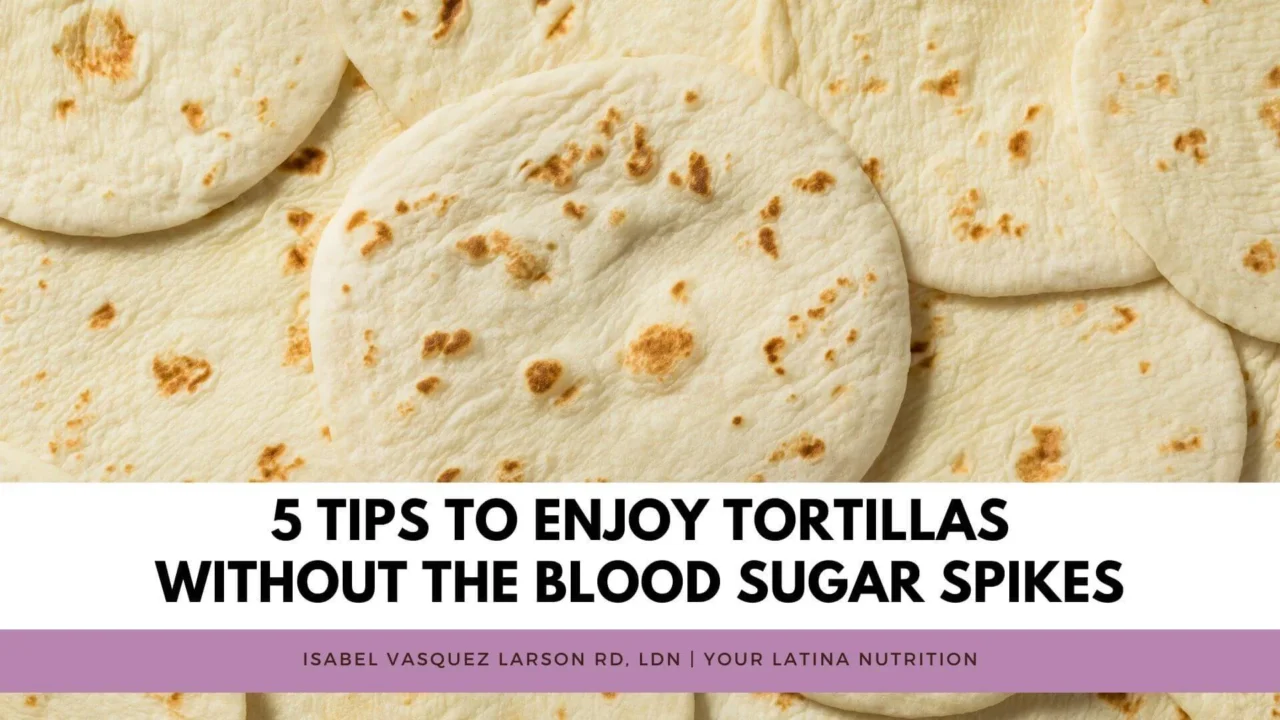
If you’re like many of our clients, you love tortillas. My clients tell me all the time that tortillas are a staple in their households yet some of them have been told to eliminate tortillas by their doctors.
Unfortunately, this largely stems from a lack of education on the nutritional value of our Latine cultural foods.
The truth is, tortillas can absolutely be a part of a blood-sugar-friendly eating pattern. Instead of eliminating tortillas, we encourage our clients to focus on adding nutrition to prevent blood sugar spikes.
Whether you’re making enchiladas, tacos, burritos, or quesadillas, the following tips can help you balance your blood sugars while still enjoying tortillas.
How Do Tortillas Affect Blood Sugars?
Before we get into the tips, let’s talk about how tortillas affect blood sugars.
Tortillas are a source of carbohydrates, so they will raise your blood sugars. That’s normal and natural.
What we want to avoid is a rapid, excessive spike in blood sugars followed by a sharp drop.
Instead, we want a gradual rise and gradual decline over the course of a few hours—like a smooth bell curve.
To achieve this, you don’t have to eliminate tortillas, but it’s important to eat them with lean protein, healthy fat, and fiber.
Tips for Balancing Blood Sugars With Tortillas
1. Lean on corn tortillas for whole grains
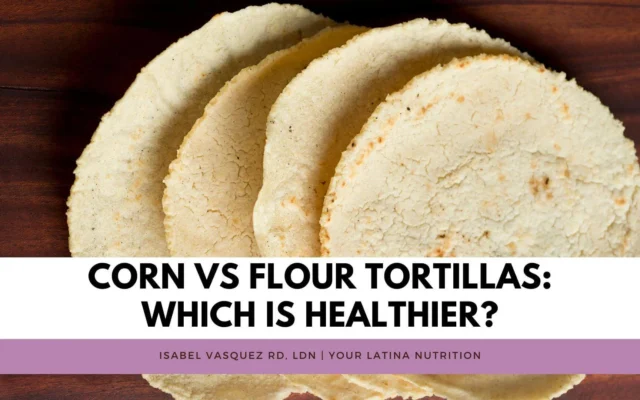
The USDA recommended that at least 50% of your grains be whole grains, and corn tortillas fit the bill! Corn is a whole grain, so whether you’re making tacos, tostadas, or fajitas, corn tortillas are an easy way to get in whole grains.
Whole grains are generally better for blood sugars since they have more protein and fiber than refined grains.
That’s not to say you need to avoid flour tortillas—these can also be a part of a blood-sugar-friendly diet. Just try pairing them with lean proteins and fiber to help slow digestion.
2. Eat them with chicken, fish, or beans for lean protein
You probably don’t eat tortillas by themselves—at least not most of the time (nothing wrong with a plain tortilla here and there!). So as you’re deciding how to prep them, plan to include a lean protein like chicken, fish, and/or beans.
Protein doesn’t spike blood sugars, and it’s digested slower than carbs, per the American Diabetes Association. So it helps slow the uptake of carbs from the tortillas to prevent blood sugar spikes.
We suggest lean proteins because they’re low in fat, particularly saturated fat, so they’re generally better for heart health, per the American Heart Association.
Higher-fat proteins like carne asada are okay to enjoy as well, but if you’re trying to prevent or manage high cholesterol, prioritize lean proteins when you can.
3. Add veggies, avocado, and beans for fiber
Fiber is another key nutrient for managing blood sugars. It’s actually a type of carbohydrate, but your body doesn’t absorb it so it doesn’t raise blood sugars, per the CDC. What’s more, it helps slow digestion to prevent the other carbs in your meal from being absorbed super fast.
Chances are, you already love eating your tortillas with sources of fiber like beans, avocado, peppers, onions, tomatoes, and nopales.
That’s right—these are all excellent sources of fiber we already enjoy in our cultural foods! You may just want to be intentional about adding them more often for flavor and fiber.
The tortillas themselves also provide some fiber. For example, a small corn tortilla has about 1.5 grams of fiber, or 5% of the daily value (DV), per the USDA. So if you eat 2–3 tortillas in a meal, they’ll provide 10–15% of your daily fiber needs.
Adding other sources of fiber to your tortillas can help you obtain ⅓ or more of your daily fiber needs in one meal.
4. Top with salsas for antioxidants
I bet you already love adding salsa to your tortillas for flavor, but it’s also a great addition for health.
The tomatoes, chiles, onions, and whatever other veggies or herbs you add to your salsa contain antioxidants that can help reduce inflammation linked with diabetes, per a 2023 study in Molecules.
Some studies have even found that a specific antioxidant abundant in tomatoes—lycopene—may help lower fasting blood glucose levels.
5. Go for a walk after eating
Finally, if you want help preventing blood sugar spikes, go for a short walk after you enjoy your tortillas. When you’re active, your muscles pull sugar in for energy, improving insulin sensitivity, per the American Diabetes Association.
You don’t have to commit to a long walk, either. Walking for just 10 minutes after a meal has been shown to significantly reduce peak glucose levels 2 hours after eating, per a 2025 study in Scientific Reports.
Final Thoughts
You don’t have to cut out your favorite cultural foods, like tortillas, to promote your health. They can all fit in a blood-sugar-friendly eating pattern.
To enjoy tortillas without blood sugar spikes, pair them with lean protein and fiber, and opt for corn tortillas when you can. It can also help to go for a short walk after eating to improve insulin sensitivity and lower your peak glucose levels.
If you want individualized guidance managing your blood sugars with your cultural foods, consider working with someone on our team of Latina dietitians!
For more education on how to manage your health with your favorite Latine cultural dishes, join our nutrition library for just $27/month.