Plant-based eating has soared in popularity in recent years, including in Latin America. According to a recent report, from 2023 to 2025 there’s been a 20% rise in vegan, vegetarian, and vegan-friendly restaurants in Latin America.
Following a plant-based diet doesn’t necessarily mean you avoid animal products entirely. The term ‘plant-based’ often means you prioritize plant foods but you occasionally eat meat or other animal products.
There are a lot of valid reasons you may choose to go plant-based—health, environmental concerns, animal welfare. However, when you think of your favorite cultural foods—or Latin American food in general—you may think of meat-centric dishes like carne asada or pernil.
The truth is that plant-based eating isn’t a brand-new trend in our culture—it’s deeply rooted in our culinary history. From beans and corn to squash, batidos, sofrito, and guisados, Latin American cuisine has always included nutritious, plant-forward ingredients.
Keep reading to learn the benefits and drawbacks of adopting a plant-based diet as a Latine, plus a bunch of plant-based meals you can enjoy without sacrificing the flavors you grew up with.
Benefits of a Plant-Based Diet for the Latine Community
Linked with Many Health Benefits
Research consistently shows that vegetarian and vegan diets are linked with lower rates of type 2 diabetes, high blood pressure, kidney disease, and high cholesterol—concerns for many of our Latine clients.
Plus, a 2024 study in the American Journal of Clinical Nutrition found that people who follow plant-based diets tend to have healthier gut microbiomes.
This makes sense since nutrient-dense plant foods like beans, lentils, whole grains, nuts, seeds, and vegetables are full of fiber and antioxidants.
That doesn’t mean you have to go full-on vegan to see health benefits. A 2019 research review in the journal Trends in Cardiovascular Medicine found that even eating less animal products and more plant foods can make a difference when it comes to heart health.
This aligns with how we approach nutrition with clients. We always focus on adding nutrition rather than eliminating foods because let’s be real—focusing on adding more nutrient-dense plant foods you enjoy is more empowering (and in the end, more health-promoting) than focusing on eliminating animal products you love.
Cultural and Culinary Fit
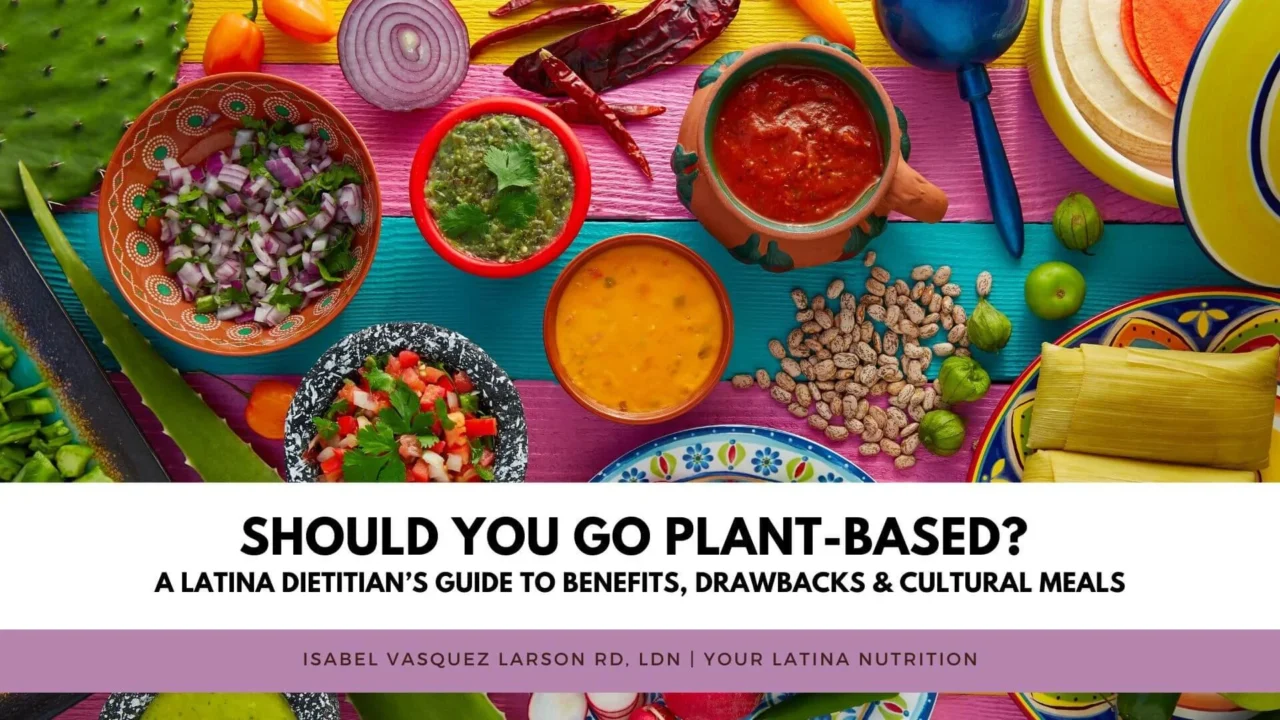
Contrary to what many people assume, Latine cuisine isn’t just meat and animal fats. It’s also full of plant foods like beans, corn, squash, peppers, onions, tomatoes, garlic, lentils, rice, and fruit.
You can absolutely adopt a plant-based diet and keep enjoying your cultural cuisine. So many of our traditional foods are naturally plant-forward. Some more examples include:
-
Sofrito
-
Calabacitas
-
Habichuelas guisadas
-
Arroz con frijoles
The truth is our ancestors relied heavily on plants long before modern plant-based diets became trendy.
It wasn’t until European colonization in the late 15th century that animals like cows and pigs were introduced to Latin America. Before that, our indigenous ancestors ate predominantly vegetarian diets, per the 2025 book Food Studies.
Leaning into this heritage can be both nourishing and empowering.
Addresses Some Environmental and Ethical Concerns
Some people choose to eat a plant-based diet to lower their environmental impact and prioritize animal welfare.
Eating more plants generally results in a lower environmental impact, particularly local plant foods that are minimally processed. Purchasing locally-sourced foods and seasonal produce also helps. This seasonal produce guide from SNAP-Ed is a great resource.
If eating a lot of animal products concerns you as far as animal welfare goes, a plant-based approach may align with your ethical values without requiring an all-or-nothing lifestyle shift.
Potential Challenges of a Plant-Based Diet for the Latine Community
Nutrient deficiencies
A well-balanced plant-based diet can typically provide the nutrients you need, but the more restrictive you are, the more likely you are to develop a nutrient deficiency.
Nutrients you may need to pay special attention to include:
-
Protein: Meat is a major source of protein for Americans, but thankfully, Latine staples make it possible to meet your protein needs via plants. Beans, lentils, quinoa, nuts, and seeds all provide protein.
-
Iron & B12: You can get plant-based iron from lentils, spinach, beans, and pepitas, but vitamin B12 is generally found only in animal foods or fortified products. If you’re a strict plant-based eater, you may need a supplement.
-
Omega-3s: Fatty fish is rich in omega-3s that promote heart and brain health, but you can also get omega-3s from chia, flaxseed, and walnuts.
-
Vitamin D & Calcium: The best dietary sources of vitamin D are certain fish and dairy products, per the USDA. Dairy is also an excellent source of calcium. You can get vitamin D and calcium from some plant foods like fortified dairy alternatives and fortified orange juice, but the chances of becoming deficient in these nutrients is much higher for plant-based eaters, especially vegans. In turn, vegans are shown to have a higher risk of bone fractures, per a 2022 study in Proceedings of the Nutrition Society.
A registered dietitian can help adjust your diet and supplement plan to ensure you’re meeting your nutrient needs, especially as you make major dietary changes.
Whether you’re already following a plant-based diet or you’re considering starting one, our team of Latina dietitians is here to support you. We offer virtual 1:1 nutrition counseling in 16 states and counting. Learn more and verify your insurance benefits here.
Accessibility and Cost
Specialty plant-based meats and cheeses can be pricey, but they’re not required. So don’t let that deter you from eating more plant foods.
Traditional Latine foods like rice, beans, plantains, potatoes, and corn are some of the most affordable ingredients you can buy. Plus, whole plant foods typically have a better nutrition profile anyway.
You (or your family) may have historically viewed these foods as symbols of low socioeconomic status, but they’re full of nutrition and great for keeping to a budget.
Social and Cultural Barriers
If you don’t eat meat, it may feel awkward navigating gatherings where meat is front and center. You might hear things like “Ay, mija, just eat what everyone else is eating!”
After all, food is central to Latine culture. It’s often used to convey love, so turning down your abuela’s pollo guisado may come across as rejecting her love.
Here are some ways you can navigate these situations:
-
Adopt a flexible plant-based diet where you allow yourself to eat animal products occasionally.
-
Offer to bring a plant-based dish everyone can enjoy (keep reading for ideas).
-
Praise your family members for the plant-based parts of the meal you’re comfortable eating as a means of returning the love.
-
Focus on shared traditions and flavors.
Culturally-Rooted Plant-Based Meal Ideas
If you’re unsure what to cook, here are some tasty, plant-based Latin American meal ideas:
Breakfast
-
Tostadas with refried beans and avocado topped with lime and cilantro
-
Avena with cinnamon, mango, and toasted coconut
-
Bean and egg (or tofu) scramble with peppers, onions, and salsa, served with corn tortillas
Lunch
-
Rice and bean bowl with avocado, peppers, onions, and plátanos
-
Black bean and cheese (or plant-based cheese) nachos with pico de gallo and avocado
-
Sopa de lentejas with warm tortillas
Dinner
-
Berenjena guisada with moro and cabbage salad
-
Calabacitas with black beans
-
Black bean tlacoyos topped with with salsa, avocado, lettuce, and/or nopales
Snacks & Sides
-
Plantain or tortilla chips with guacamole
-
Mango and pineapple with chile y limón
-
Ensalada de nopales
Final Thoughts
A Latine plant-based diet can be delicious, nourishing, and deeply connected to your cultural heritage.
Remember, you don’t have to approach plant-based eating from an all-or-nothing lens. You can focus on adding more plant foods like beans, salsas, lentils, fruits, berenjena, batidos, and nopales in your diet rather than cutting out animal products entirely.
You may set a goal to eat one meatless dinner per week or add a veggie to every lunch this week. Start small and before you know it you may find that you’re eating way more plant foods!
For education on how to ADD nutrition to your favorite Latine cultural dishes, make peace with food, and focus on your health without dieting, join our nutrition library for just $27/month.