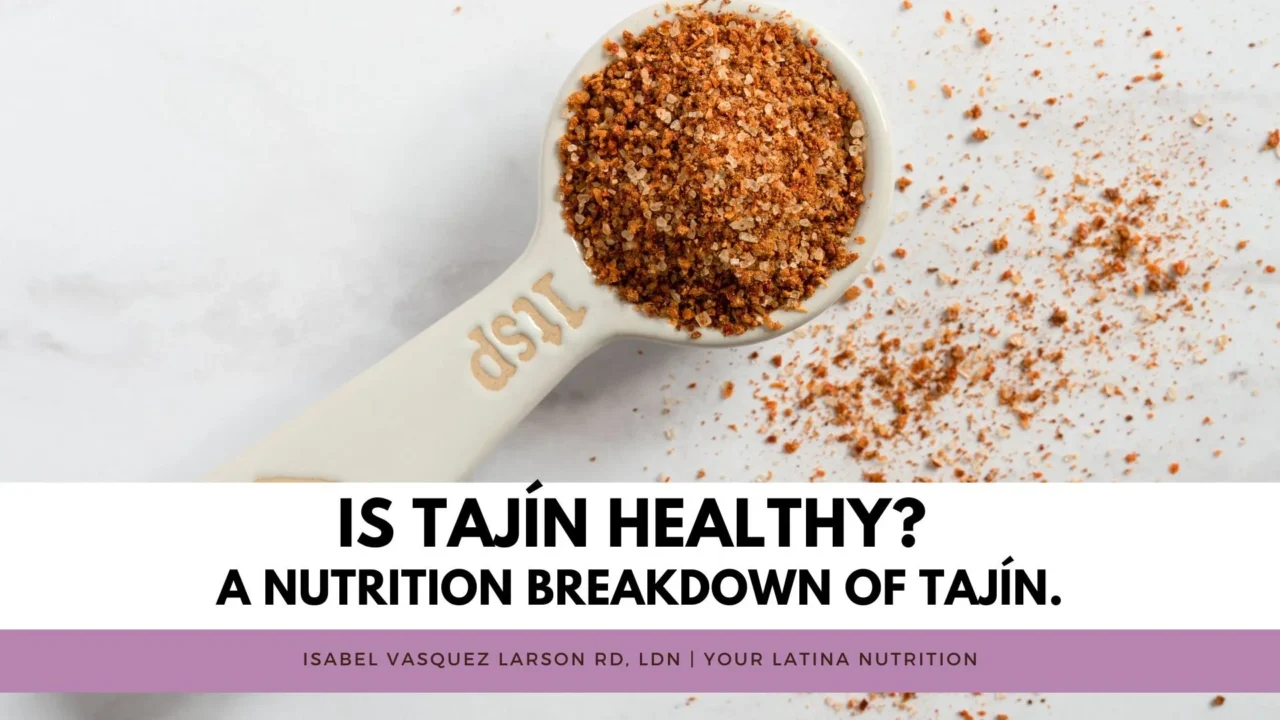
Tajín is a quintessential Mexican seasoning blend. It’s a flavorful combo of chile peppers, lime and sea salt—yum! The red, white, and green label is probably ingrained in your memory if you grew up in a Mexican household.
There’s no doubt tajín is delicious, but does it have any nutrition to offer? Or worse, could it be harmful to your health?
Here at Your Latina Nutrition, we’re all for enjoying and celebrating our Latine cultural foods! In this article, learn the nutrition benefits of tajín from a Latina dietitian, plus some considerations for incorporating it in a way that promotes your health.
Tajín Nutrition Facts
A ¼-teaspoon serving of tajín has the following nutrition profile:
-
Protein: 0 grams (g)
-
Fat: 0 g
-
Carbohydrates: 0 g
-
Sodium: 190 milligrams (mg), or 8% of the DV
-
Vitamin C: 5 mg, or 9% of the DV
As you can see, it’s free from protein, fat, and carbs, and each serving has some vitamin C and sodium.
Health Benefits of Tajín
May Help Increase Your Fruit and Veggie Intake
One of the most popular ways to use tajín is to sprinkle it on fruits and veggies. Some go-to’s are mango, watermelon, pineapple, oranges, cucumbers, and jicama.
You’ll find a mix of these fruits, plus tajín, chamoy, and lime in Mexican fruit cups. This sweet, sour, and acidic flavoring is what makes them distinct from any other fruit cups!
This is a huge benefit of tajín! It instantly makes fruits and veggies more exciting and flavorful without any extra effort.
As of 2019, only about 10–12% of US adults ate the recommended servings of fruit and vegetables, per the CDC, so we have a lot of room for improvement. Tajín can help close that fruit and veggie gap by making them more tasty!
Source of Vitamin C
Thanks to the lime in tajín, it’s also a source of vitamin C.
Vitamin C helps your body make collagen, supports immune health, and acts as an antioxidant, per the NIH.
It also helps your body absorb iron from plant foods, per the USDA. So sprinkle it on your lentils, beans, and potatoes, to enhance iron absorption from these foods.
Free from Added Sugars and Saturated Fat
Unlike other flavorings you might add to make your fruits and veggies taste better, tajín doesn’t have any added sugars or saturated fat. In fact, it’s free from fat and sugar entirely.
That’s good news for your heart and metabolic health. Eating too much saturated fat and added sugars is linked with high cholesterol, cardiovascular disease, and diabetes, per a 2024 study in The Journal of Nutrition and the American Heart Association.
Promotes Cultural Connection
Culture is at the heart of our nutrition counseling work with clients since it’s important to so many of them! And we get it—we’re Latinas, too, and we know how harmful it can be to stop eating your cultural foods out of fear that they’re bad for you.
We firmly believe that the cultural connection we get from food is something to celebrate! It’s a beautiful thing to have food that reminds you of your home country or special times with family.
So if tajín helps you connect with your culture and bring that cultural sabór to your daily meals and snacks, that deserves to be celebrated!
Potential Health Drawbacks of Tajín
The only real drawback of tajín is its sodium content. Each ¼-teaspoon serving of tajín has 190 milligrams of sodium, or 8% of the daily value (DV). That’s not too high, but if you use it a lot, it can add up. This is worth noting if you’re trying to limit your sodium intake.
A quick note on silicon dioxide: This food additive is used in tajín to prevent caking. There’s been some fear-mongering around it, but the FDA has confirmed that it’s safe to have in moderation, like the amount you’d reasonably have from tajín.
Incorporating Tajín to Promote Your Health
Tajín is an easy way to make fruits and veggies more exciting and culturally authentic!
If you’re new to tajín or looking for more nutritious ways to add it to your diet, here are some ideas:
-
Make a Mexican fruit cup
-
Top cucumbers and carrots with tajín
-
Sprinkle it on popcorn
-
Add it to corn on the cob or elote
-
Sprinkle it on avocado toast
-
Line mocktail rims with tajín
-
Sprinkle it on eggs
Final Thoughts
If you’re a tajín-lover, you’ll be relieved to know that it can absolutely be a part of a healthy diet. This Mexican seasoning staple makes fruits and veggies even tastier, which may help you up your fruit and veggie intake. It also goes great on popcorn, elote, avocado, and eggs.
So embrace tajín as a way to add sabór to nutritious foods that promote your health!
For education on how to ADD nutrition to your favorite Latine cultural dishes, make peace with food, and focus on your health without dieting, join our nutrition library for just $27/month.