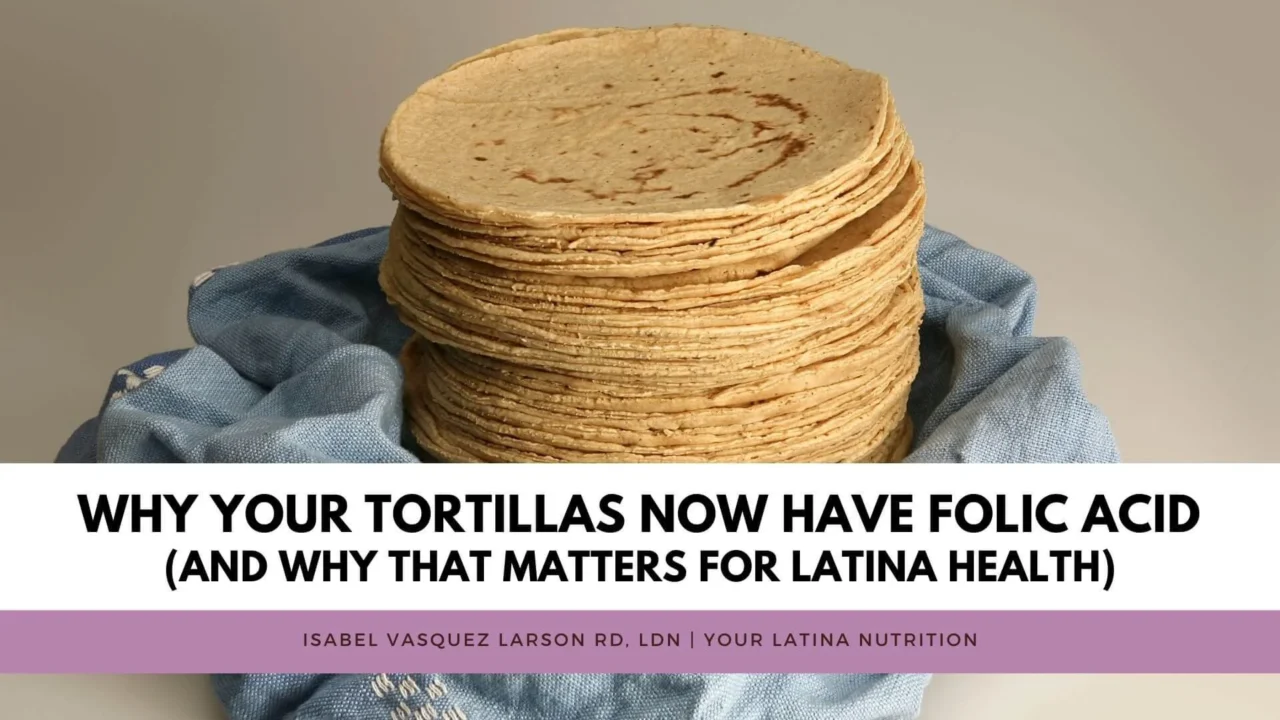
Tacos, tamales, enchiladas, quesadillas—these corn masa-based meals are staples for many Mexican Americans. But did you know that in California, corn tortillas now contain folic acid?
Before you panic about this mystery additive in your beloved tortillas, let us reassure you. Folic acid is simply a B vitamin—one that Latinas tend to fall short on. And particularly if you’re looking to get pregnant, folic acid should be prioritized for a healthy baby.
That said, this new law has stirred up controversy in the Latine community. Is adding folic acid to tortillas colonization? Is it a worthwhile public health decision? Is it changing the flavor of our beloved tortillas?
We’re diving into the details of what this new law states, how it impacts health, and what it means for your cultural cuisine.
What Is the New California Law?
On January 1, 2026, California enacted a new law requiring folic acid to be added to most corn masa products, including tortillas.
This isn’t the case for small-scale, handmade tortillas. It’s for tortillas produced by bigger operations, like the corn masa products you’d buy from a supermarket.
This made a big splash in the Latino community because California is the first state to require this, and other states are considering following suit.
Adding folic acid to grains isn’t anything new. The FDA has required folic acid to be added to enriched bread, flour, cornmeal, pasta, rice, and other grain products since 1998, per the NIH. However, adding it to corn masa wasn’t required until California’s new law.
What Is Folic Acid and Why Is It Important for Latinas?
Folic acid is a B vitamin that supports cell growth and DNA production. It’s critical in early pregnancy because it prevents neural tube defects—like spina bifida—in babies, per the NIH.
Unfortunately, Latinas are more likely to have a child born with a neural tube defect, per the CDC and a 2017 study in the Journal of Women’s Health.
Experts believe this might be due to less awareness of folic acid’s benefits, gene variations that reduce folic acid levels, and lower intake of folic acid from food and supplements.
Surely, the social determinants of health play a role in this disparity. Language barriers, a lack of health insurance, and poverty prevent some young Latinas from receiving quality healthcare and meeting this nutrient need during pregnancy.
Why Target Tortillas?
This new law is a culturally tailored public health strategy to boost Latinas’ folic acid intake and prevent serious birth defects.
The addition of folic acid to other grain products in 1998 meaningfully lowered birth defects, and this change happened pretty immediately.
In the two years following the implementation of this law, the prevalence of spina bifida—a spinal birth defect—declined by 31%, per the CDC. The prevalence of anencephaly—a fatal birth defect of the brain and skull—declined by 16%.
But for many Latinas, corn masa—not bread, flour, or pasta—is the go-to grain. So enriching other grain products didn’t make enough of a dent in Latinas’ folic acid needs.
Even after 2016—when it became optional for folic acid to be added to corn masa products—Latinas’ folic acid levels haven’t improved, according to a 2024 study in Birth Defects Research.
Common Concerns About The Law
Changing Our Traditional Foods
There’s an understandable fear about this changing the make up of our cultural foods.
But keep in mind that small batch tortilla makers or restaurants making their tortillas from scratch are exempt from the law. The law is for bigger manufacturers like the tortillas or corn masa you’d buy at a grocery store.
While some say that it’s the ultraprocessing of corn that strips tortillas of folic acid, that’s not really true. Even traditional tortillas made with heirloom corn aren’t a good source of folic acid.
Safety of Folic Acid
If you’re worried about folic acid being another chemical they’re adding to your food, rest assured that folic acid is totally safe. And not just safe, but critical for health, particularly if you may become pregnant.
Overlooking Systemic Factors
Critics say that this approach to preventing birth defects overlooks systemic factors affecting Latinas’ folic acid intake.
We can absolutely get behind this. After all, our community is disproportionately affected by social determinants of health like poverty, food insecurity, and lack of health insurance, which hinder us from getting in a range of nutrient-dense foods for a healthy pregnancy.
This may feel like a bandaid more than addressing the root of the problem, but it’s a powerful way to prevent tragic birth defects in our community.
Taste Differences
Some tortilla lovers worry that adding folic acid will ruin their flavor. But most people probably won’t notice a taste difference in tortillas with or without folic acid.
However, some folks—like a chef interviewed for this LA Taco piece—say that they notice a distinct bitter taste in tortillas with folic acid.
That said, Mission has already been adding folic acid to their tortillas for years. So if you’re used to their tortillas, you probably won’t be bothered by any taste differences.
Bigger Picture: A Shift Toward Culturally Inclusive Nutrition
This California law addresses gaps left by past policies. While the rates of neural tube defects decreased for other ethnic groups after the 1998 law, our community still faces more of these devastating health issues than others.
Our whole mission here at Your Latina Nutrition is to advocate for the nutritional value of our cultural cuisine and to help our clients promote their health with their cultural foods.
This law is a public health attempt to do just this. It recognizes tortillas as a cultural staple and uses them as a vehicle for Latinas to get in even more nutrition.
Final Thoughts
Although it’s controversial, the California law is a meaningful way to protect our community’s future generations. It’s a means of honoring our culture while improving health.
That said, if you’re someone who notices a different taste from folic acid-enriched tortillas, rest assured that handmade, small batch tortillas aren’t affected by this law.
And if you’re looking for more support promoting your health with your cultural foods, our team of Latina dietitians is here for you! Click here to learn how you can work with us.
For education on how to ADD nutrition to your favorite Latine cultural dishes, make peace with food, and focus on your health without dieting, join our nutrition library for just $27/month.