
Chickpeas vs. Lentils: A Complete Nutrition Guide
Written by Isabel Vasquez Larson RD, LDN
Lentils and chickpeas are both plant proteins full of vitamins, minerals, and fiber. But you may wonder which one is healthier.
The truth is, both of them are full of nutrition so you really can’t go wrong. That said, there are some subtle nutrition differences between lentils and chickpeas that may surprise you.
In this article, we’re breaking down those nutrition differences and similarities. We’re also sharing nutritious, culturally-relevant ways to incorporate these pulses in your diet. Let’s get to it!
Chickpea Nutrition Facts
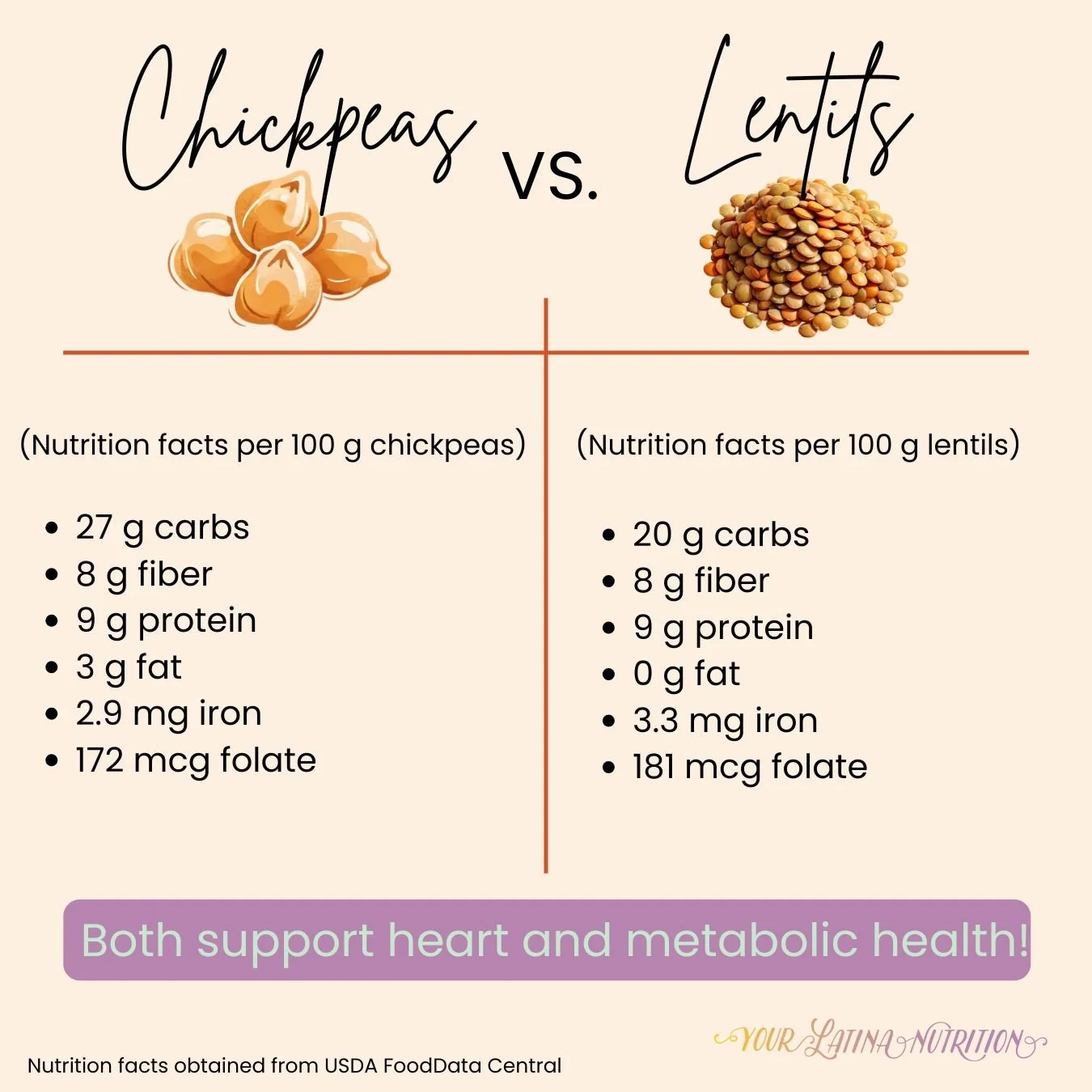
Here is the nutrition profile of 100 grams of cooked chickpeas without salt added, per the USDA:
Protein: 9 grams (g)
Fat: 3 g
Saturated fat: 0 g
Carbohydrates: 27 g
Fiber: 8 g, or 27% of the daily value (DV)
Total sugars: 5 g
Sodium: 7 milligrams (mg)
Iron: 2.9 mg, or 16% of the DV
Magnesium: 48 mg, or 11% of the DV
Folate: 172 micrograms (mcg), or 43% of the DV
Lentil Nutrition Facts
Here is the nutrition profile of the same serving—100 grams—of cooked lentils, per the USDA:
Protein: 9 g
Fat: 0 g
Saturated fat: 0 g
Carbohydrates: 20 g
Fiber: 8 g, or 27% of the DV
Total sugars: 2 g
Sodium: 2 mg
Iron: 3.3 mg, or 18% of the DV
Magnesium: 36 mg, or 9% of the DV
Folate: 181 micrograms (mcg), or 45% of the DV
Differences and Similarities Between Chickpeas and Lentils
They’re Both Full of Fiber
Chickpeas and lentils both have 8 grams of fiber, or 27% of the DV, per 100 grams (about ½ cup). That’s a whole lot of fiber in a relatively small portion!
On average, Americans only eat 58% as much fiber as the 2020–2025 Dietary Guidelines for Americans recommend, per the USDA. This is concerning since fiber does so much for health!
It promotes digestive health, helps regulate blood sugars, lowers cholesterol, and keeps you fuller longer, per the CDC.
Lentils and chickpeas can both help significantly increase your fiber intake for overall health.
They Have Similar Protein Content
Another similarity between lentils and chickpeas is their protein content. They’re both sources of plant protein, with about 9 grams of protein in a 100-gram serving.
Although this isn’t quite as much protein as you’d get from meat, you could reap other health benefits from eating more plant proteins.
A 2023 study in Nutrients found that replacing about 6–8 ounces of protein foods per week with 1.5–2 cups of pulses (like chickpeas and lentils) increases dietary fiber intake and lowers dietary cholesterol intake.
Some other studies—like this 2015 study in Advances in Nutrition—suggest that eating more plant proteins reduces the risk of cardiovascular disease.
This is likely because they provide more fiber and plant nutrients, and less saturated fat than most animal proteins. That’s good news for cholesterol, per the American Heart Association.
Lentils Have Less Fat and Carbs Than Chickpeas
The biggest difference between lentils and chickpeas is their fat and carb content.
Lentils are virtually fat-free, and a 100-gram serving only has 20 grams of total carbs. The same serving of chickpeas has 3 grams of fat and 27 grams of carbs.
The high-fiber, protein, and lower-carb content of lentils makes them especially great for managing blood sugars, per a 2024 study in Current Research in Physiology.
In the grand scheme of things, the fat and carb discrepancy between lentils and chickpeas isn’t a significant difference. Still, if you have a condition that requires you to be extra mindful of your carb or fat intake, it may be helpful to know.
They’re Both Rich in Vitamins and Minerals
Whether you eat lentils or chickpeas, you’ll be getting a big vitamin and mineral boost. They’re both excellent sources of iron, folate, magnesium, and other plant compounds.
The 2023 Nutrients study we mentioned earlier also found that replacing meat or refined grains with pulses increases total iron, magnesium, potassium, and copper intake.
Plus, a 2016 study in Nutrients found that people who eat chickpeas tend to eat more dietary fiber, polyunsaturated fatty acids, vitamin A, vitamin E, vitamin C, folate, magnesium, potassium, and iron than those who don’t.
Which One is Healthier?
There isn’t a clear winner between chickpeas and lentils when it comes to health. They’re both worth incorporating in your diet for more fiber, protein, iron, folate, magnesium, and other plant nutrients.
In fact, eating about a serving per day of pulses like lentils and chickpeas can help lower LDL cholesterol levels, per a 2014 study in the Canadian Medical Association Journal.
Lentils may have a slightly better nutrition profile for managing blood sugars because of their lower carb content, but chickpeas also have blood sugar benefits, per a 2023 study in Nutrients.
So to answer the question of whether lentils or chickpeas are healthier, we can’t pick just one. Lentils and chickpeas are both nutrient-dense foods that can promote overall health.
Nutritious Meals and Snacks With Chickpeas and Lentils
Now that you know how nutritious lentils and chickpeas are, you may be eager to start adding them to your meals and snacks.
Good news: you can absolutely do so while embracing your Latin American roots!
Here are some culturally authentic ways to enjoy chickpeas and lentils:
Sopa de Lentejas. Pro tip: make a big batch and freeze leftovers for an easy meal later on. Your future self will thank you!
Garbanzos Guisados. Pair these stewed chickpeas with rice and avocado for a well-rounded meal.
Lentejas Guisadas. Just like the garbanzo version, these stewed lentils pair well with rice and avocado.
Guasanas. Enjoy these young, green chickpeas as a snack. They’re popular in some parts of Mexico!
Roasted Chickpeas. Whether you roast them yourself or buy bagged roasted chickpeas—I’m a big fan of Biena’s Habanero ones—, these make for a great snack on their own. You can also add them to meals like salads, grain bowls, and wraps.
Final Thoughts
Instead of asking whether chickpeas or lentils are healthier, we’re probably better off asking how we can add more lentils and chickpeas to our diets! The truth is, both of these pulses are full of fiber, plant protein, and micronutrients that support gut, metabolic, and heart health.
So prep a big pot of sopa de lentejas, whip up some garbanzos guisados, or snack on roasted chickpeas this week to boost your intake of these powerful plant proteins.
For education on how to ADD nutrition to your favorite Latine cultural dishes, make peace with food, and focus on your health without dieting, join our nutrition library for just $27/month.
If you liked this post, you may also like:
Red Beans vs. Kidney Beans: A Complete Nutrition Guide