
Acai vs. Pitaya: A Complete Nutrition Guide
Written by Isabel Vasquez Larson RD, LDN
Pitaya and acai have both become popular in the US thanks to trendy smoothie bowls, but they’re native to Latin America. Pitaya is most common in Ecuador and Mexico, while acai is most common in Brazil.
Unfortunately, our Latin American cultural foods often aren’t recognized for their nutritional value until they’re co-opted by the wellness world (need another example? avocado!). Still, these nutrient-dense foods are ones our communities have been enjoying for centuries!
Especially since they’re both often used in smoothies or smoothie bowls, you may be curious as to whether acai or pitaya is a healthier choice.
In this article, we’re sharing the nutritional differences and similarities between acai and pitaya so you can make an empowered decision for your health!
Acai Nutrition Facts
Here is the nutrition profile of 100 grams of frozen acai puree without added sugar, per the USDA:
Protein: 2 grams (g)
Fat: 5 g
Saturated fat: 1 g, or 5% of the daily value (DV)
Carbohydrates: 5 g
Fiber: 5 g, or 18% of the DV
Total sugars: 0 g
Sodium: 26 milligrams (mg), or 1% of the DV
Vitamin C: 0 mg
Potassium: 105 mg, or 2% of the DV
Pitaya Nutrition Facts
Here is the nutrition profile of the same serving—100 grams—of pitaya, per the USDA:
Protein: 1 g
Fat: 0 g
Saturated fat: 0 g
Carbohydrates: 16 g
Fiber: 2 g, or 6% of the DV
Total sugars: 12 g
Sodium: 1 mg, or 0% of the DV
Vitamin C: 20 mg, or 22% of the DV
Potassium: 206 mg, or 4% of the DV
Differences and Similarities Between Acai and Pitaya
Acai Has Heart-Healthy Fats. Pitaya Doesn’t.
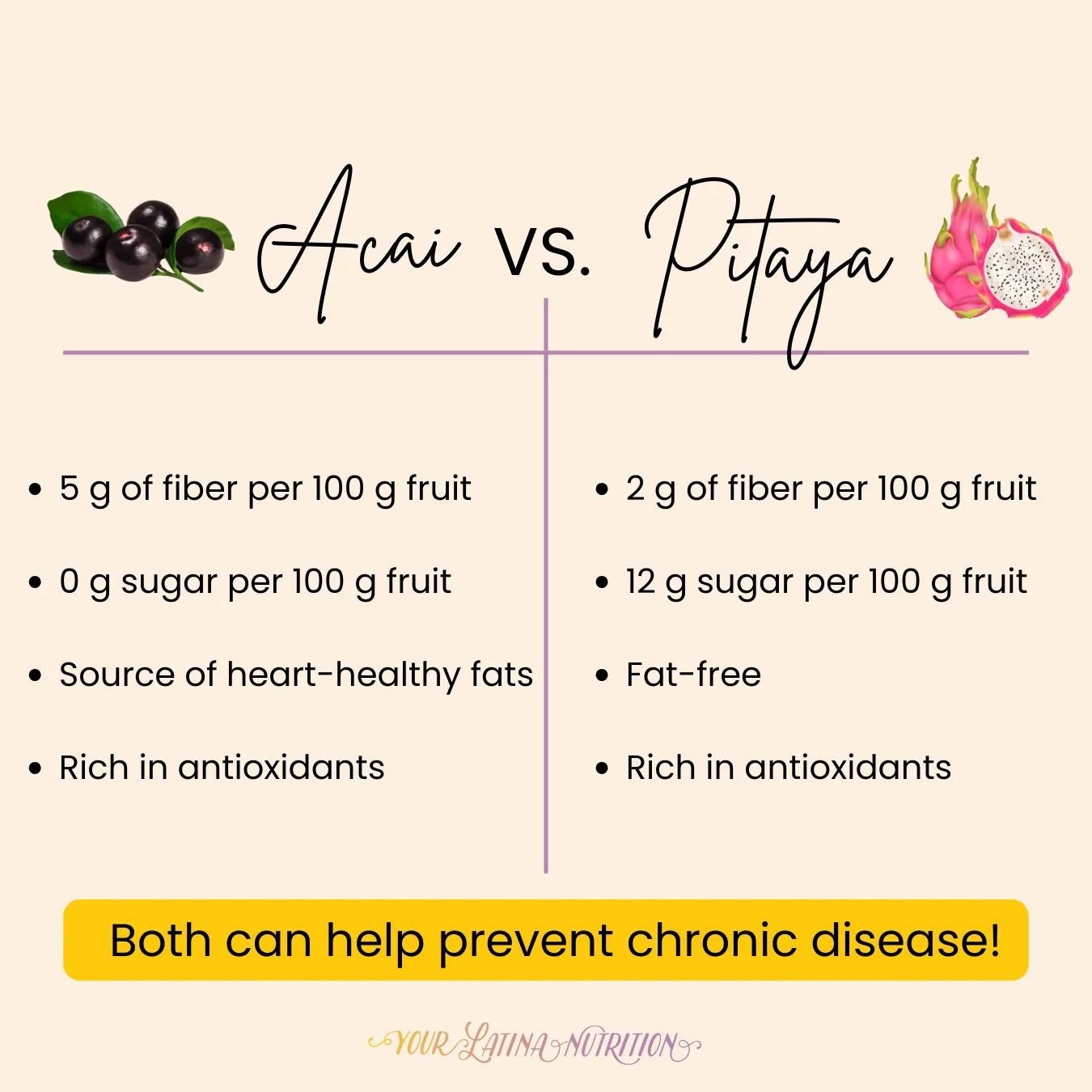
Most fruits (including pitaya) are fat-free, but not acai. Every 100 grams of acai has 5 grams of fat.
Almost all of that fat comes from unsaturated fats, which are good for heart health. These fats can help lower LDL (“bad”) cholesterol levels, per the American Heart Association.
The combination of heart-healthy fats, fiber, and antioxidants in acai are a winning one for heart health. A 2023 study in Nutrients found that eating acai may help lower the risk of developing high cholesterol, high blood pressure, and cardiovascular disease.
Pitaya can also improve heart health, per a 2022 study in the American Journal of Clinical Nutrition, but it has more to do with its antioxidant content (more on that below).
Pitaya Is a Source of Natural Sugars. Acai Isn’t.
You may have noticed from the nutrition facts above that acai is low in carbs and sugars. 100 grams of acai only has 5 grams of carbs and those are practically all from fiber.
Keep in mind that those nutrition facts are for unsweetened acai puree. Many acai bowls have added sugars to make them more palatable, which will change their impact on blood sugars and overall health.
Pitaya, on the other hand, has about 16 grams of carbs, 12 of which come from sugars. These are naturally occurring sugars so they don’t have the same health consequences as added sugars.
In fact, eating at least 2 servings of fruit per day is linked with lower rates of type 2 diabetes, according to a 2021 study in The Journal of Clinical Endocrinology & Metabolism.
Acai Has Less Carbs and More Fiber Than Pitaya.
As we addressed above, acai is lower in total carbs and sugars than pitaya. The other notable thing about its carb breakdown is that acai is higher in fiber. 100 grams of acai has 18% of the DV for fiber. The same serving of pitaya has 6% of the DV for fiber.
Fiber is a type of carb that our bodies don’t fully digest or absorb. It’s great for digestive health, blood sugar regulation, and cholesterol management, per the CDC.
Most Americans don’t eat nearly enough fiber, per the USDA, so fiber-containing foods like acai and pitaya are typically worth incorporating more often in your diet.
They’re Both Antioxidant-Packed Fruits.
If eating more antioxidants and other plant nutrients is your goal, pitaya and acai can both help.
Pitaya is rich in bioactive compounds like vitamins, potassium, betacyanin, p-coumaric acid, vanillic acid, and gallic acid that can help prevent inflammation and cell damage linked with chronic disease, per a 2023 study in Pharmaceutics.
It’s an especially good source of vitamin C—an antioxidant with immune-boosting properties.
Acai is also full of antioxidants like anthocyanins and flavonoids that can help reduce the risk of chronic diseases like diabetes, heart disease, and cancer, per a 2023 study in Nutrients. Its rich purple color exists thanks to these powerful plant compounds.
So, Which is Healthier?
Acai and pitaya are both full of valuable nutrients for overall health, so one isn’t inherently healthier than the other. They both help boost your fruit intake, which most Americans could benefit from, per the USDA.
Here are a few things to consider when deciding between acai and pitaya:
Acai has heart-healthy fats that pitaya doesn’t. These fats may help you feel more full and satisfied.
Unsweetened acai has little to no sugar, so it probably won’t raise your blood sugars. However, acai bowls or smoothies may have added sugars that can spike blood sugars.
Pitaya has natural sugars, but its fiber and plant nutrients still make it beneficial for preventing type 2 diabetes.
Both acai and pitaya contribute fiber and antioxidants to your diet that help promote heart, gut, and metabolic health.
Final Thoughts
When you want a refreshing fruit that’s true to your Central American roots, pitaya and acai are both excellent choices. You’ll get an antioxidant boost, along with gut-healthy fiber.
Keep in mind that acai is a source of heart-healthy fats as well, so it’ll probably keep you fuller longer. If you’re snacking on pitaya, you may want to add a source of protein and fat like nuts or yogurt for steady energy and fullness.
Either way, these are two cultural foods with plenty of health-promoting properties worth enjoying!
For education on how to ADD nutrition to your favorite Latine cultural dishes, make peace with food, and focus on your health without dieting, join our nutrition library for just $27/month.
If you liked this post, you may also like:
South American Fruit: A Complete Nutrition Guide