
Is Mofongo Healthy? A nutrition breakdown of mofongo.
Written by Isabel Vasquez Larson RD, LDN
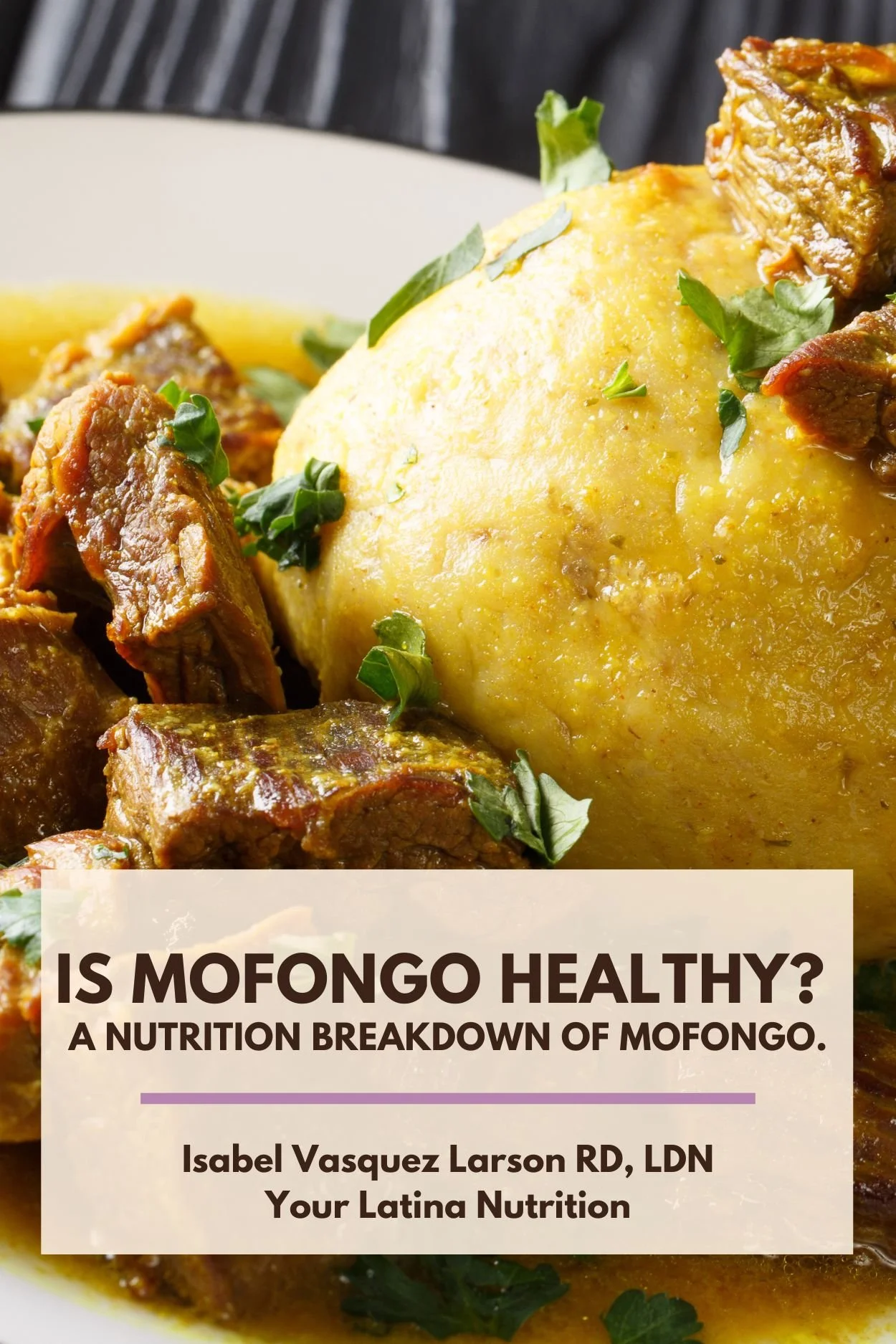
Mofongo is a delicious Puerto Rican dish that combines mashed fried green plantains and chicharrónes.
I’ll admit—I grew up with much more mangú than mofongo. But still, my Puerto Rican pride is strong.
Many of our clients come to us with the belief that they have to avoid their favorite cultural foods like mofongo in an attempt to promote their health. However, it’s important to acknowledge the benefits—nutritionally and otherwise—that mofongo does provide!
That’s what we’re doing in this article. We’ll also share mofongo’s potential health drawbacks and tips for how to incorporate mofongo in a healthy diet. Let’s get to it!
Mofongo Nutrition Facts
According to the USDA, a 1-cup serving of mofongo has the following nutrition profile:
Protein: 26 g
Fat: 46 g
Saturated fat: 11 g, or 55% of the daily value (DV)
Carbs: 54 g
Fiber: 3 g, or 11% of the DV
Sodium: 698 mg, or 30% of the DV
Magnesium: 66 mg, or 16% of the DV
Potassium: 810 mg, or 17% of the DV
Vitamin A: 80 mcg, or 9% of the DV
Vitamin B12: 0.32 mcg, or 13% of the DV
Vitamin C: 22 mg, or 24% of the DV
Vitamin K: 72 mcg, or 60% of the DV
Health Benefits of Mofongo
Provides All Three Macronutrients
In order for a meal to be nutritionally well-rounded, it should have carbs, protein, and fat. Mofongo does!
This helps you to feel full and satisfied after eating it. Plus, it promotes stable blood sugars and steady energy levels, especially compared to a carb-only dish.
Plus, you’ll get a few grams of fiber from each cup of mofongo, which further supports healthy blood sugars and satiety, along with digestive health, per the CDC.
Has a Plethora of Vitamins and Minerals
You may be surprised to learn that mofongo is full of vitamins and minerals!
As you can see from the nutrition facts above, it’s a good source of vitamins A, B12, C, and K, along with the minerals magnesium and potassium.
It also has a decent amount of iron, copper, selenium, niacin, folate, choline, and phosphorus, per the USDA. That sure is a lot of nutrients!
Source of Cultural Connection
While nutrition science is important, it’s also important to recognize that food is more than just nutrients. Food is also love, culture, comfort, and nourishment.
Mofongo offers an opportunity to find satisfaction in what you eat, particularly if it’s a part of your culture. Eating mofongo may bring back fond memories of your family or of el Isla del Encanto.
Preparing and eating mofongo can be a way of keeping your culture alive or passing it down to your kids. This is also a big benefit worth celebrating!
Potential Health Drawbacks of Mofongo
Unfortunately, mofongo is quite high in saturated fat and sodium.
One cup has over half of the daily value of saturated fat. It may be lower or higher depending on the amount of chicharrónes it has since that’s the main source of saturated fat in this dish. Vegetarian or lean protein-based variations of mofongo tend to have less saturated fat.
Mofongo also tends to be a significant source of sodium, with one cup containing about ⅓ of the daily value. This is also primarily because of the chicharrónes, but adding salt in the recipe increases the sodium as well.
Saturated fat and sodium are worth being mindful of if you’re concerned about heart health. Eating too much saturated fat can raise your LDL cholesterol—the “bad” kind of cholesterol—per the American Heart Association.
The American Heart Association also recommends limiting sodium to 2,300 mg per day—a challenge for most Americans—since eating too much sodium can lead to high blood pressure.
Incorporating Mofongo in a Healthy Diet
Don’t let the saturated fat and sodium content of mofongo deter you from enjoying this food! Remember, one meal won’t make or break your health. There’s nothing wrong with enjoying mofongo from time to time.
If mofongo is a regular part of your diet and you want to promote your heart health, here are some tips:
Add lean proteins like shrimp or chicken to reduce the amount of chicharrónes you need
Reduce the salt you add to the recipe if you’re using chicharrónes
Have mofongo as a small side with rice, beans, avocado, and salad—sources of fiber, lean protein, and healthy fat
Final Thoughts
Although you may have dismissed the nutritional value of mofongo in the past, now you know that it certainly has nutrition benefits to offer. It provides all three macronutrients and some fiber, along with a variety of vitamins and minerals.
Plus, mofongo is a means of celebrating Puerto Rican culture, whether you’re from the island or not. That’s a benefit worth celebrating, too!
For education on how to ADD nutrition to your favorite Latine cultural dishes, make peace with food, and focus on your health without dieting, join our nutrition library for just $27/month.
If you liked this post, you may also like:
Should You Go Plant-Based? A Latina Dietitian’s Guide to Benefits, Drawbacks & Cultural Meals
Unpacking the Hispanic Health Paradox: What Our Culture Can Teach Us About Wellness