Key Points
- Plantains provide fiber, vitamin C, potassium, and complex carbs
- Sweet plantains are higher in sugar, so they’re more likely to spike blood sugars
- Pair plantains with protein, non-starchy veggies, and healthy fats for a well-rounded meal
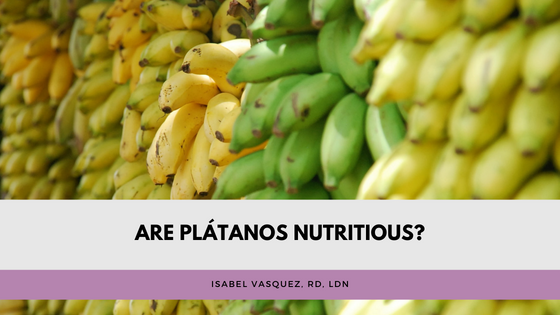
In Central America, the Caribbean, and parts of South America, you can’t go a day without plantains. They’re made into sides and main dishes like tostones, pastelón, maduros, mofongo, mangú, and chifles.
Plantains are a cultural food staple for me and many of my clients, but too many of them worry that they should avoid plantains for their health. You may have heard that they’re too high in carbs or unhealthy because they’re often fried.
But as a Latina dietitian, I’m here to reassure you that they’re more nutrient dense than you may realise, and they absolutely deserve a spot on your plate.
In this article, learn the nutritional facts and health benefits of plátanos so you can feel confident eating this Latine food staple.
Yellow vs. Green Plantains Nutrition Profile
Plantains are primarily a source of carbohydrates, although their nutrition content depends on if they’re green or yellow plantains. Yellow plantains are riper than green plantains, so they’ve had time to form more sugars.
Here are the nutrition facts of ½ green plantain (134 grams), per the USDA:
- Calories: 203
- Carbohydrates: 49 grams (g)
- Sugars: 3 g
- Protein: 1.7 g
- Fat: 0 g
- Fiber: 3 g, or 11% of the daily value (DV)
- Vitamin C: 27 milligrams (mg), or 30% of the DV
- Folate: 38 micrograms (mcg), or 9% of the DV
- Potassium: 575 mg, or 12% of the DV
Meanwhile, here are the nutrition facts of ½ yellow plantain (135 g), per the USDA:
- Calories: 165
- Carbohydrates: 43 g
- Sugars: 24 g
- Protein: 1.8 g
- Fat: 0.5 g
- Fiber: 2.3 g, or 8% of the DV
- Vitamin C: 25 mg, or 28% of the DV
- Folate: 30 mcg, or 8% of the DV
- Potassium: 655 mg, or 14% of the DV
Green plantains are a bit higher in total carbs, fiber, vitamin C, and folate. Whereas yellow plantains are much higher in sugars and a little higher in potassium.
Plantain Health Benefits
Source of Complex Carbohydrates
Carbs are the main macronutrient found in plantains. Specifically, they’re a source of complex carbs, which raise blood sugars slower than simple carbs, per the CDC.
Yellow plantains are much more likely to raise blood sugars since they’re higher in sugars than green plantains, so if blood sugar regulation is your priority, green plantains are a better option.
Provide Gut-Healthy Fiber
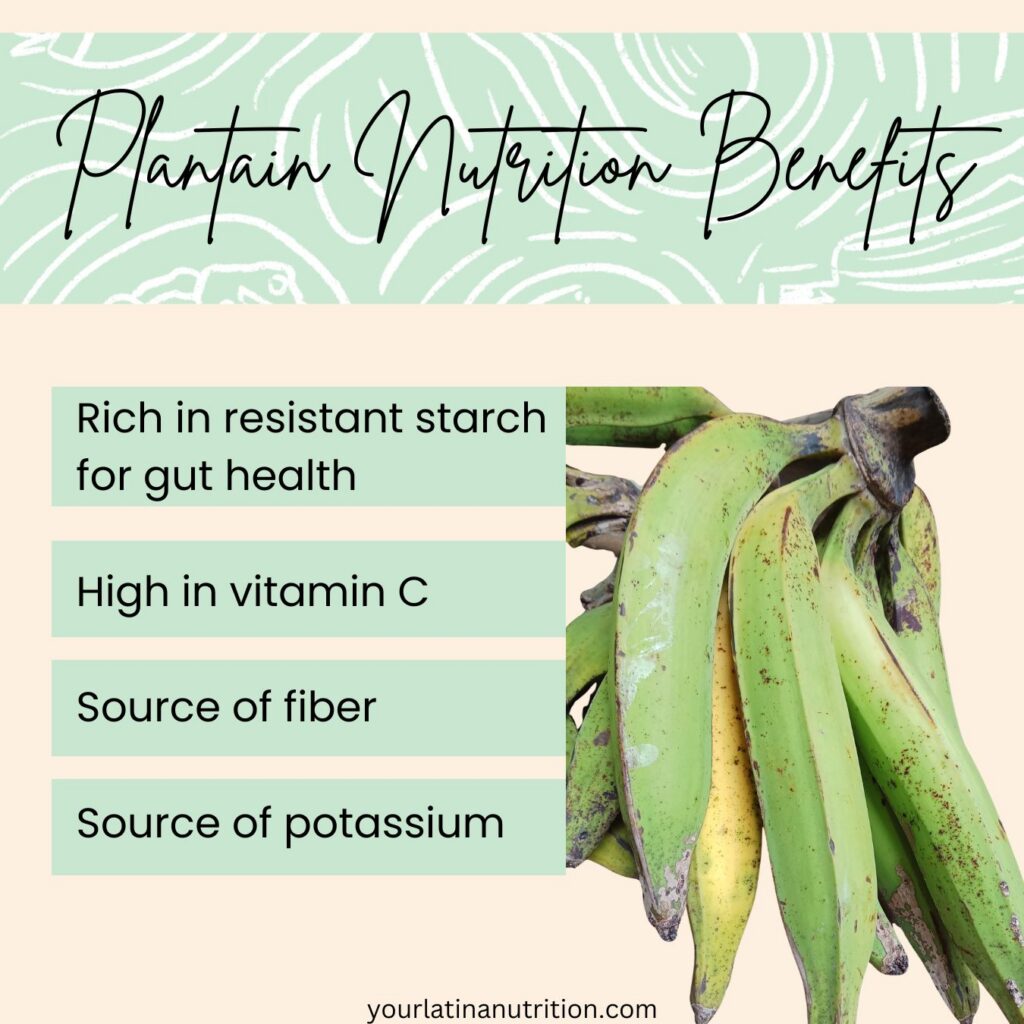
Plantains are a good source of fiber, containing between 4.5 to 6 grams per plátano—16–21% of the DV.
Fiber is important for cholesterol and blood sugar management, as well as digestive health, and most Americans don’t consume enough of it. So, plantains are a great way to boost your fiber intake to promote your health.
Specifically, plantains contain a type of fiber called resistant starch, which resists digestion in the small intestine. Resistant starch has prebiotic effects, which helps promote gut health, per a 2016 study in Critical Reviews in Biotechnology.
Resistant starch may also help reduce inflammation and improve blood sugar control, according to a 2022 study in Frontiers in Nutrition.
Low in Fat
Platános are very low in fat, making them a heart-healthy choice. That said, pairing them with sources of dietary fat can be helpful to promote satiety, nutritional variety, and health.
We often fry plantains to make tostones or maduros which increase their fat content. For a heart-healthier option, try baking or boiling plantains and adding heart-healthy sources of fat like avocado.
Rich in Vitamins, Minerals, and Antioxidants
There’s no shortage of vitamins and minerals in plátanos. They’re especially rich in:
- Vitamin C: important for immune health and iron absorption
- Vitamin B6: important for brain and nerve health
- Folate: important for red blood cell formation and prevention of birth defects
- Potassium: important for managing high blood pressure
Plantains also contain antioxidants that help neutralize harmful free radicals, per a 2020 study in Food Research International. Free radicals can cause oxidative stress linked with cardiovascular disease and cancer, per a 2017 study in Oxidative Medicine and Cellular Longevity. Yet, antioxidant supplementation isn’t necessarily helpful, per the NIH. So, getting them from food sources like plantains is important.
FAQs
Are plantains healthy for diabetics?
Yes, plantains—especially green plantains—can be healthy for diabetics when paired with protein and non-starchy veggies. In fact, plantain-rich diets were linked with better glycemic control in a 2021 study in the Journal of Diabetes & Metabolic Disorders.
Are plantains healthy carbs?
Yes, plantains are healthy carbs. They contain fiber and resistant starch which helps lower their effect on blood sugars and promote gut health.
Are plantains healthy to eat everyday?
You can absolutely eat plantains everyday as a part of an overall balanced diet. Pair them with a source of protein like eggs, non-starchy veggies like peppers and onions, and healthy fat like avocado and you have a nutritionally balanced plate!
Final Thoughts
Overall, plantains are a delicious, nutrient-packed food. You may have dismissed them as empty carbs, but they’re actually rich in fiber, vitamin C, resistant starch, and potassium.
They’re a testament to the true nutritional value of our Latine foods, both on their own and in the way we combine them with other complementary foods like avocado, eggs, and onions.
For ideas on how to cook plantains and other cultural foods, plus education on how to ADD nutrition to your favorite Latine dishes, check out our nutrition library.