The Mediterranean diet is often praised as one of the healthiest eating patterns in the world, but does that mean you should abandon your beloved Latine foods to eat Greek salads and baked fish? As a Latina dietitian, I say absolutely not!
The Mediterranean diet and a traditional Latine diet have more in common than you may think. They’re both rich in beans, whole grains, fruits, vegetables, and healthy fats—they just lean on different types of foods within these broader categories.
In this article, learn the key similarities between the Mediterranean Diet and a traditional Latin diet, and how they impact your health.
What Is the Mediterranean Diet?
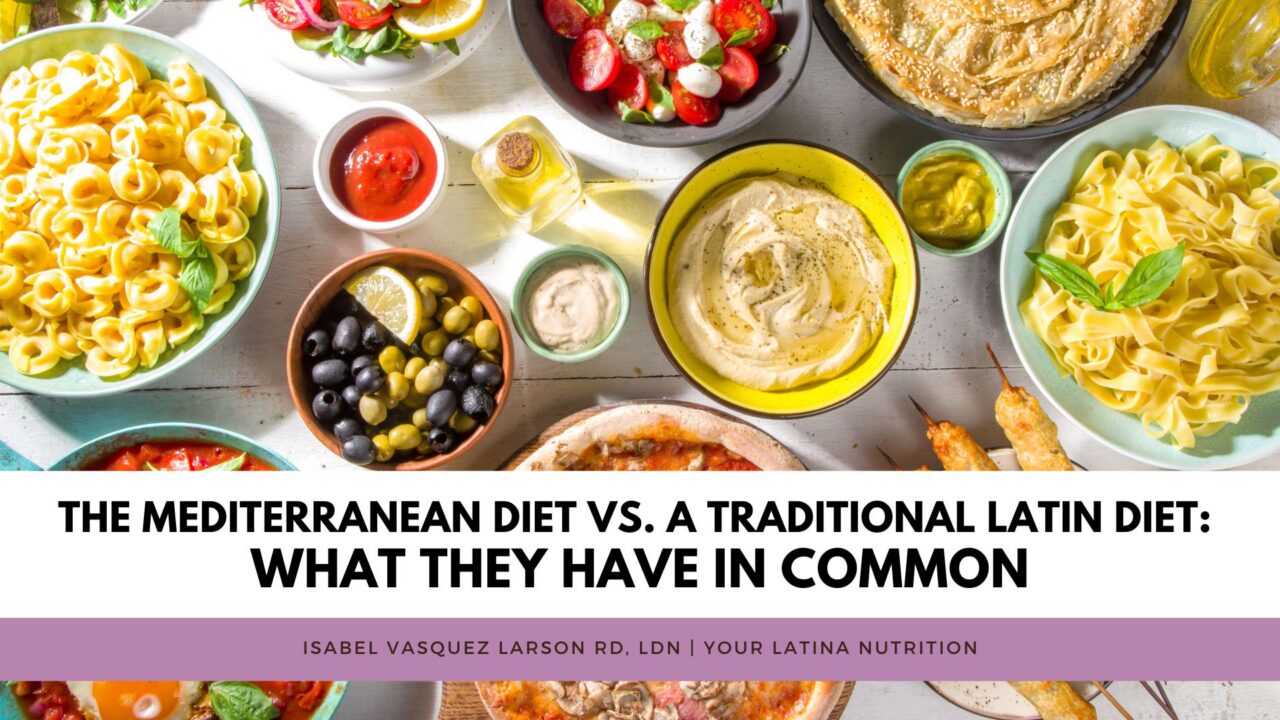
The Mediterranean Diet isn’t a strict diet. Instead, it’s an eating pattern rich in fruits, veggies, legumes, whole grains, nuts, seeds, healthy fats, and seafood, per Oldways. Dairy and poultry are consumed in moderation, and red wine, meat, and sweets are consumed occasionally.
It’s so well-known because of its abundant health benefits. It’s been shown to improve longevity, and help prevent heart disease, diabetes, and Alzheimer’s, per a 2021 study in the Journal of Internal Medicine.
That said, there are some issues with how the Mediterranean Diet is often depicted. Most dishes touted as Mediterranean-diet-friendly are from European countries like Italy, Greece, and France. This erases the cuisine of other countries in the Mediterranean region with similarly nutritious eating patterns—like Morocco, Turkey, and Lebanon.
What Is a Traditional Latin Diet?
Latin America includes so many cultures and cuisines, so there isn’t one traditional Latin diet. Traditional Latin diets vary by country and region, but they do share some commonalities. Common staple foods in Latin American diets include:
- Beans
- Corn
- Rice
- Squash
- Plantains
- Avocado
- Cassava (yuca)
- Fresh fruits
- Vegetables
- Herbs and spices
- Lean proteins
- Seafood (especially coastal regions)
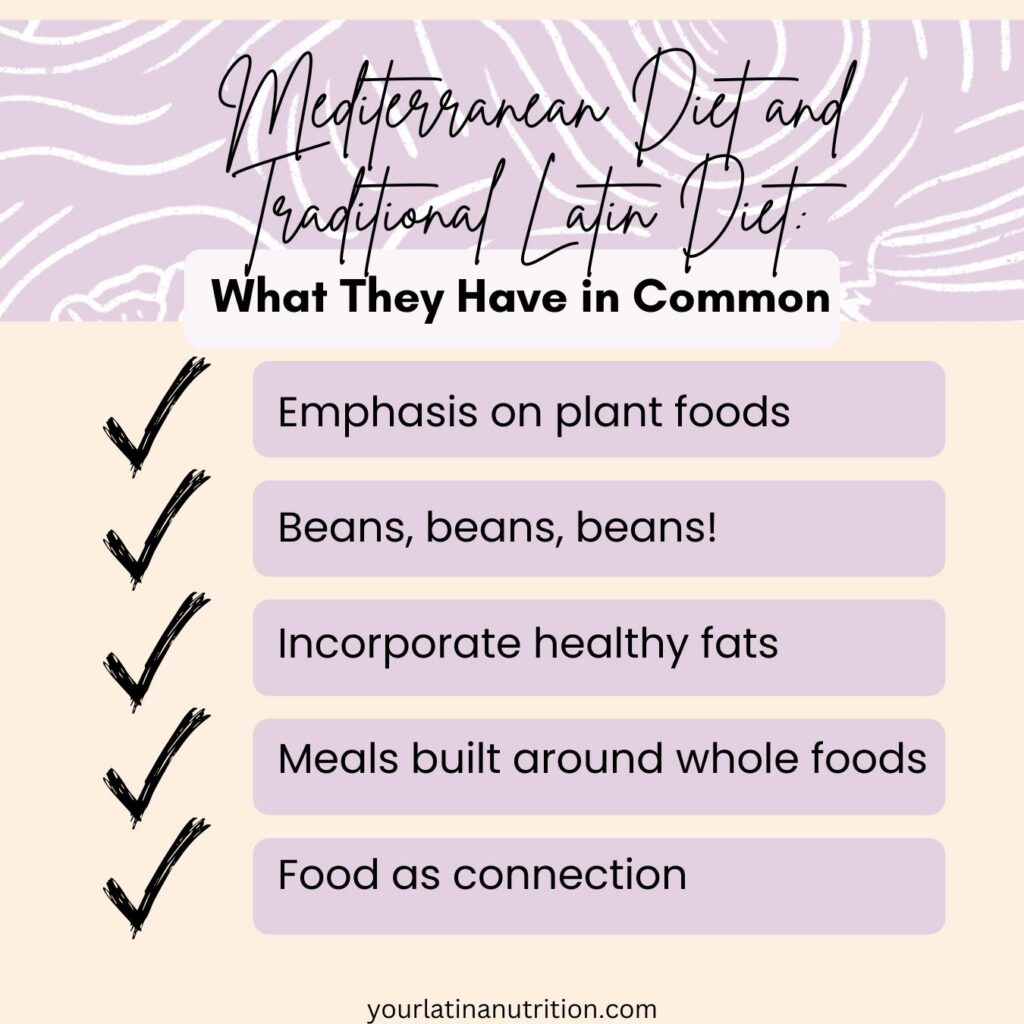
5 Things the Mediterranean and Traditional Latin Diets Have in Common
1. They Emphasize Plant Foods
Plant foods are at the heart of both the Mediterranean Diet and traditional Latin American diets. Both include a plethora of fruits, veggies, beans, whole grains, herbs, and spices—the specific types just vary.
In Latin American diets, common plant foods include corn, yuca, plantains, black or pinto beans, peppers, onions, tomatoes, mango, papaya, and jicama.
In traditional Mediterranean diets, they include eggplant, tomatoes, cucumbers, figs, bulgar, farro, lentils, fava beans, and nuts.
Regardless, diets centered around plant foods are linked with a lower risk of major chronic diseases like heart disease, type 2 diabetes, and cancer, per a 2023 study in Nutrition Journal.
2. Beans Are Nutritional Powerhouses
Beans, in particular, are central to both Mediterranean and Latin American diets. Mediterranean meals tend to have chickpeas, lentils, or fava beans, while Latin American meals lean more on black beans, pinto beans, and kidney beans.
Beans are an excellent source of fiber, plant-based protein, iron, and antioxidants, so it’s no surprise they’re linked with a number of health benefits.
A 2021 study in Nutrients found that eating beans as a part of an overall plant-based eating pattern promotes heart, gut, and metabolic health, and may also help reduce inflammation.
3. Healthy Fats Play an Important Role
Healthy fats play an important role in both of these diets, as well. Of course, olive oil is a staple of the Mediterranean Diet, but it’s used in a lot of Latin American cooking as well.
Other healthy fats in the Mediterranean Diet include nuts, fatty fish, and olives.
In Latin America, healthy fats often come from avocado, pepitas, canola oil, or chia seeds.
Either way, these fats are great for heart health. They can help lower cholesterol levels, which helps lower the risk of heart disease and stroke, per the American Heart Association.
4. Meals Are Built Around Whole Foods
In both eating patterns, traditional meals are built around whole foods. In Latin America, it’s things like rice, beans, homemade salsa or tortillas, corn, avocado, and fresh fruit. In the Mediterranean Diet, it may be legumes, olives, fresh fish, quinoa, farro, cucumbers, and tomatoes.
By eating these whole foods, you’re getting a lot of fiber, vitamins, minerals, complex carbohydrates, heart-healthy fats, and protein without added sugars, excess saturated fat, or excess sodium that are more common in pre-packaged or frozen foods.
While diets in many of these countries have evolved to include more pre-packaged foods, traditionally they lean on whole foods.
5. Food Is About Family and Connection
In these regions, food is more than just fuel—it’s connection and community.
So it isn’t just about what you eat, but how you eat.
Enjoying meals with others is at the base of the Mediterranean Diet Pyramid, and it’s a common practice in Latine culture as well.
Food is love and connection in our community. Family gatherings center around food, and our family members often show their love through food. Eating is a time when we share quality time with loved ones. Cooking is a way of connecting with our elders and our culture.
All of this overlaps with the eating practices central to the Mediterranean Diet.
Final Thoughts
You don’t have to ditch your Latin American cultural foods to promote your health. In fact, there are many commonalities between traditional Latin American diets and the well-studied Mediterranean Diet.
Both center around whole plant foods, lean heavily on beans, incorporate healthy fats, and treat food as a source of connection.
So instead of colonizing your plate, embrace your cultural foods for the nutritional powerhouses they are!