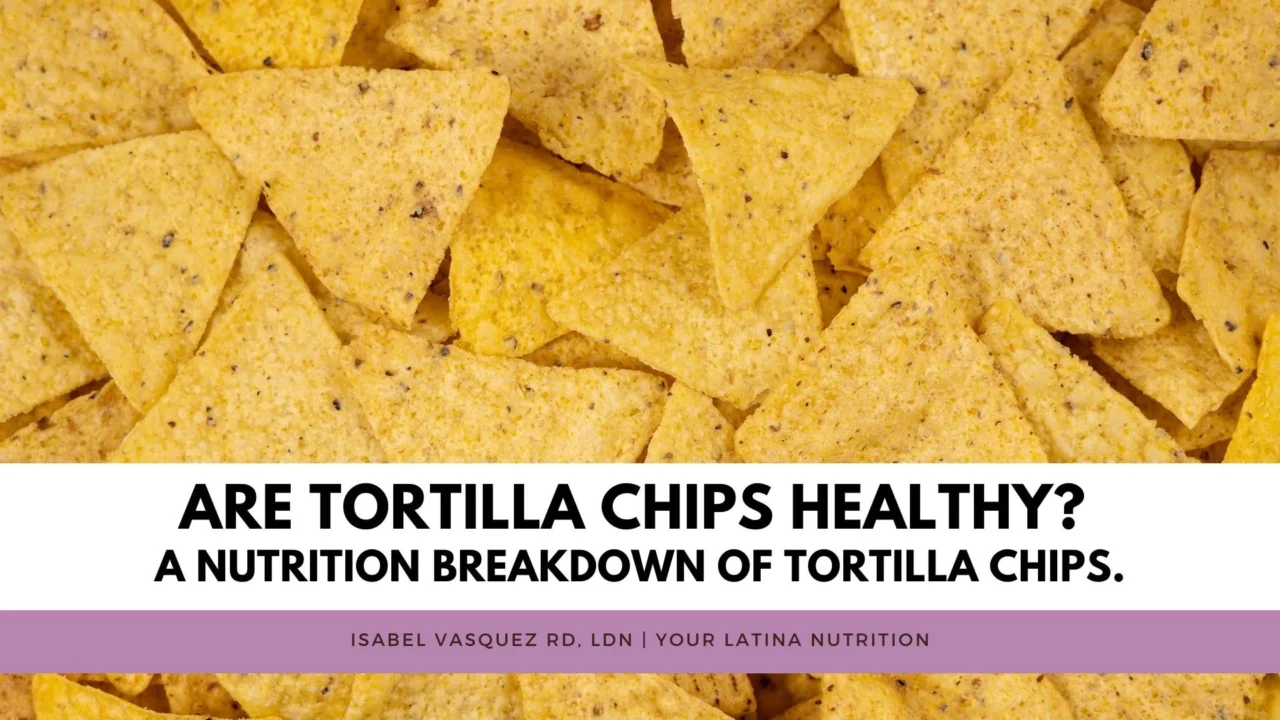
If you’re a tortilla chip lover, you may wonder…are tortilla chips healthy? Although you may not think of them as a “health food”, tortilla chips have nutrition to offer. When they’re made with whole grain corn, they have some fiber and minimal saturated fat. Plus, they’re easy to pair with nutrient-dense plant foods like avocado, beans, and salsa.
In this article, learn the nutrition facts, health benefits, and potential health drawbacks of tortilla chips. We’re also sharing how to incorporate them in your meals and snacks in a nutritionally balanced way. Let’s get to it!
Tortilla Chips Nutritional Value
Tortilla chips are primarily a source of carbs because they’re made from corn. Some of those carbs are in the form of fiber—an important nutrient for your gut, heart, and metabolic health.
They also contain a few grams of fat, since they’re fried in oil.
The specific nutritional value of tortilla chips varies a bit based on the brand you purchase so you can always check the nutrition label to understand the nutrition profile of the ones you’re having.
That said, here’s the nutrition profile of one ounce (about 7–10 chips) of white corn tortilla chips, per the USDA:
- Protein: 2 grams (g)
- Fat: 6 g
- Saturated fat: 0.8 g
- Carbohydrates: 19 g
- Fiber: 1.5 g, or 5% of the daily value (DV)
- Sodium: 93 mg, or 4% of the DV
Tortilla chips also have relatively small amounts of micronutrients like iron, calcium, B-vitamins, magnesium, potassium, and phosphorus.
Health Benefits of Tortilla Chips
Gluten-Free Source of Carbohydrates
Tortilla chips are a source of energy-boosting carbs. While carbs have gotten a bad rap in today’s day and age, they’re essential for health. In fact, carbohydrates should make up at least half of your diet, per the Dietary Guidelines for Americans.
Tortilla chips are special because they’re a gluten-free source of carbs. While most people don’t need to avoid gluten (a protein found in wheat, barley, and rye), folks with Celiac disease do to prevent damage to the small intestine, per the Celiac Disease Foundation.
You still need carbs if you have Celiac disease, and tortilla chips are one way to consume this important macronutrient.
Plus, some people are sensitive to gluten without having Celiac disease, per the Celiac Disease Foundation. Eating gluten may not be as harmful for these folks as it is for those with Celiac disease, but if you have a gluten sensitivity, you may also benefit from leaning on gluten-free sources of carbs.
Often Made With Whole Grain Corn
Tortilla chips can be made with whole grain corn, making them a source of whole grains in your diet. The Dietary Guidelines for Americans recommend making half of your grains whole grains.
That’s because whole grains are richer in fiber, protein, and some minerals than refined grains, making them important for overall health, per the USDA.
To determine if tortilla chips are made with whole grain corn, look at the ingredients list. Ingredients like “whole corn” or “whole ground corn” signal that they’re made with whole grains. Some tortilla chips also have a stamp on the package indicating that they’re made with 100% whole grains.
Contain Some Fiber
When tortilla chips are made with whole grain corn, they provide a couple grams of fiber per serving. The exact amount depends on the brand and how the chips are made.
Fiber is a non-digestible carb that helps manage blood sugars and supports cardiovascular and gut health, per the CDC. Unfortunately, most Americans don’t eat enough of it. Tortilla chips are a tasty snack that may help you chip away at your daily fiber needs.
As an added bonus, we often eat tortilla chips with fiber-rich foods like avocado and beans, further enhancing their health benefits.
Potential Health Drawbacks of Tortilla Chips
Tortilla chips are a source of sodium. While our bodies need some sodium, having too much of it could lead to or worsen high blood pressure, per the CDC. So, if you have high blood pressure, it’s worth being mindful of sodium in your diet.
That said, the total sodium in tortilla chips depends on the brand you purchase and how many servings you eat. As you may have noticed above, one serving of tortilla chips from the USDA’s FoodData Central has less than 5% of the DV of sodium, making it a low-sodium food.
Furthermore, tortilla chips are a source of carbohydrates. This isn’t bad by any means; however, if you have diabetes, it’s worth pairing them with a source of fiber and/or protein to prevent blood sugar spikes. Some tasty examples are beans or guacamole.
What Are Health-Promoting Ways to Eat Tortilla Chips?
Tortilla chips are a satisfying snack food, but they’re even more tasty and nutritious when paired with protein and fiber-rich foods.
Here are some ideas for what to pair tortilla chips with for added benefits on health, satiety, and energy:
- Salsa. Tortilla chips and salsa are a classic combo, and one worth enjoying for your health! Salsa adds antioxidants, vitamins, and fiber. Plus, salsa counts as a source of veggies since it’s made with tomatoes, onions, and peppers.
- Guacamole. You can also pair tortilla chips with guacamole—another nutrient-dense dip. Guacamole is richer in fiber than salsa and it’s a good source of heart-healthy fats.
- Beans. Beans are an excellent source of plant protein, fiber, iron, folate, and antioxidants per a 2014 study in The American Journal of Clinical Nutrition. The same study found that they can help lower your risk of metabolic syndrome, diabetes, and heart disease. Enjoy tortilla chips with a bean dip, refried beans, or topped with beans and cheese for nachos.
- Tuna. Canned tuna or a tuna salad is the perfect dip for tortilla chips. It adds plenty of protein for a satisfying snack. Throw some veggies on the plate and you can even turn it into a snacky lunch.
- Hummus. Another tasty dip, hummus also pairs well with tortilla chips. It’s another way to get in more legumes and add some fiber, protein, and healthy fat to your snack.
- Eggs. Chilaquiles anyone? Top your tortilla chips with eggs, salsa, avocado, and cheese for tasty Mexican breakfast flavors any time of day.
- Ground meat. Ground meat—say, ground beef on nachos—is another way to add plenty of protein to your tortilla chips. This makes them more filling, adds iron, and helps you reach your daily protein goals.
Final Thoughts
Tortilla chips can absolutely be enjoyed as a part of an overall health-promoting diet.
Alone, they mainly offer carbs and won’t keep you full very long, but when you pair them with salsa, guacamole, bean dip, or other protein-rich foods they become part of a balanced dish.
These additions offer fiber, micronutrients, protein and/or heart-healthy fat to help prevent blood sugar spikes and promote overall health.
For education on how to ADD nutrition to your favorite Latine cultural dishes, make peace with food, and focus on your health without dieting, join our nutrition library for just $27/month.