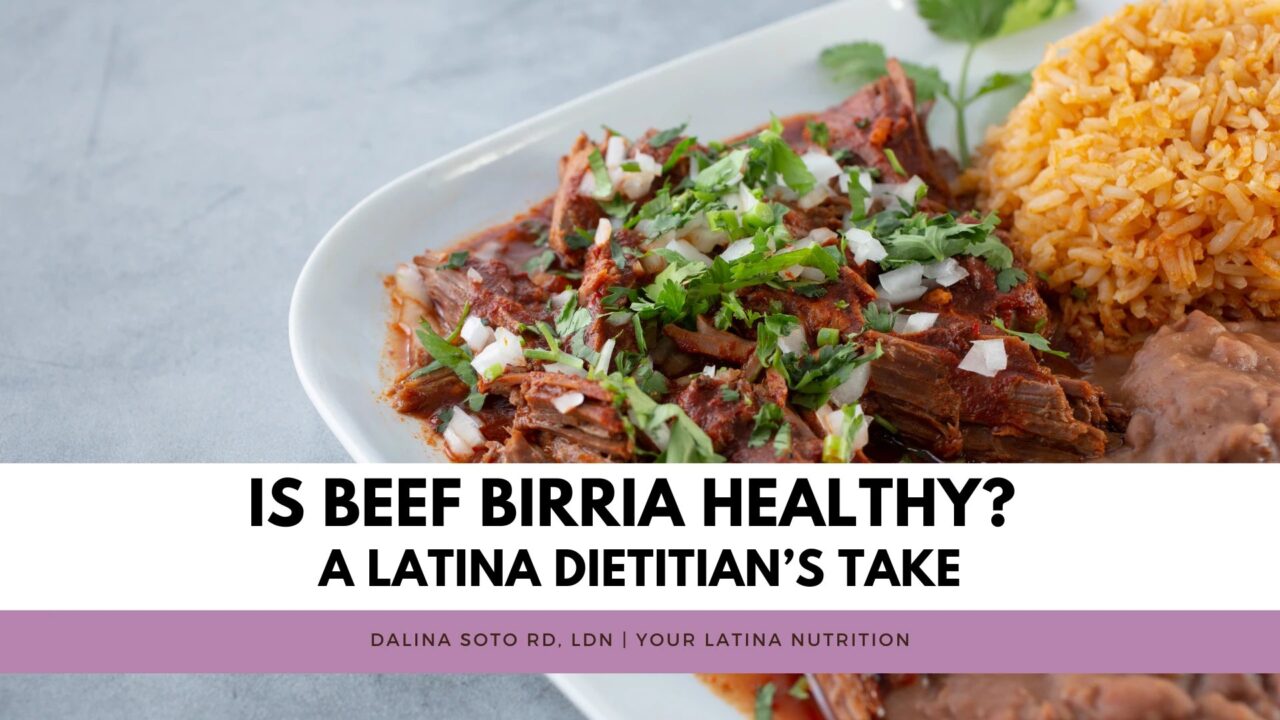
Beef birria is a slow-braised stew of beef in a dried chile adobo, served with its consomé for dipping, and it’s the birria behind almost every birria taco you’ve seen in the last few years.
Somewhere along the way it got filed under indulgence, and let’s be real, our cultural foods don’t get to be called “indulgent” or saved for “cheat days” just because an influencer doesn’t know the nutrition in them.
Beef birria is protein-rich with real iron, zinc, and B12, and compared to the traditional goat version, it tends to be higher in saturated fat, which mostly comes down to the cut and whether the fat gets skimmed.
Below, I cover where beef birria comes from, how it compares to goat, what it brings to the table, and how to build a plate that works for you. If you want the broader look at birria in general, we covered that in Is Birria Healthy?
Key Points
- Beef birria is the version most of us in the US are eating, and it’s a strong source of protein, iron, zinc, and vitamin B12
- Compared to traditional goat birria, beef carries more total fat and saturated fat, with protein in the same range
- The cut of beef and whether you skim the consomé change the final dish more than anything else
Where Beef Birria Comes From
Birria started in western Mexico, especially Jalisco, and it was goat (chivo) long before it was anything else.
Chef Rick Martínez told Tasting Table that the dish traces back to the goats the Spanish brought to Mexico in the 1500s, and that outside of Jalisco, beef has since become the most common meat for birria.
The beef version most of us know took shape in Tijuana.
According to Food Network, a vendor named Guadalupe Zárate set up a birria stand there in the 1950s and started using beef in place of goat, and that Tijuana-style beef birria eventually crossed the border into Los Angeles.
Quesabirria came out of that same route: a tortilla dipped in the fat that rises to the top of the consomé, griddled with cheese, and served with a cup of broth alongside it. And to be honest, both the goat and beef versions are equally delicious in my eyes.
The adobo stays the same whichever meat you use. It usually starts with dried chiles like guajillo and ancho, sometimes chile de árbol for heat, plus garlic, onion, and warm spices, and every family adjusts the ratios to its own sazón.
Beef Birria Nutrition Facts
In our post, Is Birria Healthy?, we broke down the nutritional value of 1 cup of Trader Joe’s premade beef birria.
- Protein: 32 grams (g)
- Fat: 15 g
- Saturated fat: 5 g, or 25% of the daily value (DV)
- Carbohydrates: 3 g
- Fiber: 0 g
- Sodium: 1090 milligrams (mg), or 47% of the DV
- Iron: 4.5 mg, or 25% of the DV
- Potassium: 650 mg, or 15% of the DV
Any database entry for beef birria is only ever an approximation.
The cut of beef changes everything, the seasonings and amounts vary by family, and whether the fat gets skimmed off the consomé makes a real difference to the final numbers, so treat the figures as a starting point rather than a verdict.
Beef Birria vs. Goat Birria
This is the comparison I get asked about most, so here’s how the two meats line up.
Fat. Goat is one of the leanest red meats you can buy. The Alabama Cooperative Extension System puts a 3-ounce serving of goat at about 2.6 grams of fat, compared to about 8 grams in beef, and notes that goat is lower in saturated fat as well.
Protein and iron. Both are red meats, so both bring solid protein and heme iron, the form of iron your body absorbs best. The same extension source notes that goat is a little higher in iron, so you’re giving up a bit there with beef, but beef is still a good source.
Flavor and texture. Beef is milder and richer, which is a big part of why it took over. Goat has a stronger flavor that the chiles and spices were originally built to balance.
So goat is the leaner pick, and it’s also the original, which means the culturally authentic choice and the lower saturated fat choice happen to be the same one. But beef birria is what’s on most menus, and you don’t need to switch meats to make it work for you. Most of the difference can be closed in how it’s cooked.
What Beef Birria Brings to the Table
Protein Is the Star
Beef birria is braised meat, so protein is the STAR. Protein digests more slowly than carbohydrate, which means it helps with staying full, keeping energy steady, and balancing blood sugars, especially when you’re eating it with tortillas.
Iron Your Body Can Actually Use
Beef provides heme iron, which your body absorbs better than the nonheme iron in plant foods. Iron deficiency is common among women under 50, and it shows up often in my practice. Low iron is exhausting in a way that’s easy to write off as being busy or stressed, and a dish built on slow-braised beef is a good source that pairs well with the rest of these iron-rich Latin American foods.
Squeeze lime over it, too. Vitamin C helps your body absorb the nonheme iron in the meal, from the tortillas, the beans, and part of the meat itself, and the lime is already always on the table.
Zinc and B12
Beef is one of the best food sources of both. Zinc supports immune function and wound healing, and B12 keeps nerves and red blood cells working. B12 is only found naturally in animal foods, which makes beef birria a meaningful source.
The Chiles Count Too
Guajillo and ancho chiles are rich in carotenoids, the pigments behind that deep red color, and lab research on carotenoids extracted from these same dried chiles found anti-inflammatory effects. The amount in one bowl is modest, so I’m not going to call birria an anti-inflammatory food, but the adobo isn’t empty either. People see that decadent consomé and think, yup, that’s bad, when the same adobo that makes it taste like birria is also contributing nutrition, the way it does in mole.
Collagen From the Braise
Beef birria is usually made with braising cuts that have plenty of connective tissue, which is exactly what chefs reach for with birria. As it cooks, that tissue breaks down into gelatin in the consomé, which is why it has body and why it sets up in the fridge.
What to Watch With Beef Birria
Saturated fat. This is where beef and goat differ most. The fat from the beef renders into the consomé, and quesabirria adds cheese plus whatever fat is on the tortilla. Consistently high saturated fat intake can raise LDL cholesterol, so if you’re managing cholesterol, skimming the consomé is the step that matters most.
Sodium. Between salt, bouillon, and store-bought broth, birria can climb high. If you’re managing blood pressure, this is the number that matters more than any other in this article. Talking to your dietitian is key here, since they can help you bring the sodium down without sacrificing flavor.
None of that means beef birria is off the table, and this is the part I actually want you to hear. Watch for all-or-nothing thinking creeping in, like deciding that beef birria is the “bad” version and goat is the only acceptable one, or that birria has to be saved for special occasions. That framing is what sends people into the cycle of avoiding a dish for months and then feeling out of control around it. Beef birria is a food you can eat, enjoy, and prepare in ways that work with your health.
If you’ve been carrying around the idea that your cultural food is the problem, this post on Latin American food myths is worth your time.
How to Build a Balanced Beef Birria Plate
- Trim the cut before it braises. Braising cuts need some fat and connective tissue to turn tender, but trimming the thick outer fat before the meat goes in keeps a lot of it out of the consomé in the first place.
- Chill the consomé and skim it. Make it a day ahead, refrigerate it, and lift the solidified fat off the top. With beef, this matters even more than with goat, and you lose almost no flavor, which makes it the single highest-impact thing on the list.
- Control the sodium at the source. Use low-sodium or homemade broth, and taste before you add more salt. The chiles are carrying more flavor than you think.
- Add fiber. Birria brings protein and fat but almost no fiber, so cebolla, cilantro, radish, cabbage, a side of beans, or avocado all help with fullness and blood sugar. Beans and avocado are two of the easiest fiber additions in most Latin cooking.
- Go with corn tortillas. Nixtamalized corn is a better source of absorbable calcium and adds a bit more fiber than flour. Here’s the full comparison.
- Try goat when it’s offered. You don’t have to switch, but if a birriería has chivo on the menu, it’s the leaner option and the original.
Frequently Asked Questions
Is beef birria healthy?
Yes. It’s high in protein, iron, zinc, and B12, and the things to watch are saturated fat and sodium, both of which depend on the cut and how it’s prepared. For the full breakdown of birria in general, see Is Birria Healthy?
Is beef birria or goat birria healthier?
Goat is leaner, with less total fat and saturated fat, and a little more iron. Beef still brings plenty of protein and iron, and skimming the consomé closes much of the fat gap.
Why is most birria in the US made with beef?
Beef birria took hold in Tijuana, where a vendor started using beef in place of goat in the 1950s, and that Tijuana style is the one that spread to Los Angeles and beyond. Beef is also easier to find in most US grocery stores than goat.
Is quesabirria the same as beef birria?
Quesabirria is a way of serving birria, usually beef: a tortilla dipped in the consomé fat, filled with birria and cheese, and griddled. The cheese and the fat on the tortilla add saturated fat on top of the birria itself.
Is beef birria good for iron deficiency?
It’s a good source of heme iron, the most absorbable form, and a squeeze of lime helps you absorb the rest of the iron on the plate. It shouldn’t replace treatment your doctor has prescribed, but it’s a useful food to have in rotation.
Can I eat beef birria if I have diabetes?
Yes. Birria itself is protein and fat with very little carbohydrate, so on its own it has minimal effect on blood sugar. The carbohydrate comes from the tortillas, rice, and beans you eat with it, and adding fiber and eating them alongside the protein helps keep blood sugars steadier.
Final Thoughts
Beef birria is the birria most of us grew up seeing on menus in the US, and it’s a protein-rich, iron-rich dish with a real story behind it, from Jalisco’s goat stew to Tijuana’s beef version to the tacos that took over your feed.
Trim the cut, skim the consomé, watch the sodium if you’re managing blood pressure, and add something with fiber alongside it.
What you don’t need to do is treat it as something you have to earn, or feel like you picked the wrong meat. It’s food, and there’s real nutrition in it.
Want help making your cultural foods work for your health?
Our team of Latina registered dietitians works with you on the food you actually eat, with no elimination lists and no meal plans you’ll abandon by Thursday. We accept most major insurance plans.
See What Your Insurance Covers →
Sources
- Berrill, A. “How Birria Evolved From a Food of Necessity to a Delicacy, According to Chef Rick Martínez.” Tasting Table, December 30, 2025. tastingtable.com
- “What Is Birria?” Food Network. foodnetwork.com
- “Goat: A Healthy Meat Option.” Alabama Cooperative Extension System, 2024. aces.edu
- “Iron: Fact Sheet for Consumers.” National Institutes of Health, Office of Dietary Supplements. ods.od.nih.gov
- “Zinc: Fact Sheet for Consumers.” National Institutes of Health, Office of Dietary Supplements. ods.od.nih.gov
- “Vitamin B12: Fact Sheet for Consumers.” National Institutes of Health, Office of Dietary Supplements. ods.od.nih.gov
- “Antioxidant, Antinociceptive, and Anti-Inflammatory Effects of Carotenoids Extracted from Dried Pepper (Capsicum annuum L.).” PubMed Central. pmc.ncbi.nlm.nih.gov
- “Saturated Fat.” American Heart Association. heart.org