Key Points
- Pan dulce is a refined carbohydrate, so it does raise blood sugar
- What you eat it with and when changes the response more than whether you eat it at all
- Cutting it out entirely tends to backfire, and there’s a well-documented reason why
When a chula gets a pre-diabetes diagnosis and comes to see me, before I’ve asked a single question, she often tells me she’s already given up pan dulce. She hasn’t cut back on it; she’s given it up completely, and she tells me the way people tell you something they are very reluctant about.
So let’s talk about what actually happens when you eat a concha, because the honest answer is more useful than the one you’ve been carrying around from influencers.
Pan dulce is a refined carbohydrate, and it will raise your blood sugar. However, how you eat it can reduce your blood sugar response substantially, while quitting it entirely can cause binge eating.
Below I’m covering what pan dulce actually is, what it does to blood sugar and why, plus why elimination tends to fail, and six things that help.
What Is Pan Dulce?
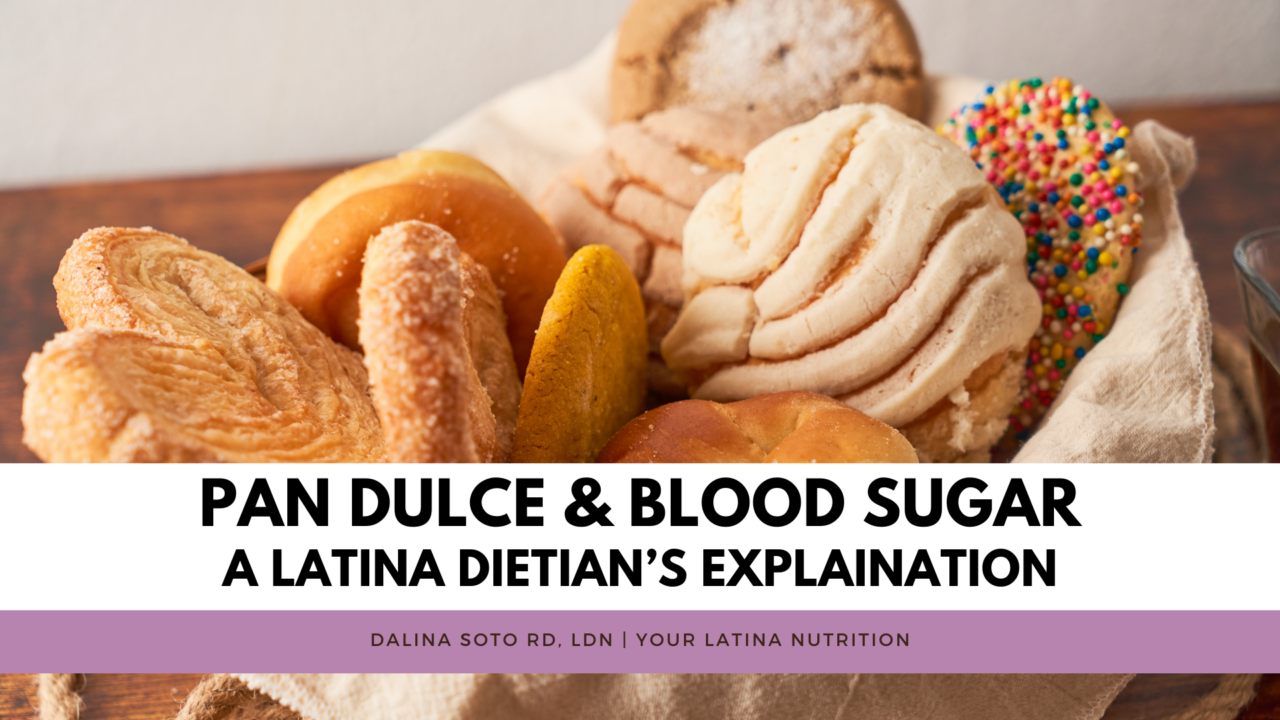
Pan dulce is a whole category of Mexican sweet breads, not a single bread, with somewhere between 500 and 2,000 varieties baked across Mexico.
Conchas with their crackled sugar shells, orejas with their folded pastry and caramelized edges, plus cuernitos, besos, mantecadas, polvorones, and marranitos made with piloncillo that taste more like molasses and ginger than pig.
The breads we know today took shape after wheat arrived with the Spanish and then again during the French occupation in the 1800s, when Mexican bakers picked up French techniques like puff pastry and made them their own.
That French influence peaked under Porfirio Díaz, which is how French pastries ended up with Mexican names like orejas and cuernitos.
Every panadería has its own take on the classics, and you grab a tray and tongs and choose for yourself, which is half the pleasure.
In Mexico, pan dulce is eaten at breakfast, but it’s just as equally tied to the merienda, the afternoon or evening snack, usually with café, hot chocolate, or atole, and usually after you’ve already eaten other meals that day.
A concha eaten on an empty stomach and a concha eaten after lunch get very different blood sugar responses.
How Pan Dulce Affects Blood Sugar
Pan dulce is made with refined white flour, sugar, and butter or shortening. Refined flour has had the bran and germ stripped out, which takes most of the fiber with it.
Fiber is what slows digestion, so without it the carbohydrate in a concha breaks down quickly into glucose and arrives in your bloodstream fast.
That’s the spike people talk about, and it’s followed by a drop that can leave you shaky, foggy, and hungry again within a couple of hours, which is why a pan dulce breakfast on its own often has you ravenous by ten.
Protein and fat help slow things down, but pan dulce doesn’t have much on its own, so it’s best eaten right after or with other foods. This is the same principle behind enjoying tortillas without the spikes. Eating the carbohydrate by itself is what makes the curve steep, but pairing it with protein, fiber, and fat reduces the crash.
Why “Just Cut It Out” Backfires
Here’s what I see happen over and over.
Someone decides pan dulce is off limits. It goes well for a while, and then there’s a birthday, or a bad week, or she’s standing in the panadería because her mom asked her to pick something up. She eats one, and then, because she’s already “ruined it,” she eats three standing at the counter without really tasting any of them.
Then she feels terrible and recommits harder.
That’s the binge-restrict cycle, and it isn’t a willpower failure, because restriction reliably produces it. The more forbidden a food becomes, the more charged it gets, and the harder it is to eat a normal amount of it calmly.
From a blood sugar standpoint, that pattern is worse than just having a concha on a Tuesday afternoon with some intention behind it. Three in a row on an empty stomach in a shame spiral does far more to your glucose than one eaten after lunch.
What I’m after is making pan dulce ordinary enough that you can have one and get on with your day.
6 Ways to Enjoy Pan Dulce Without the Spike
- Don’t eat it on an empty stomach. This is the single biggest lever. Pan dulce after a meal that had protein and fiber in it produces a much gentler curve than pan dulce as the meal, so leaning into the merienda tradition is both culturally rooted and easier on your blood sugar, which is a nice thing to be able to say. Just don’t forget to add some nutrition alongside it.
- Give it a protein partner. Eggs, Greek yogurt, queso fresco, or even a handful of nuts alongside. Protein digests slower and blunts the rise, so if pan dulce is breakfast, it should not be all of breakfast.
- Add berries. Berries are one of the higher-fiber, lower-sugar fruits, which makes them the easiest fiber to put next to something sweet. A handful of strawberries, raspberries, or blackberries does more here than you’d expect, and here are more ways to get fiber in.
- Watch what’s in the cup. A concha with sweetened café con leche is two refined carbohydrates arriving together, so if you want the pan dulce, consider letting the coffee be the less sweet half of the pairing. There’s more on café con leche and blood sugar here.
- Take a walk after. Easy movement soon after eating helps your muscles pull glucose out of your bloodstream, and research pooling several studies found that walking after a meal lowers the post-meal rise more than walking before it. It works and it’s free, and it isn’t meant as punishment, which is the same idea behind movement that actually fits your life.
- Eat it sitting down, on purpose, rather than standing in the kitchen or driving. Food you actually taste is more satisfying, and satisfaction is what lets you stop at one without negotiating with yourself.
Watch for all-or-nothing thinking here, meaning the belief that you either never eat pan dulce again or you’ve lost control. That framing turns one concha into a spiral, and eating is how it works for most people: you eat one thing, with something else on the plate.
If you’re managing diabetes specifically, this piece on carbohydrates and diabetes goes deeper on the same logic.
Frequently Asked Questions
Can I eat pan dulce if I have diabetes?
Yes. Pan dulce is a carbohydrate, so it will affect your blood sugar, but people with diabetes can and do include it. What matters is the portion, what you pair it with, and where it falls in your day. Your care team can help you figure out what works with your medications and your numbers.
Is a concha worse than other pan dulce?
Not really. Conchas, orejas, and cuernitos are all refined flour and sugar with fat, and sizes vary more between panaderías than the varieties differ from each other.
What’s the best time of day to eat pan dulce?
After a meal, or as part of one with protein and fiber alongside it. An afternoon merienda with protein will treat your blood sugar better than pan dulce alone first thing in the morning.
Does whole wheat pan dulce help?
A little, since whole grain flour keeps more fiber, but it’s rare in traditional panaderías, and it isn’t worth chasing. Pairing and timing do far more than swapping the flour.
Will one concha ruin my blood sugar for the day?
No. One food doesn’t determine your health, and a single rise in blood sugar isn’t damage. What matters is the pattern over months, and one concha on a Tuesday isn’t a pattern.
How do I stop overeating pan dulce once I start?
Usually it means it’s been too restricted. Foods we’ve made forbidden get charged, and charged foods are hard to eat calmly, so letting it be normal and available, with protein and fiber, as part of a meal, sitting down, is what takes the pressure off.
Final Thoughts
Pan dulce raises blood sugar. That’s chemistry, and I’m not going to pretend otherwise.
But you have a lot more room than you’ve been told. Eat it after a meal, or as one when you add fiber and protein. Walk afterward if you can, and sit down and actually taste it.
The version where you swear off pan dulce forever is the version most likely to end with you eating three at a counter feeling awful. I’d rather you have one on a Tuesday afternoon with your coffee, like people have been doing for generations, and get on with your day.
Want help making this work with your numbers?
Our team of Latina registered dietitians works with real food and real life, with no elimination lists and no meal plans you’ll abandon by Thursday. We accept most major insurance plans.
See What Your Insurance Covers →
Sources
- Martínez, M. “Mexican Pan Dulce Guide: A Sweet Journey Through Mexico’s Beloved Breads.” Mexico in My Kitchen. mexicoinmykitchen.com
- “The History of Bread & Pan Dulce in Mexico.” La Monarca Bakery, April 14, 2021. lamonarcabakery.com
- Engeroff, T., et al. “After Dinner Rest a While, After Supper Walk a Mile? A Systematic Review with Meta-analysis on the Acute Postprandial Glycemic Response to Exercise Before and After Meal Ingestion in Healthy Subjects and Patients with Impaired Glucose Tolerance.” Sports Medicine, 2023. pubmed.ncbi.nlm.nih.gov