Experiencing body dissatisfaction is an almost inevitable reality in our society. We’re constantly told that our bodies are somehow wrong or imperfect, and it’s only gotten worse since the emergence of GLP1s.
Pretty much all of our clients come to us with some level of body dissatisfaction. And instead of encouraging them to lose weight or focus on changing their bodies to resolve this dissatisfaction, we focus on helping them respect their bodies more, no matter their shape or size.
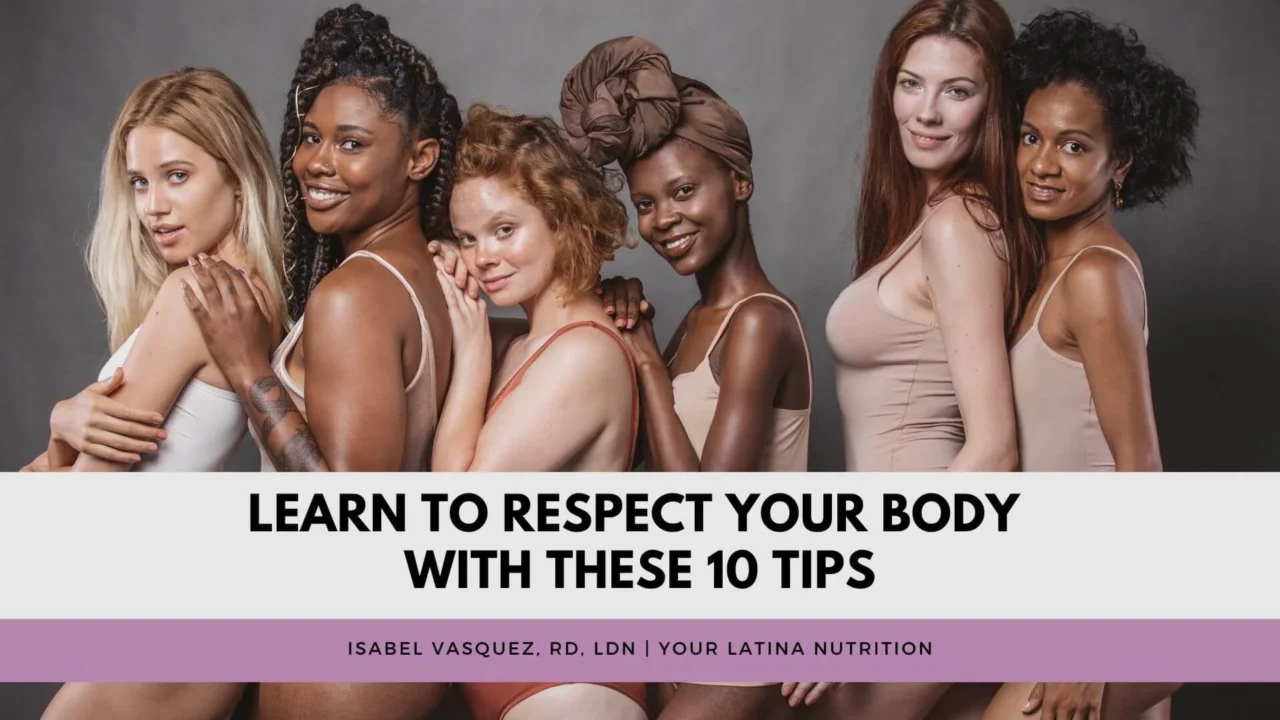
Learning to respect your body means developing a better relationship with it. Body respect can help reduce how often self-critical thoughts pop into your mind and improve your self-care when they do creep in.
In this blog, I’ll share what body respect is, along with 10 tips to help you cultivate respect for your body.
What Does Respect Your Body Mean?
Respecting your body means treating it with kindness, honoring its needs, and admiring all it does for you.
It means taking care of it, no matter its shape, size, fitness level, age, etc. It’s understanding and honoring your body’s needs without judgment. And fostering appreciation—and maybe even awe—for what your body does for you every single day.
The best part is you can work towards body respect even when loving your body seems far-fetched. Body respect feels more approachable than body love for many people.
Why Should You Respect Your Body?
You should respect your body because it deserves it! You deserve it!
Even if you’d like to feel better in your body, shame isn’t a great motivator for change.
So whether you’d like to improve your mobility, feel less tired throughout the day, or eat more fruits and veggies, respecting your body is a much more empowered place to come from when you start making those changes.
Instead of focusing on changing your body, you can focus on making shifts to be a better caretaker for your body.
Respect the way your body keeps you going, and look at the habits you’d like to develop as ways to grow that respect and caretaking.
How Can You Show Respect For Your Body?
Building respect for your body can take time, especially if you have a really tumultuous relationship with your body right now. So be patient with yourself.
The tips below are a great way to start cultivating respect for your body. Practicing them regularly will go a long way to stop body hatred and promote a better relationship with your body!
And please, take what works for you and leave what doesn’t. Every single tip won’t work for or resonate with every single person who reads this, and that’s okay. We’re all different. Experiment with these suggestions and continue incorporating the ones that help you.
1. Recite affirmations
Affirmations are one way we can build our self-esteem, self-confidence, and self-acceptance. It can be SO hard to look yourself in the mirror and say something positive about yourself or your body.
For some people, looking in the mirror is a form of self-degrading body checking. But how powerful would it be if you could stop body checking and instead, look in the mirror and say some nice things to yourself? Over time, it can really improve how you view yourself.
We’ve even had clients share that they repeat positive affirmations to themselves before looking in the mirror, and it really helps with their self-image when they do look in the mirror.
Here are a few affirmations to consider (and here’s an article with 50 affirmations for body image):
- My body deserves respect no matter its size, shape, or ability
- My body does so much for me everyday and that’s amazing
- I am worthy of respect, and that includes taking care of my body
- I look good no matter my size
- My appearance doesn’t define me
- I am capable of building a better relationship with my body
2. Be your body’s caretaker
Body caretaking runs parallel to body respect.
If you respect someone, you’ll probably want to take care of them and treat them well. So why can’t the same be true for your body?
Check in with your body and what it needs.
Are you grinding too hard and neglecting your body’s need for rest?
Maybe your body needs more food but you’re stuck in a cycle of restriction.
Maybe you could even just use a hug! Yet you disregard your need for human touch, are afraid to ask for this kind of support, or live alone and don’t socialize much.
Whatever it is that your body needs, can you start to take care of it? It may help to think about how you would take care of a child or a friend in need.
3. Cultivate a stronger connection with your body
Oftentimes, we go about life totally disconnected from our bodies’ needs, signals, and sensations.
However, we are our bodies’ keepers. Only we know precisely what our bodies need in a given moment. Come into that power!
After years of dieting, it may feel overwhelming. Having relied on external rules for so long can make you feel disconnected from your body and doubtful that you know what’s best for it.
However, as you get accustomed to properly feeding your body and become more connected to its cues, you can learn to honor them more and more intuitively.
This isn’t just the case with food, but also with movement, rest, and more.
Note: If you have an active eating disorder, you may need the support of a treatment team to meet your body’s nutritional/calorie needs. If you are or think you may be struggling with an eating disorder, please visit Project Heal’s website for support and resources.
4. Write a letter to your body
You know all the thoughts (positive or negative) about your body that live in your mind? Get them out onto paper!
Write a letter to your body chronicling all you’ve been through together and how you feel about it. Sometimes, seeing all the thoughts out on paper can be eye-opening.
I know it might sound cheesy, but it can be really therapeutic.
5. Move your body joyfully
If you have a history of rigid, weight-loss-driven exercise, then you may view movement as a way to punish your body rather than a way to respect it. But that doesn’t have to be the case forever.
Healing your relationship with movement might mean taking more time to rest and/or finding movement that you actually enjoy. Some people may love dancing, while others may love lifting weights. The options are really endless.
Regardless of what movement you enjoy, you can show respect for your body by honoring how it’s feeling on any given day.
For example, if you’re used to cranking out miles on the spin bike just to reach the top of the leaderboard, can you stop paying attention to those numbers and go for easier rides when you’re feeling low energy or fatigued?
6. Practice gratitude for your body
Our bodies are truly amazing. Regardless of your body’s mobility, size, shape, or features, it does so much for you everyday that most of us take for granted—breathing, digesting, filtering out waste, etc.
So I invite you to muster up whatever gratitude you can for your body. It can be the littlest thing. It doesn’t have to be gratitude for the part of your body you’re most self-conscious about right off the bat.
And this isn’t just some woo woo recommendation. Research demonstrates that gratitude has real benefits, especially on mental health. For example, a 2014 study in The Journal of Positive Psychology found that a gratitude practice reduced depressive symptoms amongst participants.
7. Feed your body well
What better way to show your body respect than to meet its most basic needs?
When I say feed your body well, I don’t just mean getting in enough calories. I also mean eating the types of foods that satisfy you, including your cultural foods.
Too many people add their cultural foods to their list of forbidden foods—foods they avoid out of fear they’ll ruin their health or cause unwanted body changes.
Here at Your Latina Nutrition, we’re constantly advocating for the value of cultural foods, not just because of their nutritional value (which they do have a lot of!) but also for the way they nourish our souls!
In fact, the Dietary Guidelines for Americans define a healthy dietary pattern as “not a rigid prescription but rather a customizable framework of core elements tailored to personal, cultural, and traditional preferences.” Cultural and personal preferences are key aspects of a “healthy dietary pattern”!
8. Wear clothes that feel good
Wearing clothes that feel authentic to you and fit well not only shows your body respect, it often improves your body image.
I do want to acknowledge that purchasing new clothes whenever your body changes requires a certain level of privilege. And even if you have the resources to do so, it can be draining to clear out your closet and accept that your body has changed.
Allow yourself time to process how you’re feeling, grieve if you need to, and do what you can to find clothes that feel better for you.
If you’re worried about constantly having to spend money on new clothes if your body has not settled into a comfortable weight yet, you may want to try renting clothes or shopping secondhand and selling your old clothes.
9. Be conscious about your media consumption
It’s no secret that the media is full of diet culture messaging.
We’re constantly told that our bodies are flawed, too big in certain places, too small in others, or otherwise a problem. And then we’re sold on a supplement, workout program, or medication that promises to “fix” the problem and leave us feeling confident, happy, and healthy.
Your media consumption could also be leading you to judge your body in ways you may not think about. For example, if your feed is full of thin, able-bodied, white women that don’t look like you, it could definitely harm your body image.
Consciously consuming media could include reducing your time on social media and curating your feed to include more body diversity and less diet culture-related posts.
10. Set boundaries around body comments
Arguably one of the best ways to show yourself and your body respect is to set boundaries.
Trust me, I’m the first to admit how hard setting boundaries is. It can be super uncomfortable and scary, especially if you are someone who “hates confrontation.”
However, setting boundaries doesn’t have to be a form of confrontation. It’s an opportunity to advocate for your needs and form healthier, more satisfying relationships.
You can cultivate body respect by setting boundaries around unwelcome body comments—like being called “gordita” or being greeted with a comment on how your weight has changed.
Frequently Asked Questions
How do you treat your body with love and respect?
Body love may feel like a far-fetched goal for some; whereas body respect may feel more realistic. That being said, there are many ways to show your body love and/or respect.
Meeting its most basic needs by feeding it adequately, getting enough sleep, and hydrating is one way. You can also write a letter to your body expressing your feelings about it or start a gratitude practice dedicated to your body.
What does it mean to honor your body?
Honoring your body means recognizing its needs and meeting them. Some examples of these needs include regular meals, tasty foods, physical activity, rest, sleep, socialization, nutritional variety, and alone time.
Final Thoughts
Body respect is a more approachable step towards improving your relationship with your body. It entails honoring your body’s needs and appreciating all it does for you.
Building body respect might take time in our fatphobic society, but there are a bunch of ways to get started, from reciting affirmations to feeding yourself adequately to setting boundaries.
Overall, understanding your body, appreciating it, and treating it with kindness are key to having a better relationship with it. And remember, your body deserves to be treated as well as you would treat anyone else you respect!
For education on how to ADD nutrition to your favorite Latine cultural dishes, make peace with food, and focus on your health without dieting, join our nutrition library for just $27/month.