Key Points
-
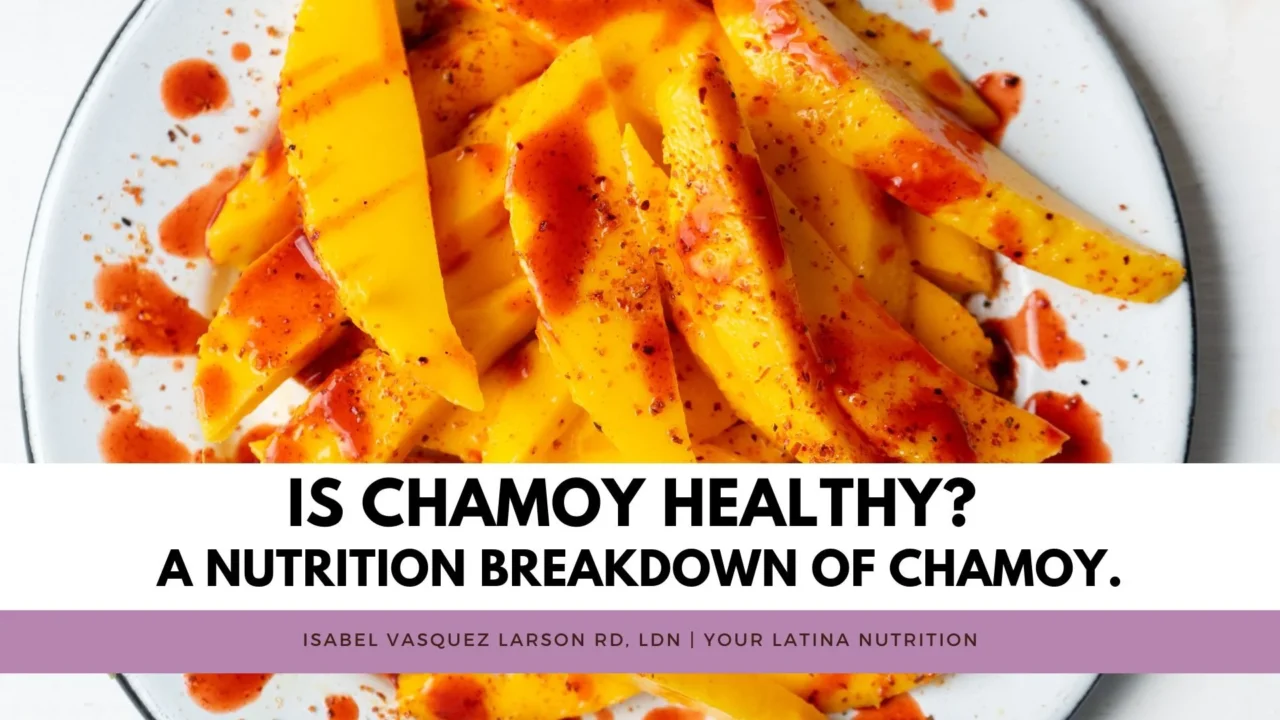
Chamoy is a sweet, tangy, spicy Mexican condiment traditionally made with chiles, limes, and fruit
-
It’s a source of added sugars and sodium, but can be a part of an overall well-rounded diet
-
Chamoy is a great way to make fruits and veggies more exciting so you can eat the recommended 5 servings per day
Chamoy is a signature Mexican condiment with a sweet, tangy, and spicy flavor—all thanks to a combo of fruit, chiles, and lime. It’s most commonly used to make Mexican fruit cups, Mexican candy, and chamoyadas.
It goes great sprinkled over fresh fruit and veggies. After all, Mexican fruit cups wouldn’t be the same without chamoy! In fact, it’s an easy way to make fruits and veggies more appealing if you struggle to eat them regularly.
However, you may fear that chamoy adds too much sugar to your foods. In this article, we’re breaking down the nutrition facts of chamoy and how it impacts your health.
Chamoy Nutrition Facts
Here are the nutrition facts of one teaspoon (one serving) of Chamoy Mega:
-
Fat: 0 g
-
Protein: 0 g
-
Carbs: 0 g
-
Sodium: 120 mg, or 5% of the daily value (DV)
Keep in mind that one teaspoon is a pretty small serving size. Most of the time you’re probably eating more than this, which increases your sodium and added sugar intake.
Although one teaspoon has a negligible amount of carbs and sugars, high fructose corn syrup is the third ingredient in this chamoy. If you eat large amounts of chamoy, it can become a significant source of sodium and added sugars.
Different brands of chamoy have slightly different ingredients and nutrition profiles. For example, here’s the nutrition facts of one serving of I Love Chamoy:
-
Fat: 0 g
-
Protein: 0 g
-
Carbs: 0 g
-
Sodium: 40 mg, or 2% of the DV
This chamoy is made with monk fruit instead of added sugars, and it has much less sodium.
Health Benefits of Chamoy
Helps You Eat More Fruits and Veggies
The biggest benefits of chamoy is that it can help you eat more fruits and veggies. Eating enough fruits and veggies—about 3–5 servings per day—helps prevent common chronic diseases like heart disease, diabetes, and cancer, per a 2024 study in Foods. Yet 90% of US adults do not eat enough fruits and veggies, per the CDC.
If plain fruits and veggies aren’t your thing, chamoy may be just what you need to make them more appealing. It adds a spicy, sweet, tangy flavor that can transform a fruit cup from boring to crave-worthy!
Can Provide Antioxidants
Most store-bought chamoy isn’t a significant source of antioxidants, but homemade chamoy is!
Traditionally, chamoy is made with dried fruits like apricots, prunes, or mangos, along with chile peppers. These ingredients provide a range of antioxidants like capsaicin, polyphenols, flavonoids, and carotenoids, per a 2023 study in Comprehensive Reviews in Food Science and Food Safety and a 2022 study in Innovative Food Science & Emerging Technologies.
This is important because dietary antioxidants help lower inflammation, prevent cell damage, and reduce the risk of chronic disease, per a 2026 article in the journal Antioxidants. If you want to make chamoy yourself, check out this recipe from Muy Delish.
Can Be a Source of Fiber
Just like antioxidants, homemade chamoy is a source of fiber. That’s because the fruits that provide antioxidants also provide fiber! Fiber is a non-digestible carb that supports gut health, blood sugar regulation, cholesterol management, and satiety, per the CDC.
It’s another nutrient Americans fall short on, but homemade chamoy can help you chip away at your daily fiber needs.
Source of Cultural Connection
We take cultural foods seriously here at Your Latina Nutrition, and chamoy is no exception! Food isn’t just the nutrition facts panel—it’s also a representation of our culture, our love, and our community.
So if chamoy is one of your cultural foods, embrace it for its cultural significance!
Potential Health Drawbacks of Chamoy
Having a little chamoy here and there probably won’t be an issue for your health, but the sodium and sugar content of store-bought chamoy may cause issues if you eat it a lot.
One teaspoon of traditional bottled chamoy has 120 mg of sodium, or 5% of the DV. So if you have even a tablespoon of chamoy, you’re getting 15% of the DV of sodium.
Eating too much sodium can increase the risk of high blood pressure, per the American Heart Association, so it’s something to be mindful of—particularly if you already have elevated blood pressure.
The sugar content is also worth considering, particularly if you have diabetes, prediabetes, or insulin resistance. It’s a source of added sugars that get quickly absorbed by your body, which could lead to blood sugar spikes.
Still, we encourage our clients to zoom out and look at their overall intake of sodium and added sugars instead of demonizing one food. This can give you insight as to whether your chamoy intake is meaningfully affecting your health or not.
For individualized guidance and support with your dietary needs, consider working with our team of Latina dietitians.
Is Chamoy Okay to Eat With Diabetes?
You can absolutely still enjoy chamoy even if you have diabetes.
If you’re eating regular chamoy, just be mindful of how much of it you’re eating and what you’re pairing it with. For example, instead of having it with fruit, try drizzling it over veggies for more fiber without more sugars.
You can also try I Love Chamoy, which is free from added sugars.
Final Thoughts
If you worry that chamoy isn’t healthy, we’re here to challenge that assumption! Chamoy’s sweet, tangy, spicy flavor may help you eat more fruits and veggies, particularly if you’re into Mexican fruit cups.
Homemade chamoy even provides antioxidants and some fiber since it’s made with fruit.
Just be mindful of its sodium and sugar content, particularly if you’re concerned about high blood pressure or diabetes.
That said, chamoy also holds value for its cultural significance. So embrace it as a way of connecting to your culture and finding more satisfaction from your meals!
FAQs:
What are the benefits of eating chamoy?
Chamoy may help you eat more fruit and veggies—particularly if you love Mexican fruit cups. Eating more fruits and veggies may lower your risk of cancer, cardiovascular disease, and early death, per a 2024 study in Foods.
What is the healthiest chamoy?
For less sodium and added sugars, we recommend I Love Chamoy. This chamoy has only 40 mg of sodium and no added sugars. That said, we’re all for regular chamoy as a part of an overall well-rounded diet!
Is chamoy good or bad for you?
Chamoy is a source of sodium and added sugars, but it can help you eat more fruit and veggies! Being mindful of how much chamoy you use can help you reap the benefits of eating more fruits and veggies without significantly increasing your intake of sodium and added sugar.
Are Mexican fruit cups healthy?
Mexican fruit cups are full of fiber, antioxidants, and vitamins from a variety of fresh fruit. They have some sodium and added sugars because of the chamoy and tajin, but this usually isn’t cause for concern.
Is chamoy spicy?
Chamoy has a spicy, tangy, and sweet flavor, but the spiciness isn’t overbearing.
For education on how to ADD nutrition to your favorite Latine cultural dishes, make peace with food, and focus on your health without dieting, join our nutrition library for just $27/month.